
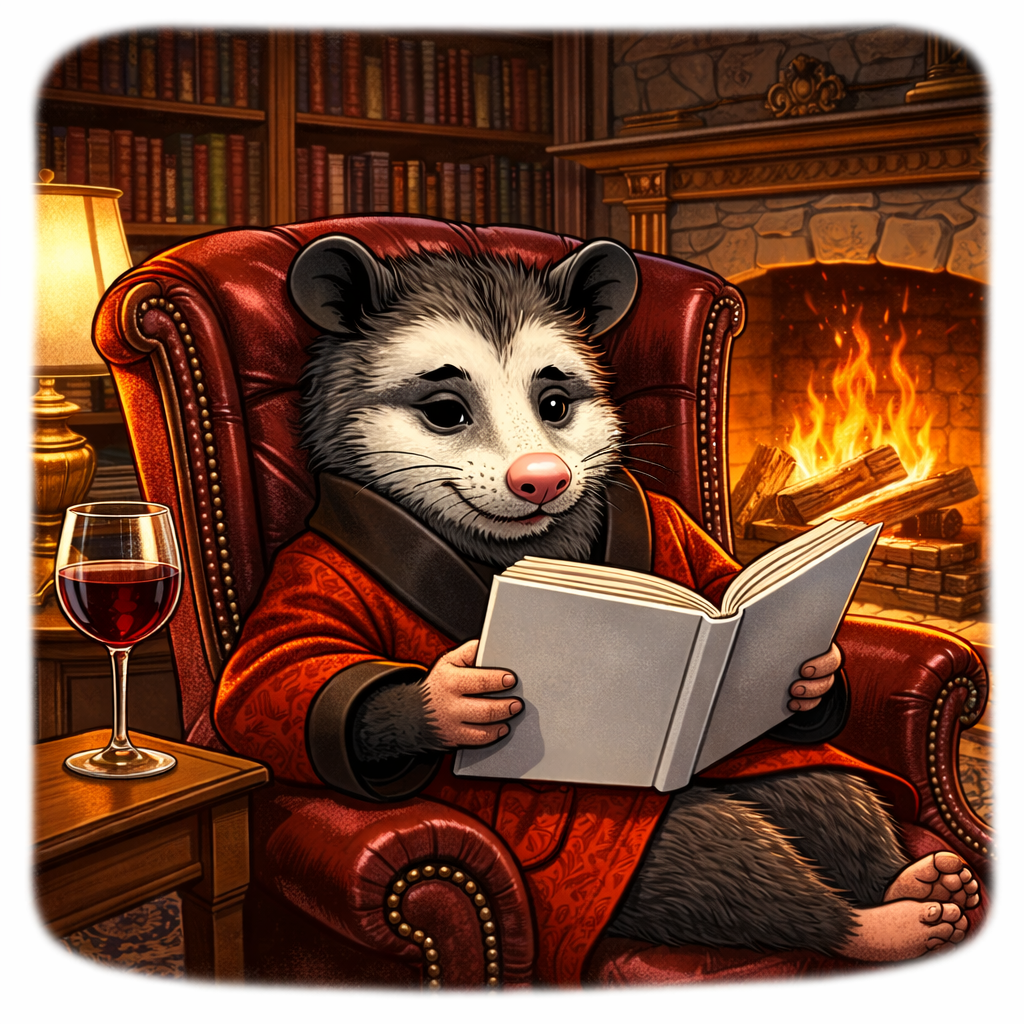
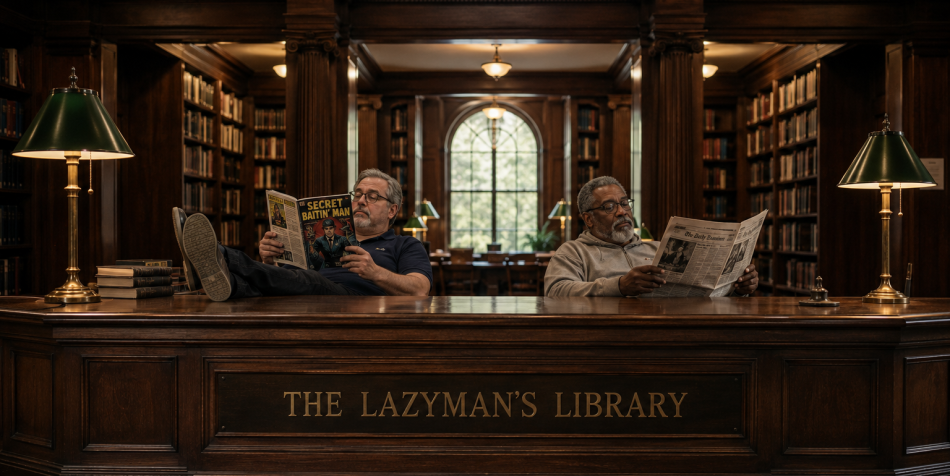
Note: We requested for our librarians to place these in alphabetical order, but they said they were busy so just browse these great works at random, at your leisure.
The Republic
The Republic is Plato's attempt to answer one central question: what is justice, and why is being just actually better for the person who practices it? Socrates and his companions test several answers, including the cynical claim that justice is simply whatever benefits whoever already has power. To make the problem easier to see, Socrates imagines an entire city and argues that a healthy society works when each part does its proper job and the wisest people govern. He then applies the same model to the individual, dividing the soul into reason, spirit, and appetite, with justice existing when reason is in charge rather than desire or ego.
The book's most famous ideas grow out of that argument. Plato proposes philosopher-rulers who are educated for decades before governing, uses the Allegory of the Cave to show how people can mistake familiar appearances for reality, and warns that political systems can decay when honor, wealth, freedom, or appetite becomes dominant. His tyrant looks powerful from the outside but is actually enslaved by endless wants and fears. The overall claim is that both a good city and a good person require order, education, self-command, and wisdom rather than simply getting whatever they want.
In One Sentence: Plato argues that justice is a kind of inner and political order in which wisdom governs appetite, making the just person freer and happier than someone ruled by power, impulse, or desire.
The deepest theme in The Republic is that justice is not mainly a list of good behaviors. Plato treats it as the condition of a person whose inner life is properly ordered. Reason should judge what is actually good, spirit should supply courage and ambition in support of reason, and appetite should remain a necessary but limited part of life rather than becoming the ruler. That matters because Plato is trying to answer the Ring of Gyges challenge: if you could lie, steal, dominate, or indulge yourself without ever being caught, would there still be any reason to be good? His answer is yes, because injustice damages the person doing it by turning the self into a disorderly collection of competing cravings.
A second major theme is the difference between knowledge and opinion. Plato thinks human beings are extremely comfortable mistaking what is familiar, popular, visible, or emotionally satisfying for what is true. The Allegory of the Cave is the clearest version of this: the prisoners do not merely lack information, they have built their entire understanding of reality around shadows. Education therefore is not just memorizing more facts. It is the painful process of learning to question appearances, revise assumptions, and turn the mind toward better explanations even when the old ones felt safer.
This is why education is so central to Plato's politics. He does not trust leadership to people simply because they are ambitious, persuasive, wealthy, popular, or born into the right family. The philosopher-ruler is supposed to be someone trained for decades in discipline, mathematics, public service, dialectic, and the habit of putting truth ahead of personal advantage. The ideal ruler is also reluctant to rule, which reveals an important Platonic suspicion: the people who most desperately want power may be the people least suited to have it. Political authority is treated as a burden attached to knowledge and responsibility, not a prize for winning a popularity contest.
Another major takeaway is Plato's belief that politics mirrors character. His sequence from aristocracy to timocracy, oligarchy, democracy, and tyranny is not just a classification of governments; each regime corresponds to a type of person dominated by a particular desire. Honor takes over from wisdom, wealth takes over from honor, unrestricted freedom pushes aside restraint, and eventually fear and disorder create an opening for tyranny. Whether or not one accepts Plato's severe criticism of democracy, his broader warning remains recognizable: a society can undermine itself when one valuable thing becomes the only valuable thing and all balancing virtues are treated as obstacles.
The book also keeps returning to the problem of freedom versus self-control. Modern readers often think of freedom as having more choices and fewer restraints, while Plato repeatedly asks whether a person who cannot control his own impulses is really free at all. His tyrant can command other people, seize wealth, punish enemies, and satisfy almost any immediate desire, yet he is portrayed as the least free person because every appetite becomes another master. Plato's definition of freedom is therefore surprisingly internal: the person who can govern himself is freer than the person who can govern everybody else but cannot tell himself no.
Finally, The Republic is less valuable as a blueprint for a literal perfect state than as a machine for asking uncomfortable questions. Who should rule, and what qualifies them? Does morality still matter when nobody is watching? Can a population be educated for good judgment, or will it prefer convincing shadows? Can liberty survive without restraint, and can power survive without corrupting the person who holds it? Plato's specific answers are often authoritarian, elitist, or alien to modern democratic values, but the questions remain difficult precisely because the book ties public life to private character. Its central challenge is that a society cannot be wiser, more disciplined, or more just than the people who compose and govern it.
The conversation starts with old age, money, and character before trying to pin down justice, and Cephalus observes that old age has a great sense of calm and freedom
when the passions loosen their grip. Socrates then immediately refuses the easy definitions. Cephalus suggests honesty and repayment, but Socrates shows that blindly returning what is owed can sometimes be harmful. Polemarchus moves toward helping friends and harming enemies, only for Socrates to argue that harming people makes them worse rather than more just. Then Thrasymachus blows the discussion open with, Justice is nothing else than the interest of the stronger.
His point is that rulers write laws for their own benefit and call obedience justice. Socrates pushes back by arguing that the true artist does not regard his own interest, but always that of his subjects
, and the first round ends with the stronger claim, the just is happy, and the unjust miserable
, while admitting that the argument still has much farther to go.
Glaucon and Adeimantus then make the challenge much harder by asking Socrates to prove that justice is desirable even when it brings no reputation or reward. The Ring of Gyges gives a person the power to act invisibly, stripping away witnesses and consequences, and the question becomes whether anyone would remain just if injustice were perfectly safe. Plato contrasts being good with merely seeming good, describing the truly just person as one wishing, as Aeschylus says, to be and not to seem good.
Socrates responds by enlarging the problem and building a city in speech, arguing that it may be easier to see justice in a state before looking for it in a single soul. From the beginning, education matters because the beginning is the most important part of any work
, especially while character is still being formed, and later Socrates adds that knowledge which is acquired under compulsion obtains no hold on the mind.
The city develops producers, guardians, and rulers, and Plato becomes intensely concerned with what kind of people education creates. Music, stories, physical training, discipline, and habits all shape the soul long before abstract philosophy arrives. Socrates says that musical training is a more potent instrument than any other
because rhythm and harmony reach deeply into character. The point is not merely artistic taste but formation: people learn what to admire before they can fully explain why they admire it, and Plato eventually describes virtue
as the health and beauty and well-being of the soul.
Justice eventually becomes less about outward rule-following and more about the person who sets in order his own inner life, and is his own master and his own law, and at peace with himself.
That inner order is mirrored in Plato's famous tripartite soul. Appetite wants food, money, sex, pleasure, comfort, and possessions; spirit wants honor, victory, recognition, and the satisfaction of anger; reason tries to judge what is genuinely best. The just person does not erase appetite or spirit but keeps them in the right relationship, becoming one entirely temperate and perfectly adjusted nature.
This is also why Plato distrusts rulers who crave office, insisting that he who refuses to rule is liable to be ruled by one who is worse than himself.
The best rulers, in his view, govern from necessity and duty rather than hunger for status. Later he makes the same point even more sharply: the State in which the rulers are most reluctant to govern is always the best and most quietly governed.
Plato's most notorious political proposal follows from this theory of education and character: Until philosophers are kings
, or political power and philosophy are united, cities will not escape their evils. By philosopher he means someone trained to distinguish knowledge from opinion and to seek what is good beyond immediate advantage; in the epistemological discussion, opinion appears to you to be darker than knowledge, but lighter than ignorance.
That leads into the Cave, where prisoners have known only projected images and therefore assume those images are reality. Socrates says, To them ... the truth would be literally nothing but the shadows of the images.
When a prisoner is forced toward the light, the transition hurts before it clarifies, because the familiar illusion initially feels more convincing than the unfamiliar truth.
The Cave becomes Plato's model of education. Learning is not the insertion of sight into blind eyes, because the power and capacity of learning exists in the soul already.
Instead, the whole person must be turned toward what is more real, because the instrument of knowledge can only by the movement of the whole soul be turned
, just as the body must turn the eye from darkness toward light. The educated prisoner eventually sees more clearly, but Plato refuses to let him stay outside and enjoy private enlightenment. He must return to the cave and govern among people still fighting over shadows, because knowledge carries an obligation to public life and because those who govern ought not to be lovers of the task.
That return also explains why wisdom is politically difficult: the enlightened person may appear foolish when he re-enters darkness, and the people accustomed to shadows may resist anyone who challenges the world they know.
In the later books, Plato turns from the ideal city to the ways governments and personalities decay. Timocracy elevates honor, oligarchy elevates wealth, democracy elevates freedom, and tyranny elevates uncontrolled appetite backed by fear and power. Plato calls democracy a charming form of government, full of variety and disorder
, a line that captures both what he sees as its attraction and its danger. His larger principle is that the excessive increase of anything often causes a reaction in the opposite direction.
Applied to politics, he argues that The excess of liberty, whether in States or individuals, seems only to pass into excess of slavery.
The sequence is deliberately provocative: freedom without self-command becomes disorder, disorder produces demand for protection, and the protector accumulates enough power to become a tyrant.
The final comparison returns to the original question of whether injustice pays. Plato's tyrant seems to have won because he can command others and indulge himself, but inwardly he is governed by fear, suspicion, erotic desire, greed, and endlessly multiplying wants. The apparently powerful man becomes master of others when he is not master of himself
, which for Plato is the deepest form of slavery. By contrast, the just person organizes desire rather than being dragged behind it and therefore lives with greater unity and peace. Socrates ultimately proclaims that the best and justest of men is also the happiest
, while the unjust person is the greatest tyrant both of himself and of his state. That is the thread connecting the whole book: justice is worth having even when nobody applauds it because justice is the condition of being able to govern yourself.
Socrates sit by big water place with tribe, tribe start grunt-fight over justice thing, very big brain rock. Old cave-man say justice mean tell true and give borrowed club back, but Socrates go unga-bunga lawyer and say, "What if friend brain go bad and want murder-club back?" Other cave-bro say help tribe-friend, bonk tribe-enemy, but Socrates poke idea with pointy stick until idea fall over dead. Then loud chest-thump man Thrasymachus stomp in, full alpha-chief ooga energy, and say justice just rule strong chief make so strong chief keep mammoth meat. Socrates make long thinking grunt, say chief job supposed help tribe, not just hoard best cave and fattest haunch, and whole fire-circle go hmmm.
Then Glaucon drop magic shiny ring, ring make cave-man invisible, no tribe see, no elder punish, no mate catch, no one know who steal mammoth steak or bonk rival, and question get real unga real fast: why be good when no one catch? Socrates answer normal simple question by build entire pretend cave-city, because philosopher-man no use small rock when mountain available. Food tribe make food, spear tribe guard cave, thinky tribe train many moons, and best thinky cave-man become chief even though he not thirsty for chief necklace. Then Plato say skull-cave also have three little cave-men inside: hungry one scream meat-mate-shiny-rock, proud one scream honor-win-bonk, and thinky one say maybe save winter berries and do not fight saber-cat naked. Good cave-man let thinky one hold steering club, proud one guard him, hungry one eat but not eat whole cave.
Then Plato tell cave story inside cave story, maximum cave-per-cave. Chain tribe stare at wall-shadow whole life, shadow-mammoth is mammoth, shadow-tree is tree, shadow-news is all news, then one poor unga get dragged outside and sun go BIG FIRE EYE, much ow, much rage, much "put me back." Eyes get good, cave-man see real sky and real things, go back yelling "wall shadow fake," and cave tribe call him sun-sick kook and maybe bonk enlightenment out of skull. Plato then sort chief systems like rock pile: wise chief, honor chief, rich chief, everybody-do-whatever chief, then chaos-chief who promise "me fix" and become tyrant big-bonk boss. Tyrant own whole valley but hungry brain own tyrant, so final caveman wisdom is simple: man who cannot rule own unga is not free, even if every other unga kneel.
Avast, ye scurvy lot, Socrates drops anchor in the Piraeus and gets Shanghaied into a deck-long squabble over what justice be, before the poor sea dog can so much as belay a thought. Cephalus says a square sailor pays his debts and keeps his tongue true, Polemarchus says stand by yer mates and give yer foes the cat, but Socrates keeps sounding every plank till each argument springs a leak. Then Thrasymachus storms the quarterdeck like a bilge rat with a loaded broadside, swearin' justice be whatever fattens the captain already gripping the helm, because the lubber with the cannon writes the Articles. Socrates calls that cargo rotten, argues a proper captain pilots for the crew and not merely his own purse, and the whole mess turns into a mutiny of definitions. By then the philosophical seas are already whitecap rough, matey, and nobody aboard is getting shore leave.
Then Glaucon hauls up the cursed Ring of Gyges, a bit of legendary booty that makes ye vanish cleaner than a deserter in fog, with no witness, no black spot, no noose, and no watchman to clap ye in irons. If a salty dog can pinch every doubloon, steal the queen, scuttle the king, and swagger back to the tavern with nary a soul the wiser, why stay honest on the account? Socrates answers by charting an entire imaginary port: craftsmen work the docks, guardians man the guns, and philosopher-captains spend decades learning stars, numbers, discipline, and how not to become rum-soaked tyrants with fancy hats. Then Plato says yer soul is a three-deck vessel, with Appetite in the bilge hollering for grog and booty, Spirit on the rail demanding glory and revenge, and Reason at the wheel reading the chart before some fool drives the hull onto a reef. Justice, arrr, is when the navigator keeps the helm and the rum barrel does not mutiny into captain.
Then the old Greek sea-witch sends the crew into his famous Cave, basically a cursed hold where chained lubbers stare at shadow-puppets and swear the silhouettes are the whole blasted ocean. One swab slips his irons, climbs topside, gets broad-sided by daylight, and finally sees sea, stars, gulls, horizon, the whole proper world, only to be ordered back below deck to tell a hold full of stubborn barnacles that their shadows are bunk. The prisoners call him addled, threaten to send him to Davy Jones, and prove Plato's point that a crew can get mighty protective of a bad chart when it is the only chart they have ever sailed. After that Plato watches governments go down by the bow: wisdom gives way to honor, honor to doubloons, doubloons to every jack-tar doing as he pleases, and the resulting free-for-all invites some swaggering corsair to promise order and seize the whole fleet. Final captain's log, me hearty: a tyrant may fly his colors over every mast in sight, but if every craving below deck can ring the bell and change course, the poor bastard is still a captive on his own ship.
Dude, Socrates paddles into the Piraeus lineup and the whole beach instantly turns into a heavy justice sesh, like nobody checked the forecast and suddenly philosophy is overhead and pumping. One old local says justice is paying people back and keeping it straight, another bro says back your crew and harsh your enemies' mellow, but Socrates keeps carving rail-to-rail through every take until each one pearls and eats sand. Then Thrasymachus drops in way too deep with total aggro-kook energy, saying justice is basically whatever the dude owning the beach says it is, because biggest board, biggest crew, biggest rules. Socrates is not stoked, calls the setup blown out, and says an actual leader should read conditions for everybody in the lineup instead of snaking every set for himself. So before anybody can paddle in, the justice swell has gone from waist-high chatter to a legit cleanup set.
Glaucon then tosses out the Ring of Gyges, which is basically invisibility with no beach cam, no receipts, no locals seeing you snake the peak, and zero chance of getting called out in the parking lot. If you can steal every wave, jack everyone's gear, act like a complete wave-hog kook, and never get burned, do you still keep it righteous, bro? Socrates responds by shaping an entire imaginary surf town where everybody has a role, the guardians hold the line, and philosopher-rulers spend forever learning to read the swell instead of just yelling "mine" at every lump on the horizon. Plato says your own head is the same lineup: Appetite is frothing for tacos, cash, pleasure, and one more set; Spirit is amped on respect, glory, and sending it; Reason is the seasoned local checking tide, reef, wind, and whether this bomb is actually makeable. Justice is basically letting the local with wave knowledge call the set instead of letting the loudest frother shoulder-hop your whole brain.
Then comes the Cave, bro, the gnarliest landlocked break in philosophy: chained dudes have watched wall-shadows since birth and think the projection is the whole ocean, so one guy finally gets outside, gets absolutely flash-banged by the sun, and realizes his entire worldview was a mushburger. He comes back fired up with real-world stoke, but the cave crew calls him a kook because their shadow break is familiar and the outside sounds like some sketchy secret spot story. Plato then runs the government forecast from clean wisdom lines to honor chop, money crowds, max-freedom chaos, and finally a charismatic heavy who says he can fix the lineup if everybody just gives him priority forever. That dude becomes the tyrant, looks like he owns the point, but internally he is permanently caught inside, taking whitewater from money cravings, praise cravings, fear, status, and another endless set of wants. Overall surf report: if you cannot read your own conditions and control your own lineup, you are getting worked, no matter how glassy your power looks from shore.
Justice was a slippery dame, the kind every mug in the Piraeus claimed to know until a gumshoe named Socrates started asking for the low-down and checking the alibis. Cephalus said keep your story straight and pay your debts, a clean little rap until Socrates found the loose thread about handing a dangerous weapon back to a pal who's gone screwy. Polemarchus tried the old friends-get-favors, enemies-get-the-business racket, but the shamus leaned on it under the hot lamp until the whole flim-flam folded like a two-bit grifter. Then Thrasymachus barged into the joint with a brass set of lungs and said justice was just the graft run by whoever had the muscle, the high pillow writes the law and every little mug calls obedience virtue. Socrates wasn't buying the frame-up, said a real ruler ought to work for the people under his care, and suddenly this quiet philosophy caper had more suspects than a midnight stickup.
That's when Glaucon slid the Ring of Gyges across the table, the perfect heater for a crooked soul: invisible, no copper on the corner, no dame behind the blinds, no fingerprints, no stool pigeon, no chance of getting pinched. If a guy can pull every job, grab the dough, bump the king, and still walk out clean as a church hat, does he stay on the level or go full grifter? Socrates, being the sort of dick who solves a purse-snatch by zoning a metropolis, builds a whole city and assigns everybody a beat: workers handle the goods, guardians provide the muscle, and philosopher-types get the penthouse only after years of schooling that would make most wiseguys take a powder. Then he opens the file on the human skull: Appetite is the lush in the back booth ordering another steak and another stack of green, Spirit is the hard boy hunting respect, and Reason is the tired shamus with the notebook trying to keep both mugs from turning the joint into a crime scene. Justice, see, is when the gumshoe runs the investigation instead of letting the hungriest hood write the report.
Then Plato takes the case underground to the Cave, a dark basement where poor saps have stared at shadows so long they think the cover story is the city itself, until one bird gets loose and daylight hits him harder than a blackjack. He comes back with the real low-down, but the basement crowd figures the street cooked his noodle and may close his case permanently if he keeps gumshoeing around their precious shadows. From there Plato flips through governments like mug shots: wisdom gets bumped by honor, honor gets muscled out by dough, dough loses the room to everybody wanting his own rules, and the whole town turns into such a racket that some smooth-talking heavy promises to clean the streets if everyone hands him the keys. Naturally the heel becomes the tyrant, owns every precinct, and still sleeps like a stoolie who hears footsteps outside every door because his own appetites have him by the collar. Case closed, sweetheart: the biggest mug in town can still be a fall guy if his own cravings are running the grift.
Session opens in the Piraeus and the party thinks they are getting a festival one-shot, but Socrates immediately triggers a ten-book social encounter, the DM folds the combat map, and everybody realizes the main quest is Define Justice with no obvious quest marker. Cephalus rolls Persuasion on "tell the truth and pay your debts," Socrates rules-lawyers the cursed-friend-with-a-weapon edge case, and that build fails its save before initiative even starts. Polemarchus tries a Friends Good / Enemies Bad subclass, Socrates multiclasses into Annoying Follow-Up Question, and the whole homebrew collapses under RAW scrutiny. Then Thrasymachus kicks open the tavern door with pure murderhobo charisma and argues that whoever controls the faction also controls the alignment chart, because the ruler has the stat block and everybody else can cope. Socrates contests the check, points out that competent leadership should serve the governed rather than farm personal loot, and the table realizes this campaign has absolutely no fast-travel option.
Glaucon then drops the Ring of Gyges, a legendary item with permanent invisibility, witnesses disabled, reputation mechanics deleted, and consequences nerfed into the floor, which turns the quest into "why shouldn't the PC immediately go full murderhobo?" Socrates answers by launching a domain-management expansion nobody bought, with producers on crafting, guardians tanking the city, and philosopher-rulers grinding decades of INT, WIS, Athletics, Dialectic, and public-service XP before they can unlock the prestige class. Then the DM reveals the city was basically a character sheet all along: Appetite is the loot goblin maxing gold, food, romance, and consumables; Spirit is the aggro build chasing honor and crits; Reason is party lead trying to stop everybody from splitting the party. Justice is when Reason has admin permissions, Spirit actually supports the main quest, and Appetite stops metagaming every encounter around immediate loot. In optimization terms, Plato thinks a character with maxed external Power and dumped Wisdom is not a broken build in the fun way, just broken.
Next the DM finally says "you enter a cave," everybody cheers for a dungeon, and then learns the PCs have been Restrained since character creation while projected shadow tokens constitute their entire campaign lore. One prisoner breaks the condition, fails the first Perception check because sunlight imposes disadvantage, eventually discovers the party has spent its life arguing over texture maps, and gets hit with the biggest lore dump in Western philosophy. The quest log immediately updates to Return to Cave, which feels like railroading, but back underground the NPCs accuse the enlightened PC of metagaming and threaten PvP because nobody likes being told the campaign setting is fake. Plato then runs governments through a cursed progression tree: Aristocracy to Timocracy to Oligarchy to Democracy to Tyranny, basically each build min-maxing one stat until Wisdom becomes the dump stat and the campaign balance explodes. Final boss Tyrant has legendary actions, absurd Charisma, map-wide authority, and a catastrophic saving throw against every impulse, so he conquers the setting while losing his own character sheet, which is about as close as philosophy gets to a TPK of the soul.
Socrates pulls up to the Piraeus and the group chat instantly becomes justice discourse, zero warning, maximum yap, nobody even asked, and Cephalus drops the boomer-coded take that being good is basically telling the truth and paying people back. Socrates immediately hits him with the "okay but your friend is literally crashing out and wants his weapon back" edge case, so that take gets ratioed and Cephalus basically logs off. Polemarchus tries "help the mutuals, opps can hold the smoke," but Socrates quote-tweets the logic until it has negative aura and the whole thread is cooked. Then Thrasymachus barges in with premium rage-bait energy and says justice is whatever benefits whoever already has admin, like Terms of Service magically becomes ethics because the platform owner wrote it. Socrates says massive cap, argues rulers are supposed to serve the users rather than farm them for clout, and suddenly this ancient Greek server is deep in governance discourse with no mod team in sight.
Glaucon then activates hard mode with the Ring of Gyges: invisibility, no screenshots, no receipts, no Find My Friends, no camera roll, no getting exposed, basically consequence-free villain DLC. If you can steal, cheat, thirst, scam, and crash out with literally zero chance of getting put on blast, are you still a good person or was your morality just reputation-maxxing? Socrates answers with an entire fictional state because brevity is apparently mid, assigns producers to do the actual labor, guardians to run defense, and philosopher-rulers to spend decades locked in on math, discipline, dialectic, and public service instead of farming aura. Then Plato says your brain is three accounts sharing one password: Appetite is doomscrolling DoorDash, shopping, thirst traps, money, status, and one more little treat; Spirit is pure W-or-crash-out energy screaming "respect me"; Reason is the exhausted moderator trying to lock the thread before everybody gets banned. Justice is when Reason has admin, Spirit stops subtweeting, Appetite gets screen-time limits, and the whole internal server finally stops being a dumpster-fire livestream.
Then Plato drops the Cave, which is basically being chained to one algorithm since birth and thinking the For You page is objective reality, until one guy finally touches grass and gets absolutely flash-banged by context, primary sources, sunlight, and the horrifying discovery that the feed was not the world. He comes back saying the shadows are literally projections, the cave replies "source?" and "bro got sunlight once and thinks he's enlightened," and they ratio him so violently that media literacy becomes a contact sport. Plato follows that with a government tier list where honor-maxxing slides into pay-to-win oligarchy, democracy becomes everybody running simultaneous main-character firmware, and unlimited "nobody can tell me anything" energy creates such a chaotic server that some charismatic guy with nuclear rizz says "give me all permissions, I alone can fix it." Everybody lets him cook, he burns down the kitchen, tyranny unlocks, and the supposed sigma ruler turns out to have negative freedom because every craving, fear, flex, validation hit, and power binge has him in a chokehold. Plato's TL;DR is lowkey savage: if your impulses own you, you are cooked no matter how much external aura you stack, and self-control is the actual endgame buff.
Nicomachean Ethics
Nicomachean Ethics asks one basic question: what does it take for a human life to go well? Aristotle's answer is not simply pleasure, money, fame, or following a list of rules. He calls the goal eudaimonia, usually translated as happiness or flourishing, meaning a whole life lived and acted well. A good life is something you do, not merely a feeling you happen to have.
The key is character. Aristotle argues that people become courageous, generous, honest, just, and self-controlled by repeatedly practicing those qualities until they become habits. Virtue usually avoids both excess and deficiency, but there is no universal formula for finding the right response in every situation. That takes phronesis, or practical wisdom: experience-based judgment about what is appropriate here, now, for these people and these circumstances.
In One Sentence: Aristotle thinks the good life is built by repeatedly making good choices until sound judgment and good character become the way you naturally live.
The first major theme is that the good life has to be judged as a whole. Aristotle begins from the idea that nearly everything we deliberately do aims at some good, but many of those goods are only means to something else. Money is useful because of what it can buy, status depends on other people's opinions, and pleasure can disappear as quickly as it arrives. He therefore looks for an end that is worth choosing for itself rather than as a tool for getting something further. That end is eudaimonia: flourishing, living well, and functioning well over the course of a complete human life. This is why Aristotle's "happiness" is much closer to a life going well than to simply being in a good mood.
The second theme is that character is trained rather than merely declared. Aristotle does not treat virtue as a personality label or a set of beliefs stored in the head. We become just by doing just things, brave by doing brave things, and self-controlled by practicing self-control. Repeated choices slowly make certain responses easier, more familiar, and eventually characteristic of us. That means every habit is doing moral work even when it feels trivial, because repetition is always strengthening some pattern of action. His ethics is therefore less interested in what kind of person you say you are than in what kind of person your repeated behavior is actually producing.
The famous doctrine of the mean is Aristotle's attempt to explain why virtue requires judgment rather than mechanical rule-following. Courage is not cowardice, but it is also not reckless disregard for danger; generosity is not stinginess, but it is also not wastefulness. The virtuous response often lies between too much and too little, yet Aristotle repeatedly warns that this is not an arithmetic midpoint. The right amount depends on the person, the circumstances, the stakes, the timing, the motive, and what the situation actually calls for. Some acts also have no virtuous midpoint at all because they are wrong in themselves. The larger takeaway is that ethical maturity means learning to perceive what a situation requires, not memorizing a universal slider marked "moderate."
That leads to one of the book's most important ideas: phronesis, or practical wisdom. A person can know moral principles, be highly intelligent, and still make terrible decisions in ordinary life. Practical wisdom is the ability to connect general values to particular situations, including details that an inexperienced person may not even notice. It develops through practice, correction, experience, good examples, and the gradual education of emotion as well as reason. Aristotle is interested in choice precisely because a good decision is not merely one that accidentally produces a good result; it is an action knowingly and deliberately chosen for the right reasons. His treatment of weakness of will, or akrasia, makes the same point from the opposite direction: knowing what is better does not guarantee that we will actually do it.
Friendship is another major theme because Aristotle does not imagine flourishing as a solitary self-improvement project. He distinguishes friendships of utility, pleasure, and character. Useful and pleasant friendships can be genuine, but they are vulnerable because they often disappear when the usefulness or pleasure disappears. The deepest friendship exists when two people value one another for who they are and actively want the other person to live well. Good friends also help us see ourselves more clearly, practice virtue toward someone besides ourselves, and share worthwhile activity. For Aristotle, a flourishing person still needs other people; independence does not mean isolation.
Finally, Aristotle connects virtue to pleasure, community, and contemplation. A well-formed person does not merely grit their teeth and perform good actions forever; over time, they learn to take pleasure in what is genuinely good. He also acknowledges that flourishing needs at least some external support, because friendship, political stability, health, opportunity, and fortune can affect how fully a person is able to live well. Near the end of the work he gives the highest place to rational contemplation, creating a lasting tension between the active moral life and the philosophical life. Yet the practical lesson of the entire book remains remarkably consistent: ethics is not mainly about possessing correct opinions. It is about becoming the sort of person who can recognize what is worth doing, choose it well, and keep doing it until living well becomes a practiced way of life.
Aristotle opens at full altitude: Every art and every inquiry, and similarly every action and pursuit, is thought to aim at some good.
That immediately gives the book its direction, because he wants to know whether all our smaller goals point toward some final one. He eventually argues that happiness is something final and self-sufficient, and is the end of action,
while also insisting that human good turns out to be activity of soul in accordance with virtue.
Happiness here is not a possession sitting on a shelf; happiness is an activity,
something continuously expressed in the way a person lives. Aristotle even adds the famous warning that one swallow does not make a summer,
because a single good day or isolated success cannot establish the quality of an entire life.
Once flourishing is defined through activity, Aristotle turns to the training of character. His bluntest claim is that moral virtue comes about as a result of habit,
and he explains the mechanism with examples from ordinary skills: men become builders by building and lyreplayers by playing the lyre.
The ethical equivalent follows directly: we become just by doing just acts, temperate by doing temperate acts, brave by doing brave acts.
The point is not that we fake virtue until some mystical transformation occurs, but that action forms disposition. This is also why education matters so much to him: the habits we repeat while young help determine what later feels normal, pleasant, difficult, shameful, or admirable.
Aristotle then asks what a virtue actually looks like in action, arriving at his doctrine of the mean. His compact definition says that virtue, then, is a state of character concerned with choice, lying in a mean,
but that mean is relative to us.
It is therefore not enough to split two extremes mathematically, because it is no easy task to be good.
Anger, fear, giving, taking, speaking, and acting must all fit the circumstance, and the right response can vary dramatically between people and situations. The mean is demanding precisely because it asks for the right thing, toward the right person, in the right way, at the right time, and for the right reason rather than merely asking us to avoid anything that looks extreme.
That emphasis on choice leads Aristotle into responsibility and deliberation. He says that we deliberate not about ends but about means,
because once a goal is accepted the practical question becomes how to pursue it. Choice is therefore more than impulse; choice is deliberate desire of things in our own power.
Aristotle spends considerable effort separating voluntary action, compulsion, ignorance, passion, and deliberate wrongdoing because praise and blame depend on those distinctions. His ethical person is not merely someone whose actions happen to land correctly, but someone who sees what they are doing and chooses it as the appropriate thing to do. Character matters because enough choices of the same kind eventually make future choices easier in that same direction.
Justice expands the discussion from self-mastery to life with other people. Aristotle calls justice complete virtue, but not absolutely, but in relation to our neighbour,
because it shows whether a person's character survives contact with someone else's interests. He also preserves room for judgment when laws are too general, explaining that the equitable is just, and better than one kind of justice.
A written rule has to speak generally, while actual human cases arrive full of particulars that the rule could not anticipate. This is one reason the book keeps returning to cultivated judgment rather than pretending that a perfect moral instruction manual can be written in advance. Good character becomes visible when a person can act fairly even when the situation is messy, the incentive points the other way, or the literal rule fails to capture the whole case.
Aristotle gives that cultivated judgment a name: phronesis, practical wisdom. It concerns action rather than abstract theory, because practical life constantly asks what should be done in circumstances that will never repeat themselves exactly. His larger claim is that intellectual cleverness by itself is insufficient; someone may reason brilliantly about a goal and still choose a terrible goal or badly misread the human situation in front of them. This is why moral virtue and practical wisdom support one another rather than operating as separate upgrades. Aristotle's treatment of weakness of will reinforces the same problem, since a person may recognize the better course and still be dragged toward immediate appetite. Ethics therefore requires not just seeing the good but forming desires, habits, and judgment so that the person can actually follow it.
Then the book spends an extraordinary amount of time on friendship. Aristotle begins with the sweeping claim that without friends no one would choose to live, though he had all other goods.
He distinguishes relationships based mainly on usefulness or pleasure from the deeper form, saying that perfect friendship is the friendship of men who are good, and alike in virtue.
Friendship becomes so central that he describes a friend as another self,
and later insists that the happy man needs friends.
These friends do not merely provide comfort or networking; they give a good person someone with whom to share worthwhile activity, someone to benefit, someone whose character can be admired, and someone through whom one's own life becomes easier to see.
Pleasure is not thrown out of the good life, but it is demoted from ruler to companion. Aristotle argues that pleasure completes the activity,
meaning that worthwhile activity naturally carries an appropriate pleasure when a person's character is properly formed. He rejects the idea that entertainment itself could be life's final point: happiness does not lie in amusement.
Recreation matters because people need rest, but rest exists so that meaningful activity can resume rather than replacing it. This helps explain why the virtuous person is not supposed to spend life miserably obeying duty against every desire. The deeper achievement is to educate desire itself so that good activity becomes something the person genuinely enjoys.
In the final movement Aristotle gives contemplation the highest rank. He says that if happiness is activity according to virtue, it should accord with the highest virtue,
and concludes that the activity of our highest rational capacity is contemplative. That can sound like a sudden victory lap for philosophers after hundreds of pages about courage, justice, friendship, pleasure, and civic character, but it fits his original search for the fullest exercise of what is distinctively human. Even here he does not erase the practical world that came before; human beings still require formation, friendships, communities, and enough external goods to sustain a life of excellent activity. The book finally turns toward politics and education because reading about virtue is not enough to create virtuous people. The bridge from ethics to politics is therefore unavoidable: if character is built through habit, then families, institutions, customs, laws, and communities all help decide which habits people get to practice.
Aristotle sit by fire and ask big tribe question: what make whole human life good-good, not just belly-full-now good? Shiny rock no, because shiny rock only trade for meat, hide, spear, cave rent, so rock-tool not final good. Sweet berry, warm sun, big nap, cave party all good, but man chase only yum-yum and snooze become fancy cave pig with opinions. Tribe clap also weak sauce because tribe clap today, throw dung tomorrow, and now man happiness live in other caveman mouth. Aristotle grunt that real prize called eudaimonia, meaning whole life go strong, brain work good, choices good, tribe life good, not one lucky mammoth weekend. Big rock lesson already: good life not thing man own in pouch; good life thing man keep doing until bones old.
Then Aristotle bonk giant habit drum: man become brave by do brave thing, fair by do fair thing, honest by no tell sneaky cave-lie, and fool by rehearse fool move every sunrise. Do thing, do again, do again, and soon brain make little trail; keep walking trail and trail become road, then man grunt "this just who me am" like sky carved it, when actually man stomped path himself. Virtue sit between bad-too-little and bad-too-much: hide from tiny wolf forever is scared-baby cave mode, charge mammoth naked with soup spoon is skull-empty hero mode, and courage is know danger real but still do right hunt move. But middle no exact half-meat slice, no magic pebble say 47 percent fear and 53 percent chest thump. Need phronesis, old-hunter brain, many-winter judgment, scar knowledge, know when spear, when run, when talk, when shut cave-mouth. Aristotle basically say smart skull not enough; man can know honey pot bad, explain honey pot bad, give lecture on honey pot, then wake with honey pot empty and sticky beard anyway.
Friendship get huge cave wall because even strongest tribe man not flourish alone in sad little hole. Tool-friend stay because man have cart, fun-friend stay because man tell good fire joke, but best tribe-friend want man become better even when cart break and joke stink like wet mammoth. Justice mean good character toward other cave people, not just proud chest-thump about own virtue while stealing neighbor meat. Pleasure not enemy either; trained-good man eventually like doing good thing instead of acting noble while making face like dragging boulder uphill. End of scroll Aristotle suddenly go full sky-thinker and say highest human move may be contemplation, big brain staring at truth while everybody else wonder who watching goats. Cave TLDR: every choice train future caveman, so quit feeding dumb habit beast unless man want dumb habit beast become tribe chief inside skull.
Avast, ye bilge-soaked philosophers, Aristotle comes aboard askin' what makes the whole blasted voyage worth sailin', not merely what keeps a swab merry till sunrise. Doubloons be handy booty, aye, but coin only buys other cargo, so treasure be a means and not the final harbor. Grog, grub, a warm berth, and a lively tavern wench may put wind in yer sails, but if pleasure alone captains the vessel ye're not flourishing, ye're just a rum cask with boots. Reputation be even shakier rigging, because hand the crew and every dockside landlubber the keys to yer honor and one bad yarn can sink yer spirits below Davy Jones. Aristotle names the true destination eudaimonia, a whole voyage sailed well from first tide to final anchorage, with the captain's judgment, character, and conduct still seaworthy. In pirate terms, matey, the treasure map points not to one chest but to becoming the sort of salty old sea dog who can keep the ship trim through the whole damned crossing.
Then Aristotle hauls out the bosun's cane of habituation: ye become brave by facing proper squalls, honest by keeping yer word when a lie would fill the hold, and generous by sharing booty without flingin' the payroll overboard like a barnacle-brained lubber. Every repeated tack trains the crew, and every repeated vice lets some scurvy mutineer claim another deck inside yer character. His famous mean be the middle course between two rotten headings: refuse every storm and ye're a yellow-bellied dock rat, charge a hurricane broadside because fear is for landlubbers and ye'll be fish supper before bells. Yet there be no enchanted compass markin' "VIRTUE, THREE POINTS STARBOARD," because the right heading changes with tide, crew, cargo, weather, and stakes. That skill be phronesis, proper sea-legs for judgment, the old captain's knack for smellin' reef, mutiny, bluff, and bad weather before the greenhorn has finished admirin' the gulls. A clever pirate can know every chart in the cabin and still steer straight into rocks if appetite has lashed reason to the mast.
Friendship gets two whole books of deck space because Aristotle knows no captain flourishes with a crew of temporary drinking mates and paid hands alone. Utility mate stays while ye've got a ship, pleasure mate stays while the rum runs, but the true hearty wants ye to become a better captain and will call ye a witless sea cucumber before lettin' ye scuttle yer own hull. Justice means yer virtue works toward other sailors too, not merely when ye're alone polishing medals in the cabin, and equity means sometimes a rigid Article needs enough give to fit the actual storm. Pleasure itself needn't walk the plank; when yer character is shipshape, good action starts feeling like a fair wind instead of punishment detail. Then Aristotle climbs the crow's nest and declares contemplation the finest watch of all, because the mind doing its highest work is the grandest use of the vessel. Captain's log: every choice trims a sail inside ye, so if greed, grog, vanity, and impulse keep taking the wheel, don't act shocked when yer soul runs aground with full canvas and a very expensive hat.
Dude, Aristotle paddles into the whole philosophy lineup asking what makes an entire life genuinely righteous, not just one glassy Saturday where the swell pumps and everybody's vibing. Cash is useful because boards, wax, tacos, gas, and questionable beach parking all cost clams, but money is gear, bro, not the wave itself. Pleasure is obviously choice, because warm sun, clean faces, cold drinks, and getting slotted are totally epic, but if every life decision is just chasing the quickest dopamine set, you're gonna kook the lineup and call the wipeout freedom. Fame is even sketchier because now your whole inner stoke depends on whether the beach crowd is still hooting, and that's basically renting your soul to the comment section. Aristotle calls the full-send good life eudaimonia, meaning your whole ride has shape, skill, balance, and righteous human function instead of one sick highlight reel surrounded by total mush. So the first big vibe is that flourishing is not catching a wave; it's becoming the surfer who can read an entire ocean.
Then the dude gets absolutely locked in on reps, because character works like learning a break: paddle out, eat foam, miss the takeoff, get worked, read the shoulder better, and keep sending until the move stops feeling alien. Courage grows by doing courageous stuff, honesty grows by staying clean when a sneaky little snake move would be easy, and self-control grows every time your impulse says "drop in" but local knowledge says "bro, absolutely not." The Mean is his sweet spot between two kook zones: too spooked to paddle manageable surf is timid energy, but charging a twenty-foot closeout on a rental foamie because "fear is low vibration" is Darwin-award charger energy. There is no ethical tide chart with 50 percent boldness and 50 percent chill, because the right line changes with the set, your ability, the reef, who else is in the lineup, and whether your ego is hallucinating a GoPro edit. That's phronesis, seasoned-local wisdom, the kind of situational read where some grom sees "wave" and the old head sees rip, rock, cleanup set, angry local, and three ways this gets gnarly. Aristotle's basically saying high IQ with no lineup sense is still a kook, just a kook who can footnote the wipeout.
Friendship is major stoke because nobody gets the full flourishing session as some lone wolf camping the secret break forever. Utility bro has the truck and the map pin, pleasure bro brings immaculate vibes and burritos, but virtue bro tells you when you're snaking waves, hypes you when you've earned it, and actually wants your whole character arc to get less kooky. Pleasure isn't cancelled either; once you're genuinely trained, the good line starts feeling sweet instead of every decent act becoming a brutal paddle against the rip. Justice is the social lineup version of virtue, where your excellent little inner vibe has to survive sharing waves, respecting claims, and not turning "my freedom" into everybody else's concussion. Then Aristotle goes full far-out elder and says contemplation may be the cleanest wave in the set, the mind riding truth for its own sake, which is some serious philosopher-at-sunset energy. Overall vibe, brah: stop hunting nonstop peak moments, train your habits, read conditions, keep solid people in the lineup, and don't let one frothing impulse paddle-battle your whole life into the rocks.
Happiness walked into the office wearing a dozen aliases, and Aristotle was the kind of gumshoe who checked every one against the file. Money looked like the big cheese at first, plenty of lettuce and a clean alibi, but the green was only useful for whatever it could buy, so it wasn't the mastermind. Pleasure had a better disguise, all neon, bourbon, silk, and a dame at the end of the bar, but make that your whole racket and pretty soon the good time owns the joint. Reputation was a stool pigeon from the start, because any sap who parks his happiness in public opinion gives every mug in town a key to the safe. Aristotle's real lead was eudaimonia, the whole life flourishing from opening scene to final reel, not one hot night before the cops, creditors, and consequences knock at dawn. The case wasn't about finding a lucky break; it was about becoming the kind of operator whose character holds up when the streetlights go out.
Habits left fingerprints everywhere. Tell the truth enough and honesty starts keeping a toothbrush at your place; duck every hard call and cowardice quits knocking before it walks in; take dirty money every Tuesday and corruption learns your coffee order. Aristotle calls virtue a mean, which sounds tidy until you work the beat and discover courage sits somewhere between a yellow-bellied sap hiding behind a radiator and a trigger-happy palooka charging every alley because he likes the sound of his own brass. The address changes with the case, so there is no moral street map with a red X and "GOOD DECISION" scribbled beside the body. What you need is phronesis, street sense for the ethical beat, the seasoned shamus instinct that knows when the same punch is guts in one alley and first-class stupidity in the next. Book smarts help, sure, but a mug can quote the whole statute book and still get played by his appetite like a nickel piano. Knowing better and doing better are two different suspects, and Aristotle never lets either one slip out the back door.
Then the friendship file gets thick. Utility pals show when business is good, pleasure pals show when the gin is cold and the band knows their tune, but the rare straight-shooter tells you you're becoming a heel before the habit gets permanent paperwork. Justice is virtue with another person's fingerprints on the evidence, because being noble alone in your office is cheap; the real test is what happens when somebody else's money, dignity, or share is on the table. Equity is the judge with enough sense to know the written rule can fit the average case and still pinch the wrong guy in a weird one. Pleasure isn't the femme fatale either, because when the character is clean, doing the right thing can actually feel right instead of like community service. By the last reel Aristotle turns philosopher and puts contemplation under the brightest lamp, but the whole case file still says the same thing: character wasn't hiding in a locked room waiting to be discovered; the mug was building it choice by choice, and his prints were on every brick.
Session Zero opens and Aristotle drops the broadest quest hook imaginable: build a Human Life character that actually clears the campaign. The party immediately tries to min-max Gold, but the DM rules currency is an inventory resource, not the victory condition; somebody pitches Pleasure, but that's a temporary buff with nasty diminishing returns if you make it your whole build; somebody else chooses Reputation and discovers the stat is controlled by random NPC opinion. Aristotle finally reveals the actual endgame objective, Eudaimonia, which is basically completing the full campaign with your sheet, choices, relationships, and long-term playstyle functioning well. This is not a mood-meter mechanic and it is definitely not "I rolled one nat 20 at brunch so my life is optimized." The campaign score is based on sustained excellent activity across the arc, not one legendary session before three levels of chaotic-neutral consequences. In DM terms, your win condition is not acquiring the fanciest loot; it's becoming a character worth playing at level twenty.
Virtues are proficiencies you grind through repeated checks, because Aristotle absolutely refuses to let you write "Brave" in the traits box and call the build finished. Make good Courage checks under appropriate threat and the proficiency levels; keep choosing deceit because "it's what my character would do" and congratulations, you've optimized a deeply annoying subclass. The Doctrine of the Mean looks like a slider until the table asks for RAW percentages and the DM cackles, because Cowardice and Recklessness are both failed builds while Courage depends on encounter context, party needs, actual threat, motive, and timing. No alignment grid, feat tree, or rules-lawyer appendix can automate that judgment, so Aristotle unlocks Phronesis, the Practical Wisdom proficiency that only levels through campaign experience, mentors, bad rolls, corrected mistakes, and enough side quests to recognize a telegraphed disaster. High INT does not grant it automatically; your wizard can have +9 History, quote every sourcebook, and still catastrophically fail the "Should I say this at dinner?" check. Akrasia is the cursed mechanic where the player identifies the optimal move, explains the optimal move to the whole table, then presses the glowing skull button anyway because apparently Wisdom was the dump stat.
Friendship gets three relationship tiers: Utility is "we keep the rogue because thieves' tools," Pleasure is "we keep the bard because tavern sessions slap," and Virtue is "this party member actually wants my character arc to improve and will stop me multiclassing into Idiot." Justice is the social rules engine where your build has to work when loot, status, injury, and other PCs enter the encounter, while equity is the DM ruling that RAW sometimes needs a sane interpretation because the module writer could not anticipate every deranged player choice. Pleasure is not a debuff; once your build is well-formed, virtuous actions start granting their own positive feedback instead of requiring a Wisdom save every time decency appears in initiative. Then Book X unlocks the Contemplation endgame and somehow the Philosopher build becomes S-tier after ten books of social encounters, martial virtues, resource management, friendship quests, and moral skill checks. Aristotle has been theory-crafting this the whole campaign, the absolute rules goblin. Campaign lesson: every repeated action is secretly allocating XP, so check your sheet before you discover you've spent twenty levels maxing a prestige class called "Guy Who Knows Better And Still Does It Anyway."
Aristotle opens with the ultimate "okay but what are we actually doing here" discourse and immediately starts auditing everybody's life build. Money is giving utility-item energy, because babe, it literally exists to get other stuff, so calling it the final goal is inventory-core delusion. Pleasure is valid and we love a dopamine moment, but if every decision is "whatever hits fastest," congratulations, your reward system is farming you for engagement and your frontal lobe has left the group chat. Fame is even more cooked because now your self-worth is outsourced to the comments, one ratio tanks the portfolio, and random NPCs basically own stock in your nervous system. Aristotle says the actual main-character objective is eudaimonia, full-arc flourishing, not one immaculate weekend followed by six months of side-quest purgatory and a notes-app apology. Translation: stop confusing a highlight reel with a good life, because the lore has to hold up across the whole season.
Then he drops the wildly inconvenient habit take: your personality is basically repeated behavior that accumulated enough lore to start calling itself identity. You don't become disciplined by reposting sigma edits while marinating horizontally for eleven hours, bestie; you do disciplined stuff until the stat is actually leveled. Do brave things and Courage gets XP, do fraudulent little snake moves and Fraudulent Little Snake becomes your optimized build, no cap. The Doctrine of the Mean is not beige moderation-core either: cowardice is an L, reckless aura-farming is also an L, and courage is the context-aware move where fear has useful information but doesn't become server admin. There is no moral spreadsheet, so you need phronesis, basically cracked situational awareness for knowing whether you're brave, delulu, manipulated, ego-posting, or one impulsive choice away from a generational crash-out. And yes, akrasia is literally "I know this is bad, I have explained why this is bad, I am now doing it anyway," which is painfully human and catastrophically on brand.
Friendship then gets TWO BOOKS because Aristotle apparently saw modern networking culture coming and said absolutely not, we need categories. Utility friend is LinkedIn-core, pleasure friend is elite-group-chat immaculate-vibes core, but virtue friend is the rare-drop mutual who gases you when deserved, clocks your nonsense when you're moving fraudulent, and genuinely wants the character development patch notes to improve. Justice is where your private "I'm a good person" branding gets fact-checked by how you act toward actual people, and equity is basically Aristotle admitting rigid rules sometimes need a context update because reality refuses to stay inside the template. Pleasure isn't cancelled; the fully cooked virtue build eventually enjoys good action, meaning decency stops feeling like a weekly boss fight against your own frontal lobe. Then Aristotle ends by glazing contemplation so aggressively that Philosophy Main somehow wins the meta after ten books of courage, friendship, politics, self-control, justice, pleasure, and interpersonal chaos. TLDR, gang: every habit is farming XP for Future You, so maybe check what build you're maxing before "that's just who I am" becomes permanent canon and the patch notes say skill issue.
The Prince
The Prince is Machiavelli's short guide to getting political power, keeping it, and surviving the people who want to take it from you. He is much less interested in describing an ideal ruler than in studying rulers who actually succeeded or failed. His basic argument is that politics is full of unstable alliances, ambition, fear, self-interest, bad luck, and opponents who may not follow the moral rules you wish everyone followed. A ruler therefore has to understand the world as it is, not merely as it ought to be.
That does not mean Machiavelli simply says, "Be cruel." He repeatedly warns that unnecessary cruelty, confiscation, weakness, dependence on mercenaries, and becoming hated can destroy a ruler. His preferred prince is decisive, adaptable, difficult to deceive, capable of force when necessary, and smart enough to stop using force when it stops helping. The point of the book is political survival through judgment, preparation, reputation, military strength, and the ability to change strategy when circumstances change.
In One Sentence: Machiavelli argues that a ruler who wants to survive must understand power realistically, use both force and cunning when necessary, avoid becoming hated, and adapt faster than fortune changes the game.
The major break in The Prince is Machiavelli's insistence on discussing politics through the "effectual truth" of how rulers and states actually behave. Earlier political writing often asked what a good ruler ought to be; Machiavelli asks what allows a ruler to remain a ruler. That shift produces the book's famous coldness. He evaluates generosity, mercy, honesty, cruelty, reputation, and force partly by their consequences rather than by whether they sound morally admirable in isolation. The uncomfortable takeaway is that a virtue used badly can damage a state, while an ugly action used narrowly and strategically can sometimes prevent greater disorder.
A second major theme is that new power is fragile. Hereditary rulers inherit familiarity, habits, institutions, and expectations, while new rulers inherit enemies from the old order and impatient supporters from the new one. People who benefited under the old system have obvious reasons to resist change, while people who expect to benefit from a new system may support it only weakly until they actually see results. Machiavelli therefore treats reform as politically dangerous even when reform is desirable. His deeper point is that changing institutions creates winners, losers, expectations, resentments, and opportunities for rivals, so political change has to be managed rather than merely announced.
The book also turns repeatedly on the difference between fear and hatred. Machiavelli thinks love is useful but unreliable because affection can weaken when interests change, while fear can be more predictable. Yet fear becomes politically suicidal when it turns into hatred, especially when rulers seize property, humiliate people, behave arbitrarily, or make ordinary life feel unsafe. This is why the famous "feared rather than loved" line is incomplete when quoted alone. Machiavelli is not recommending permanent terror; he is trying to identify a form of authority strong enough to deter disobedience without generating a population desperate to remove the ruler.
Another central theme is the gap between appearance and private character. Rulers govern large populations whose members cannot personally inspect their motives, so politics inevitably operates through reputation, symbols, public behavior, ceremonies, victories, stories, and visible outcomes. Machiavelli therefore argues that a ruler must know how to appear merciful, faithful, humane, upright, and religious even when circumstances force actions inconsistent with those appearances. This is one reason the book still feels modern: political legitimacy is partly a problem of perception. Machiavelli is brutally aware that most citizens know leaders through what they see, hear, and experience from a distance.
Machiavelli's paired ideas of virtù and fortuna provide the book's larger theory of action. Virtù does not mean moral virtue in the Aristotelian sense; it means something closer to political capacity, nerve, judgment, discipline, adaptability, boldness, and the ability to shape events. Fortuna is everything unstable that no ruler fully controls: accidents, wars, deaths, changing alliances, economic shocks, weather, foreign intervention, and the simple fact that circumstances move. Machiavelli does not think skill eliminates luck, but he does think preparation can reduce how badly luck hurts. His flood metaphor captures the idea: you cannot order the river not to rise, but you can build defenses before the water arrives.
The final major takeaway is adaptability. A style of leadership can succeed for years and then fail because the environment changes while the ruler does not. Caution may be brilliant in one moment and paralysis in another; boldness may be decisive during crisis and disastrous during stability. Machiavelli thinks successful people are especially vulnerable because success teaches them to trust the strategy that previously worked. The ruler who mistakes an effective method for a permanent law eventually collides with circumstances it no longer fits. In that sense, The Prince is less a celebration of ruthlessness than a warning against political fantasy, complacency, dependency, and rigid thinking.
Machiavelli begins from the problem of acquiring and holding states, especially new ones, because novelty creates enemies faster than it creates loyal supporters. He warns that men ought either to be well treated or crushed
, a deliberately harsh way of saying that half-measures can leave injured enemies capable of revenge. Reform is dangerous because there is nothing more difficult to take in hand
than introducing a new order, while the innovator has for enemies
those who prospered under the old one. Even people who might benefit from change are often only lukewarm defenders
until the new order proves itself. The political problem is therefore not simply having a better idea; it is surviving the transition from one arrangement of power to another.
That realism becomes explicit when Machiavelli says he wants to follow the real truth of the matter
rather than imagined republics and principalities. He argues that how one lives is so far distant from how one ought to live
that a ruler who behaves as though every opponent were virtuous can ruin himself. This does not make every cruelty wise, because Machiavelli distinguishes violence that is limited from violence that becomes habitual. He says necessary injuries should be done all at one stroke
, while benefits ought to be given little by little
, because repeated punishment keeps resentment alive while repeated benefits can slowly build support. His most chilling passages are often less about sadism than about his obsession with political consequences.
The same calculation shapes his treatment of generosity, cruelty, fear, and love. A prince should desire to be considered clement and not cruel
, but he should not let the reputation for mercy produce greater disorder. When forced to choose between affection and deterrence, Machiavelli writes that it is much safer to be feared than loved
, because he thinks human loyalty changes with self-interest. Yet he immediately adds that a prince should inspire fear so that if he does not win love, he avoids hatred
. He also warns that men more quickly forget the death of their father than the loss of their patrimony
, making seizure of property especially dangerous. The useful shorthand is not "terrorize everyone"; it is "make authority credible without making revenge irresistible."
Reputation matters because politics is performed before people who cannot inspect the ruler's soul. Machiavelli observes that every one sees what you appear to be
while few really know what you are
. He therefore expects rulers to appear merciful, faithful, humane, upright, and religious, while retaining the ability to act differently when necessity demands it. He then gives the famous animal metaphor: the lion cannot protect himself from traps
, while the fox cannot defend himself from wolves
. A prince needs both natures because force without cunning is easily trapped and cunning without force is easily overpowered. Machiavelli's ruler is therefore less a single personality type than a political shape-shifter who can recognize which tool the moment requires.
Military independence is another recurring obsession. Machiavelli says flatly that mercenaries and auxiliaries are useless and dangerous
because hired soldiers ultimately serve pay, ambition, or another ruler rather than the political order depending on them. He insists that a prince should have no other aim or thought
so central to his office as war, its discipline, and preparation. The claim sounds extreme, but his reasoning is straightforward: a state unable to defend itself eventually becomes dependent on people whose interests may diverge from its own. He repeatedly links weakness to contempt and warns rulers against appearing fickle, frivolous
or irresolute
. Political authority, in his view, requires not just winning power but building the practical capacity to prevent others from casually taking it.
In the closing chapters, fortune becomes the great variable that no amount of scheming fully controls. Machiavelli allows that Fortune is the arbiter of one-half of our actions
, but insists that human beings still direct the remainder. He compares fortune to one of those raging rivers
whose floods cannot be stopped once they arrive, yet whose damage can be reduced by barriers built beforehand. He says fortune shows her power where valour has not prepared to resist her
, turning preparedness into a political virtue. Most importantly, he observes that the ruler who relies entirely on fortune is lost when it changes
, because success depends on whether a person's methods fit the times. The book ends up arguing that power belongs, as long as anything can, to the ruler who prepares, reads conditions accurately, changes course before necessity forces him to, and never mistakes yesterday's winning strategy for a law of nature.
Machiavelli say chief job big unga-bunga headache: get cave, keep cave, stop other chief bonk chair from under chief. Old chief easy-mode because tribe know face, know fire pit, know who gets mammoth leg, so nobody make big grug noise every sunrise. New chief very ooga-booga hard-mode because old tribe bros want old boss back and new bros want meat, shiny rock, cave promotion, cousin promotion, and probably best sleeping fur. Chief who promise moon then deliver damp stick get tribe side-eye real fast, big yikes in stone-age terms. So Machiavelli say no paint happy buffalo on wall and pretend buffalo real; look at actual mud, actual spears, actual angry grugs, and deal with cave as cave is.
Nice chief can be based cave chief, but too-soft chief become squishy mammoth snack if every bad grug learns there is no bonk for bad bonking. Scary chief can keep spears pointed outward, but hated chief get whole tribe sharpening rocks behind smoke hut, which is maximum unga-bunga self-own. Machiavelli say better tribe think "chief scary, no mess" than "chief soft, take meat," but never become "chief steal my cave goat, me bonk chief tonight." Chief also need lion brain and fox brain: lion go RAWR at wolf, fox sniff trap before stepping on stupid rope. Only lion become rug, only fox become lunch, so smart grug swap brain-tool depending on danger and no make one trick whole personality.
Rented spear-grug also sus as fermented berry water because coin-grug fight for shiny rock, not your glorious cave lore. Bigger shiny rock arrive and suddenly hired bonk-man discover deep spiritual loyalty to other chief, very convenient, much grug. Then Fortuna sky-goblin throw flood, plague, dead ally, bad harvest, weird horse, foreign spear tribe, and chief cannot scream at cloud until cloud respects constitution. Smart chief build ditch before rain, train own spear-grugs, store mammoth jerky, watch enemy cave, and change unga-bunga plan when weather changes. Dumb chief say "old bonk worked last winter" until old bonk stop working and chief become cautionary cave painting with little red X over head.
Arrr, Machiavelli's chart starts with the crown as a captured vessel: inherit the old tub and ye've got familiar rigging, old salts, known Articles, and a crew already used to yer family's flag. Board a fresh prize, though, and now the former officers want the quarterdeck back while every scallywag who helped ye seize her expects doubloons, grog, shore leave, a cabin, and preferably Jamaica by supper. That's mutiny weather, matey, because the old hands hate the new colors and the new hands think revolution came with complimentary treasure. Machiavelli's counsel is to quit admiring yer feathered hat and read the bloody sea state. A prince who steers by how the ocean ought to behave instead of how the squall actually blows is a landlubber with a crown and a very short voyage.
Mercy can be fine seamanship, arrr, but mercy that lets every bilge rat knife the cook, nick the rum, and set fire to the mizzen is just cowardice wearing a Sunday coat. Fear keeps a lubber from testing the captain; hatred gets the bosun, gunner, carpenter, and half the blasted galley quietly measuring ye for Davy Jones's Locker. So keep the crew wary, not blood-mad, and keep yer paws off their property unless ye fancy a black spot under every breakfast plate. Then fly both beast flags: lion when wolves need a broadside, fox when a smiling envoy brings a treaty smelling of bilge and loaded dice. Sail pure lion and ye blunder into every reef; sail pure fox and the first cutlass-heavy sea dog folds ye like wet canvas.
Mercenaries are barnacles with invoices, matey, because their oath runs exactly as deep as the pay chest and a richer captain can buy their sudden moral awakening by Thursday. Machiavelli wants yer own crew drilled, powder dry, hull tight, watch posted, and cannon crew loyal to the same ship whose deck they stand upon. Then Fortuna, that drunken sea-witch, flips the wind, snaps the mast, kills an ally, drops a rival fleet off larboard, and laughs at yer immaculate five-year navigation plan. Ye cannot order Neptune to belay, but ye can reef early, stock provisions, know alternate harbors, and tack when the weather changes. The captain who keeps yelling "this heading worked yesterday" while the reef climbs through the hull becomes a fine nautical lesson for whichever scallywag steals his chart.
Dude, Machiavelli is basically posted on the political bluff checking a super sketchy swell and asking who can actually hold the lineup without getting stuffed into the rocks. Inherit the break and you're cruising a familiar peak with locals who know your board, your spot, and the whole mellow pecking order. Paddle into a newly conquered break and it's instantly aggro: old locals want you bounced, your new bros want priority sets, and every kook who backed your takeover is asking where his beachfront villa went. So the core vibe is read the conditions, brah, not the fantasy forecast you printed at home. If the ocean is throwing cross-chop, closeouts, and rogue cleanup sets, manifesting glassy peelers is not strategy; it's how a ruler gets absolutely worked.
Machiavelli's fear-versus-love thing is basically lineup etiquette with a knife behind it: ideally everybody respects you and is stoked you're there, but if respect goes soft, predictable consequences hold the peak better than pure good vibes. Hatred is a different animal, dude, because fear says "don't snake that guy" while hatred says "all twelve locals are waxing boards together behind the lifeguard tower." That's why you don't jack everybody's gear, humiliate the beach, or go full aggro kook just because you've got the biggest board. You also need lion energy for heavy sections and fox energy for reef-reading, because brute paddling power with zero awareness sends you straight over the falls. Pure fox is slick until a set lands on his head, pure lion charges every closeout, and Machiavelli wants the freak who can switch boards before the next set even stands up.
Mercenaries are basically hired kooks whose loyalty lasts until another beach offers better tacos, so building your whole defense around them is profoundly not-righteous, man. Fortuna is the ocean itself: swell jumps, wind flips offshore to onshore, tide drains, board snaps, your buddy gets hurt, and some random army paddles into your break with zero respect for your vision board. You cannot control the Pacific, but you can know the reef, train hard, bring the right stick, watch the horizon, and stop pretending yesterday's chest-high funboard session prepared you for today's double-overhead cleanup set. That's Machiavelli's virtù vibe: stay loose, stay sharp, adapt fast, and don't let ego glue your feet to one line. The ruler who refuses to reposition because his old takeoff spot was once totally firing is about to get detonated in front of the entire beach.
Power was a dirty racket, see, the kind of dame everybody swore they understood until the lights went out and somebody changed the locks. An inherited prince had the easy beat: familiar mugs, familiar precinct, old arrangements, everybody knowing which palm got greased and which door stayed shut. A new prince walked into the joint like a fresh gumshoe wearing another man's fedora, with the old gang wanting the office back and the new gang demanding its cut for helping him swipe it. Every stool pigeon had an angle, every palooka had a cousin who needed a job, and every respectable citizen suddenly remembered campaign promises with photographic precision. Machiavelli wasn't buying the clean story; he wanted the case file, the fingerprints, the motive, and the ugly little fact that a new order makes enemies before it makes believers.
Mercy looked swell under a streetlamp, doll, but mercy that let three gangs shoot up downtown was just lousy police work with a halo. Fear was steadier than love, because love could skip town when the rent came due, but hatred was the real torpedo: hatred had a roscoe, a grudge, a cousin at city hall, and nothing left to lose. So the prince needed enough muscle that the wiseguys stayed in line without squeezing every nickel until the whole burg started pricing piano wire. Then Machiavelli opened the animal file: lion for the goons, fox for the con, because the bruiser who never spots a frame-up gets clipped and the slick grifter with no muscle gets folded by the first palooka who quits negotiating. Appearances mattered too, see, because most mugs never meet the boss; they know the suit, the speech, the headlines, the body count, and whether the lights still work downtown.
Mercenaries were guns for hire, cheap loyalty with an hourly rate, the sort of button man who called you "boss" until the next boss laid down a thicker envelope. Fortuna was worse because you couldn't tail her, subpoena her, or lean on her under the hot lamp; she switched the witness, flooded the street, killed the ally, tanked the market, and left town in somebody else's Buick. Machiavelli's solution wasn't mystical, sweetheart, it was street sense: build the case before the trouble walks in, keep your own muscle close, and never bet the whole operation on one lucky break. The smart prince changes the play when the neighborhood changes, while the sap keeps working yesterday's angle because it made him look like a genius three cases ago. That's how a big shot becomes a chalk outline in the history books, with everybody afterward claiming they saw it coming.
Session Zero opens with the DM dropping the campaign objective, "Acquire Throne, Avoid TPK," and the hereditary-prince build immediately gets Legacy Reputation, Familiar Faction Relations, and a free Stability proficiency. Pick New Prince and congratulations, murderhobo, you've selected nightmare difficulty with Old-Regime Aggro, Ally Expectations, Treasury Stress, Foreign Faction Pressure, and six NPCs asking where their promised duchies are. The module is aggressively RAW about regime change: every new rule spawns hostile factions, while potential beneficiaries roll lukewarm support until the patch actually works. Machiavelli is basically the DM who keeps asking whether your grand moral monologue has an action economy. If your entire strategy is "the NPCs should behave better," the table is about to learn what a legendary resistance means.
Mercy, Generosity, Honesty, and Compassion are valid proficiencies, but none are infinite-use cantrips, rules lawyer, and spamming Generosity until Treasury hits zero just unlocks Heavy Taxation followed by five stacks of Resentment. Fear is a controlled status effect; Hatred is the hidden campaign-ending condition that makes the DM quietly reach for the Conspiracy Encounter table. Mid-build, Machiavelli forces a multiclass: Lion Stance gives STR, Intimidation, and direct-action buffs, while Fox Stance gives Insight, Deception, trap detection, and counterplot cheese. Pure Lion dumped INT and walks into every glyph; pure Fox forgot combat encounters exist and gets one-rounded by the first barbarian. The optimal prince is an annoying hybrid build who can swap loadouts before the initiative tracker finishes populating.
Mercenary armies are hireling NPCs with Loyalty hard-linked to Payroll, which is exactly the sort of mechanic players ignore until the mercenary captain makes a Persuasion check against their own guards. Auxiliary armies are even worse because borrowing another kingdom's level-20 fighter solves the boss encounter and then creates a new boss encounter standing inside your throne room. Fortuna is the DM's global random-event table: war, plague, dead heir, foreign invasion, coup, market crash, natural disaster, or "your best general dies because the narrative hates you." Virtù is basically the Adaptability feat tree that boosts initiative, preparation, tactical judgment, and the rare ability to stop arguing long enough to act. Refuse to respec after the meta shifts and your once-optimized build becomes an NPC stat block in somebody else's sourcebook, which is about as Machiavellian a game-over screen as tabletop can produce.
Machiavelli basically says congrats on the crown, bestie, but your reign just spawned on hard mode and the entire server wants a payout. Inherited throne is decent RNG: legacy account, established lore, familiar mods, everybody already knows the Terms of Service. Conquered throne is cooked on arrival because the old regime are certified opps while your supporters are in the group chat asking where their ministry, tax break, land grant, verified badge, and emotional-support duchy went. The public thought the update would fix war, prices, roads, taxes, vibes, and Greg from accounting by Friday, so your honeymoon period has negative chill. Machiavelli's whole brand is basically "intentions have zero admin privileges," which is rude, deeply unromantic, and unfortunately not giving delulu.
Mercy can be a W, but mercy that lets chaos farm XP unchecked is just enabling with a crown, while generosity that drains the treasury and forces huge taxes is instant ratio material. Loved versus feared discourse gets clipped into sigma edits, but the actual take is more nuanced: both would be elite, fear has better retention when you only get one, and hatred means you've fumbled so catastrophically the opps have a private Discord. Then he drops the lion-and-fox hybrid build, because pure lion has gym-bro aura and zero scam awareness while pure fox reads every room until somebody decides the meeting is now hands. Reputation is also huge because everybody sees the feed and almost nobody sees the backend, so appearing competent, faithful, humane, and locked-in is part of governance whether philosophers like the optics discourse or not. Bro basically discovered political branding before blue checks and then made it everybody else's problem.
Mercenaries get absolutely no glaze because their loyalty subscription renews only while direct deposit clears, and a higher bidder can unlock an instant faction switch with no cooldown. Fortuna is the algorithm waking up possessed: ally deleted, foreign army trending, economy crashing out, plague patch dropped, heir nerfed, weather event doing numbers, and your five-year plan suddenly getting four impressions. Virtù is staying locked in anyway, building redundancy, reading the room, moving fast, and not coping that one old strategy is eternally meta because it once gave you insane aura. Machiavelli's sneakiest roast is that successful people become delulu about their own playbook, so the same behavior that made somebody goated in one era can make them a historical L in the next. Power is live-service, bestie: adapt, keep the server stable, don't let the opps become the entire user base, and respec before Fortuna patches you out of the game.
Don Quixote
Don Quixote is about a middle-aged Spanish gentleman who reads so many old stories about knights that he decides those stories are instructions for real life. He renames himself Don Quixote, puts on rusty armor, renames his worn-out horse Rocinante, invents an ideal lady named Dulcinea, and rides across Spain looking for giants, castles, villains, enchanted objects, and noble quests. The problem is that the world around him is ordinary: castles are inns, armies are sheep, magical helmets are barber's basins, and the famous giants are windmills.
His neighbor Sancho Panza joins him as squire because Don Quixote promises him an island to govern. Sancho starts as the practical one who constantly points out what things actually are, but over time the two influence each other: Sancho becomes more imaginative, while Don Quixote occasionally shows surprising wisdom and dignity. The novel starts as a parody of ridiculous knight stories, then grows into something much bigger about friendship, imagination, fame, storytelling, self-deception, and whether seeing the world exactly as it is always makes life better.
In One Sentence: A delusional man tries to live like a storybook knight, repeatedly loses arguments with reality, becomes strangely admirable anyway, and changes both his practical sidekick and the supposedly sane world around him.
The first major theme is the conflict between imagination and reality. Don Quixote does not merely make isolated mistakes; he possesses an entire story-shaped way of interpreting the world. When an inn looks like an inn, he sees a castle because a knight-errant requires castles. When windmills knock him into the dirt, he does not abandon the belief that they were giants; he decides an enchanter changed them at the last moment. Cervantes is therefore interested in something larger than madness. Human beings understand reality through stories, expectations, categories, beliefs, and identities, and Don Quixote is simply an extreme example of how stubborn those frameworks can become.
The second major theme is that stories can distort life and enrich it at the same time. The chivalric romances have plainly damaged Don Quixote's judgment, and much of the comedy comes from the physical consequences of treating fiction as fact. Yet those same stories give him courage, purpose, loyalty, generosity, and a moral vocabulary that many supposedly sane characters lack. He often behaves absurdly, but he also believes the weak should be defended, promises should matter, freedom is precious, and a person ought to aspire to something higher than convenience. Cervantes gradually makes it harder to decide whether the problem is simply that Don Quixote sees too much meaning or that everyone else has learned to expect too little.
Sancho Panza provides the book's great counterweight, but their relationship becomes much richer than madman versus realist. Sancho likes food, money, sleep, practical solutions, and the promised governorship, while Don Quixote speaks in lofty language about honor, glory, destiny, and Dulcinea. Over hundreds of pages they rub off on one another. Sancho begins using Don Quixote's imaginative logic and becomes emotionally invested in continuing the adventures, while Don Quixote depends increasingly on Sancho's loyalty and ordinary common sense. Their friendship becomes the emotional center of the novel because neither man's worldview survives contact with the other unchanged.
Part Two turns the novel into a major experiment in metafiction. The first part of Don Quixote has been published inside the world of the second, so strangers recognize Don Quixote and Sancho from the book about their own adventures. Their reputation now changes what happens to them, and people begin constructing fake quests because they know what kind of story Don Quixote expects to inhabit. Cervantes complicates matters further by bringing a real unauthorized sequel into his official sequel, allowing Don Quixote to complain about a false literary version of himself. Fiction is no longer merely something Don Quixote mistakes for reality; fiction has entered reality and started manipulating it.
That shift also changes the novel's moral balance. In the early adventures Don Quixote is often the obvious fool because he misreads ordinary life, but later supposedly sane people deliberately exploit his delusions for entertainment. The duke and duchess spend time, money, and servants staging elaborate deceptions simply because they are bored and want to watch Don Quixote and Sancho react. Sancho's fake governorship is meant as another joke, yet he often governs with striking common sense and fairness. Cervantes repeatedly flips social expectations so that peasants can look wise, aristocrats can look ridiculous, madmen can sound humane, and rational spectators can behave cruelly.
The ending brings all of these tensions together through disenchantment. Don Quixote is defeated, returns home, recovers his sanity, rejects the chivalric stories, and becomes Alonso Quixano again. On paper this is the cure everyone wanted, but emotionally it feels like a loss because the imaginative identity that animated the whole novel disappears just as reality finally wins. Sancho, once the realist, now tries to revive the dream and persuade his friend to keep adventuring. Cervantes does not conclude that delusion is good, but he leaves behind a haunting question: if fantasy can make us foolish, yet also courageous, hopeful, loyal, and alive, what exactly do we lose when the world becomes perfectly sensible?
Cervantes begins with an ordinary gentleman whose reading becomes an identity. He tells us that Don Quixote became so absorbed in chivalric romances that he lost his wits
, and soon the idea struck him
that he should become a knight-errant himself. The transformation requires a new name, a new horse, armor, and naturally a lady, because a knight-errant without love was a tree without leaves or fruit
. Aldonza Lorenzo, who has no idea any of this is happening, becomes Dulcinea del Toboso. The joke is immediate: Don Quixote does not merely read fiction anymore; he edits reality until his life has the necessary characters.
Once on the road, the world keeps refusing to match the genre. Don Quixote approaches an inn and takes it for a castle with its four turrets
, while ordinary women become noble ladies in his imagination. Sancho soon joins the enterprise because his master promises worldly rewards, and the contrast between them becomes the novel's engine. Don Quixote speaks in the language of destiny and knightly duty, while Sancho keeps asking practical questions about food, beatings, money, and the island he has been promised. Yet Cervantes warns us not to treat Don Quixote as merely stupid, because outside his chivalric obsession he can be thoughtful and articulate. Madness occupies one enormous room in his mind, but it does not own the entire house.
Then come the windmills, and Don Quixote sees thirty or more monstrous giants
where Sancho sees machinery. Sancho protests that those are not giants but windmills
, but Don Quixote charges with the heroic declaration, Fly not, cowards and vile beings, for a single knight attacks you.
The sail catches his lance and throws him and Rocinante to the ground, which should settle the factual dispute rather efficiently. Instead, Don Quixote decides that the enchanter Freston has turned these giants into mills
in order to rob him of glory. Cervantes establishes one of the book's deepest comic ideas: a belief system can become so complete that contradictory evidence simply gets recruited as further evidence.
The pattern repeats. Sheep become armies, a barber's basin becomes Mambrino's helmet, ordinary travelers become figures in heroic plots, and brute reality keeps handing out bruises. Don Quixote's maxim is that the brave man carves out his fortune
, but courage without judgment routinely turns innocent scenes into catastrophes. When he frees the galley slaves, he acts from an elevated principle about liberty and coercion, then discovers that people released from chains do not automatically become grateful supporting characters in his romance. The freed prisoners beat and rob their rescuers, leaving Sancho with another practical lesson and Don Quixote with another story about why events did not go according to heroic precedent.
Yet Cervantes keeps allowing the ridiculous knight to say things that are difficult to laugh away. Don Quixote tells Sancho, Freedom, Sancho, is one of the most precious boons that heaven has bestowed upon men
, and adds that for freedom, as for honour, life may and should be ventured.
Elsewhere he observes that the road is always better than the inn
, capturing the restless appeal of continuing the quest even when the destination disappoints. He praises learning, dignity, loyalty, and courage with an eloquence that periodically makes the sane characters surrounding him look spiritually smaller. The reader is gradually forced to hold two ideas at once: this man is disastrously wrong about what is in front of him, and he may still be right about things that matter more.
Sancho changes under that pressure. At first he is almost entirely the voice of stomach, purse, donkey, and common sense, armed with endless proverbs and suspicion of unnecessary heroics. Don Quixote complains that there is no proverb that is not true
in Sancho's mouth, while also begging him to stop pouring them over every conversation. Sancho nevertheless develops real affection for his master and begins defending parts of the fantasy that he once mocked. The supposed realist becomes increasingly "quixotized," just as Don Quixote occasionally becomes more grounded through Sancho. What begins as a comic employer-squire arrangement grows into one of literature's great friendships.
Part Two then makes the novel fold in on itself. Don Quixote learns that the history of my exploits is already in print
, and Sancho is delighted that their adventures have become famous. People they meet have read Part One, meaning the characters now enter situations shaped by their own literary reputation. A duke and duchess exploit this knowledge by manufacturing elaborate adventures for them, so reality begins imitating Don Quixote's fantasy instead of merely contradicting it. The "sane" people create fake enchantments, fake ceremonies, fake dangers, and eventually a fake government for Sancho. Cervantes turns spectatorship into part of the satire: once normal people dedicate enormous resources to maintaining a madman's illusion for entertainment, normality starts looking rather strange.
Sancho's governorship of Barataria is supposed to expose him as a bumpkin, but he surprises nearly everyone. Don Quixote advises him, First of all, my son, thou must fear God
, then gives practical counsel about justice, humility, cleanliness, clothing, food, and the dangers of office. Sancho resolves cases with common sense and a strong instinct for fairness, proving that social rank and practical intelligence are not the same thing. He eventually discovers that governing is less attractive than the fantasy of governing and decides that I was not born to be a governor
. The joke lands on everyone: Sancho gets the island he wanted, governs better than expected, and then discovers that power is mostly work, responsibility, and people interrupting dinner.
Cervantes becomes even more self-aware when an unauthorized sequel by Avellaneda enters the story. Don Quixote encounters evidence that another writer has continued his adventures incorrectly and objects to being represented by a counterfeit version of himself. He changes his route partly so that the authentic Don Quixote will not perform the same actions as the false one. A fictional character is now making decisions because of another real book containing an unauthorized fictional version of that fictional character. Cervantes has moved far beyond parodying knight stories; he is playing with authorship, fame, canon, imitation, readers, and the strange fact that once a character becomes famous, other people begin trying to own the character too.
Eventually the Knight of the White Moon defeats Don Quixote and forces him to abandon knight-errantry for a year. Don Quixote accepts the terms because, however distorted his worldview may be, his sense of honor is real. Returning home, he falls ill, and the identity finally breaks: I was mad, and now I am in my senses
. He declares himself Alonso Quixano again and says he now detests the books of chivalry that created Don Quixote. Sancho, astonishingly, becomes the one pleading for imagination, urging him not to die and suggesting they go out together as shepherds. The final reversal is complete: the practical man wants one more fiction, while the dreamer has accepted reality.
The ending is painful precisely because everybody got what they claimed to want. The giants are windmills, the castles are inns, Mambrino's helmet is a basin, Dulcinea is an ordinary woman, and Alonso Quixano is sane. Cervantes nevertheless makes the cured world feel diminished, because Don Quixote's impossible idealism had brought courage, loyalty, movement, friendship, and absurd beauty into it. His epitaph remembers a man who lived a madman, and died sane
, a perfectly compact statement of the book's final contradiction. Reality wins the argument, but Cervantes refuses to let reality enjoy the victory without making us miss the loser.
Alonso grug read knight scroll, then more knight scroll, then mega-many knight scroll until brain go full unga-bunga story soup. Grug wake up and say old name weak, me Don Quixote now, rusty pot armor legendary, skinny horse Rocinante mighty thunder-beast, farm lady Dulcinea most beautiful cave queen although cave queen not know she hired. Then quest-grug stomp into Spain looking for giant, castle, evil wizard, damsel, glory rock, big honor bonk, all premium hero stuff. Inn become castle because brain say castle; sheep become army because brain say war; barber bowl become magic helmet because shiny bowl got quest aura. Sancho grug come along for promised island, mostly thinking about meat, coins, nap, donkey, and how not get clubbed by villagers, which make Sancho strongest Reality stat in tribe.
Then windmill appear and Don grug yell GIANT, while Sancho grug say no giant, spinny grain thing, please no bonk architecture. Don grug charge anyway, windmill do powerful no-effort counterattack, lance go crack, knight go splat, horse look deeply tired of campaign. Normal grug maybe update brain-map, but Don grug invent wizard patch note: giant was giant, sneaky spell-man turn giant into windmill right before bonk, therefore Don still correct, unga-bunga logic fortress complete. Same thing happen again and again, yet weird twist arrive because crazy grug sometimes talk big wisdom about freedom, honor, courage, loyalty, books, human dignity, while sane cave-people act petty, mean, bored, greedy, and super un-grug. Sancho slowly catch quest disease too, so early Sancho say "that sheep," later Sancho basically say "yes yes sheep, but maybe enchanted sheep, now where island?"
Part Two make caveman forehead hurt because people inside story have read first story about story-people, so Don grug become famous while still being Don grug, meta-unga-bunga unlocked. Rich fancy cave-people build fake monsters, fake magic, fake governor island, whole giant prank cave just to troll mad knight, which make sane grugs look more bonk-brained than bonk-brained grug. Sancho finally get governor rock and surprise tribe by being pretty good chief, using practical grug wisdom while noble prank-grugs look like decorative skulls. Then fake writer make fake Don Quixote scroll, real Don inside real scroll get angry at fake Don inside fake scroll, and cave philosophy fire now out of control. Finally Don lose duel, go home, brain become normal, say me Alonso again, then die, and all tribe who spent whole saga yelling "be sane!" suddenly sad because sane world got no giant, no quest, no big dumb beautiful unga-bunga dream.
Avast, there once sailed a landlocked lubber named Alonso Quixano who swallowed so many knightly yarns that his compass spun clean off the binnacle. The old sea dog rigs himself in rusty armor, rechristens his bag-of-bones nag Rocinante, hoists the colors as Don Quixote de la Mancha, and appoints a farm lass named Dulcinea his peerless lady without troubling her with the paperwork. Then away he goes across dry Spanish country hunting castles, giants, cursed helms, blackguards, damsels, and any other chivalric cargo his barnacled brain can haul aboard. Inn off the bow? Castle, matey. Sheep on the horizon? Enemy fleet, barber's basin? Priceless helm, and windmills? Great long-armed giants begging for the business end of a lance.
Sancho Panza signs aboard because the captain promises him an island, and the salty swab spends the voyage counting meals, bruises, coin, donkey mileage, and the suspicious absence of said island. He tells Quixote the giants are windmills, but the captain charges full sail, gets broadsided by renewable grain technology, and blames an enchanter for swapping the monsters after impact, which is airtight navigation if ye enjoy reefs. Yet the lunatic skipper keeps giving speeches about liberty, honor, loyalty, courage, and human dignity that make half the respectable lubbers laughing at him look like bilge rats with lace cuffs. Sancho starts catching the madness too, muttering proverbs like a drunken quartermaster and gradually buying a little of the captain's impossible chart. By mid-voyage the straight man is helping preserve the yarn while the madman occasionally sounds like the only sailor aboard who knows which stars matter.
Then Part Two sails straight off the map because everybody in port has read Part One, so the crew is famous inside its own blasted logbook. Dukes and duchesses rig fake quests, enchanted pageants, monsters, and even Sancho's mock governorship just for a laugh, only for the supposed country bumpkin to handle the helm better than expected while the powdered pranksters look three sheets to the wind. A scurvy outside scribbler publishes a counterfeit sequel, Cervantes drags the bootleg aboard, and Don Quixote changes course just to prove the false captain isn't canon, at which point the chart has eaten the compass. Finally the Knight of the White Moon defeats him and orders him home, where Don strikes the colors, becomes Alonso again, regains his senses, and dies. Every mate spent the whole voyage begging him to read the sea correctly, then when the fog clears and every castle becomes an inn again, the crew discovers a perfectly accurate chart can be one hell of a dull ocean.
Dude, Alonso Quixano basically doomscrolls medieval knight content until his whole mental lineup goes full mystical closeout, then wakes up absolutely convinced he's the chosen charger Don Quixote de la Mancha. Rusty armor becomes premium kit, skinny Rocinante becomes a legendary big-wave stick, random farm woman becomes Dulcinea the ultimate dream lady, and bro paddles straight into Spain with maximum hero vibes and zero verified swell report. Every ordinary setup gets remapped through the chivalry filter: inn is castle, sheep are armies, barber basin is enchanted helmet, windmills are massive giants throwing long-arm sets across the plain. Sancho joins the dawn patrol because he's been promised an island, but his whole vibe is tacos, money, naps, donkey logistics, and not getting absolutely worked by strangers. He's basically the local saying "bro, that's a windmill," while Quixote is already taking off behind the peak screaming about destiny.
The windmill episode is the purest kook-versus-reality wipeout: Don sends it, the sail catches him, lance snaps, Rocinante gets dragged into the washing machine, and the dude gets folded by agricultural infrastructure. Does he read the conditions afterward? Nah, brah, he says an evil enchanter switched the giants into windmills, which is some industrial-strength reef-proof delulu. Yet here's the gnarly part: the same kook starts dropping genuinely righteous takes about freedom, dignity, courage, loyalty, and how a human life should have some honor in it, while plenty of "normal" people onshore are petty, cruel, boring, or straight-up aggro. Sancho catches the stoke too, so the guy who started with "it's literally a windmill" slowly becomes the dude trying to keep the adventure alive. Their friendship becomes this weird perfect tandem ride where one guy needs more reality and the other guy needs more imagination.
Part Two goes completely cosmic because everybody has read Part One, meaning Don Quixote is now famous inside the wave he's currently surfing, bro, and the meta swell starts folding back on itself. Rich aristocrats build fake quest setups like sixteenth-century prank-channel kooks with unlimited production budget, Sancho gets handed a fake governorship and somehow absolutely shreds the management set, and even an unauthorized sequel gets sucked into the official story for canon beef. Eventually the Knight of the White Moon beats Don and sends him home, and then the weirdest wipeout happens: he becomes sane. The castles flatten into inns, the giants settle back into windmills, Dulcinea loses the mythic glow, and everything finally reads exactly like the forecast. Everybody wanted him to stop being a kook, but once he does, man, the ocean feels flatter, Sancho wants one more paddle-out, and reality winning suddenly has serious onshore-wind energy.
The name on the old file was Alonso Quixano, a quiet country mug with a little property, too much time, and enough knight pulp to paper a precinct. He read the stuff until the racket got inside his skull, then one morning Alonso took a powder and Don Quixote walked out wearing his coat, rusty armor, and a face full of impossible confidence. The nag got a new alias, Rocinante, some farm dame who hadn't signed a statement became Dulcinea, and our boy hit the road looking for castles, giants, enchanted hardware, villains, and the kind of clean moral case that only exists in cheap fiction. The evidence kept disagreeing: inn said inn, sheep said sheep, barber's basin said shaving equipment, windmills said architecture. Don kept filing everything under "chivalric conspiracy," which made cross-examination a tough racket.
Sancho Panza came in as the practical partner, a proverb-slinging flatfoot with a donkey, an appetite, and a contract promising one future island that looked shakier every mile. He tells Don the giants are windmills, Don charges, the windmill belts him without hiring counsel, and the suspect responds by blaming an enchanter who allegedly switched the evidence right before impact. Open-and-shut case becomes open again, sweetheart, because the man's theory has no exit door. Trouble is, Quixote sometimes opens his mouth about freedom, courage, loyalty, dignity, or justice and suddenly the screwball sounds cleaner than the respectable swells chuckling from the sidelines. Sancho starts absorbing the boss's crazy poetry too, and pretty soon the sane partner is helping the mad client preserve the fantasy while half the sane witnesses turn out to be grifters, sadists, bored aristocrats, or cheap mugs with better tailoring.
Part Two walks into the office wearing the first book's fingerprints because everybody has read the case file already, so strangers recognize the suspects before they even reach town. Rich society types start manufacturing fake clues and staged adventures for kicks, Sancho gets made governor as a gag and somehow runs the joint with more sense than the swells who set him up, and then a counterfeit sequel hits the street like forged evidence. Cervantes drags the phony book into the real investigation, Don changes his travel plans to contradict his bootleg double, and by then the case file is taking statements from another case file about itself. Finally the Knight of the White Moon puts Don on the canvas and sends him home, where the madness clears, Alonso returns, the facts line up, and the poor sap dies. Case closed, technically, but everybody ends up missing the prime suspect because reality finally produced a perfect alibi and somehow made the whole city feel smaller.
Session Zero starts with Alonso Quixano, a low-level country-gentleman build who binge-reads so many chivalric sourcebooks that he crit-fails Reality three long rests in a row and homebrews himself into the Knight-Errant prestige class. Character sheet gets aggressively reskinned: Alonso becomes Don Quixote, local nag becomes Rocinante the Legendary War Mount, and Dulcinea gets added as Patron Lady despite the NPC never consenting to join the campaign. The player then insists the DM is secretly running Epic Chivalry, so Inn renders as Castle, Sheep render as Hostile Armies, Barber Basin renders as Legendary Helm, and Windmill renders as CR 12 Giant. Sancho joins the party because he was promised a Governor subclass plus one unspecified island, giving the group a WIS-heavy support character with proficiencies in Proverbs, Snacks, Donkey Handling, and saying "that is obviously scenery." The campaign immediately becomes a rules dispute between RAW reality and one player with irreversible homebrew privileges.
Windmill combat is peak table chaos: DM says "terrain object," Quixote says "giant," initiative gets rolled anyway, architecture wins, lance breaks, mounted-combat check fails, and the player invents an Enchanter mechanic after combat to explain the changed stat block. RAW does not support any of this, but Quixote keeps roleplaying through the damage like a paladin whose dump stat is evidence. The weird balance issue is that his Reality checks around chivalry are catastrophic while his Freedom, Courage, Loyalty, Dignity, and Moral-Clarity rolls periodically hit natural 20s. Sancho starts as the skeptical party member waiting for loot, then slowly gains levels in Imagination while Quixote gets small buffs to Practical Awareness, making the character arcs cross like a cursed multiclass chart. Meanwhile plenty of supposedly normal NPCs reveal awful alignment choices, so the table gradually stops being sure whether the broken build or the campaign setting has worse design.
Part Two unlocks Meta Campaign mode because the first campaign journal was published in-universe, so NPCs recognize the party, know old encounters, and start deliberately placing fake quest markers because they know Quixote will click anything glowing gold. The duke and duchess become That DM with unlimited prep time, Sancho unlocks the Governor questline and unexpectedly reveals Expertise in Common Sense, then a third-party publisher drops an unauthorized sequel and Cervantes patches the bootleg into canon solely so the official PC can complain about fake lore. Final boss is the Knight of the White Moon, Quixote loses, Forced Retirement triggers, and the party returns home with Knight-Errant deleted from the sheet. Then the cruelest patch lands: Reality debuff removed, Alonso Quixano restored, character finally rules-compliant, and everybody at the table realizes they liked the broken build better. The player spent hundreds of pages fighting scenery, ignoring RAW, inventing quests, and somehow still managed to permanently alter the party's alignment.
Alonso Quixano consumes so much knight content that bro gets algorithmically captured by medieval BookTok and fully rebrands into Don Quixote de la Mancha, maximum main-character aura, zero fact-checking. Skinny horse gets a legendary rename, random farm girl gets hard-launched as Dulcinea without accepting the follow request, rusty armor becomes fit-check canon, and bro leaves home absolutely locked in on quests nobody else can see. Local inn? Castle-coded. Sheep? Full army arc. Barber bowl? Rare legendary drop. Windmills? Giant opps, obviously, and Sancho is basically the friend saying "bro this is cooked" seventeen times while still hopping in the car because there's allegedly an island-management position at the end of the side quest.
Then Don squares up with the windmills, gets absolutely folded by renewable energy, loses catastrophic aura, and immediately blames wizard interference, which is elite delulu recovery because the lore becomes unfalsifiable the second receipts appear. But Cervantes refuses to make him just some cringe old-head NPC, because Quixote periodically drops a genuinely based speech about freedom, courage, dignity, loyalty, or justice while the "normal" people around him behave like morally bankrupt background characters. Sancho starts catching the lore too, so early Sancho is "those are literally sheep" and late Sancho is basically "okay yes sheep, but hypothetically could we do one more quest?" Their friendship arc goes crazy because one man's frontal lobe needs reality DLC while the other man's soul apparently needed premium imagination access. Nobody stays in their original lane, and that's low-key the whole emotional W.
Part Two becomes industrial-grade meta brainrot because everybody inside the book has read Part One, so Don Quixote has canon clout, random NPCs know his lore, rich nobles start producing immersive prank content around him, and Sancho gets a fake governor arc that unexpectedly turns into competent-administrator propaganda. Then some other author drops a bootleg sequel, Cervantes takes it personally, and the official Don literally changes travel plans so Fake Don can't claim the canon timeline, which is 1615 continuity discourse with absolutely no chill. Eventually the Knight of the White Moon beats him, sends him home, and the ultimate anti-glow-up happens: bro becomes sane, deletes the knight persona, rejects the books, and turns back into Alonso. Everybody spent the entire saga begging for the delulu patch to be removed, then the patch finally drops and the vibes die instantly. Reality gets the W, Don Quixote gets deleted from the server, Sancho wants the old questline back, and somehow the ratio lands on everybody else.
Hamlet
Hamlet is about a Danish prince whose father dies and whose uncle Claudius quickly becomes king and marries Hamlet's mother, Gertrude. Then Hamlet meets the ghost of his dead father, who claims Claudius murdered him and demands revenge. Hamlet wants proof before killing a king, so he pretends to be mad, watches everyone around him, and stages a play designed to see whether Claudius reacts like a guilty man.
Hamlet eventually confirms Claudius's guilt, but his hesitation, anger, impulsive mistakes, and constant need to understand everything make the situation worse. He accidentally kills Polonius, pushes Ophelia further into despair, creates a second revenge story through Laertes, and ends up in a poisoned duel arranged by Claudius. Hamlet finally kills Claudius, but by then Gertrude, Laertes, and Hamlet himself are also dying, leaving Denmark to Fortinbras.
In One Sentence: Hamlet is a revenge tragedy about a man who wants certainty before he acts, only to discover that while he thinks, doubts, performs, and waits, the consequences keep moving without him.
The central theme of Hamlet is not simply indecision but the conflict between thought and action. Hamlet has been given the cleanest possible revenge-tragedy assignment: his father was murdered, the murderer sits on the throne, and the ghost demands vengeance. Yet Hamlet refuses to move directly from accusation to killing because he knows how irreversible murder is and does not trust appearances. He wants certainty about the ghost, Claudius, morality, damnation, motive, and consequence before acting. Shakespeare turns that demand for certainty into a trap, because real life rarely waits for a person to finish thinking.
That connects to the play's obsession with appearance, performance, and surveillance. Hamlet performs madness, Claudius performs legitimate kingship, courtiers perform friendship, spies pretend to be companions, and actors perform a murder that reveals an actual murder. Nearly everyone is watching someone else while trying not to be watched themselves. The court becomes a place where speech is rarely just speech and behavior is constantly being interpreted for hidden meaning. Shakespeare repeatedly asks whether performance conceals truth or paradoxically exposes it better than direct confession.
The play is also saturated with corruption. The ghost describes murder by poison entering through the ear, an image that fits a court where lies, rumors, commands, and manipulation travel through language. Claudius's private crime becomes a public political problem because Denmark is now governed by a murderer who must keep hiding what he did. Hamlet senses this before he can prove it, and the famous idea that something is "rotten" in Denmark becomes more than atmosphere. Personal corruption spreads outward into institutions, relationships, families, and eventually the entire royal succession.
Another major theme is the instability of identity and madness. Hamlet deliberately adopts an "antic disposition," but the performance takes place while he is genuinely grieving, disgusted, angry, isolated, and obsessed with death. Shakespeare never gives the audience a clean switch labeled sane or insane. Ophelia provides the tragic counterpoint because her breakdown is not strategic; when her father is killed and Hamlet disappears, her speech fragments into songs, symbols, and disconnected meaning. The play therefore treats madness both as a role people can perform and as a genuine collapse when reality becomes unbearable.
Death and mortality gradually move from abstract thought to physical reality. Early in the play Hamlet philosophizes about suicide, the afterlife, and whether death is a kind of sleep, but later he literally holds Yorick's skull in his hands. The graveyard strips away rank, beauty, ambition, profession, and reputation because everyone ends as matter in the earth. Hamlet becomes calmer after this point, not because he solves death but because he stops pretending he can solve every uncertainty before living. His later acceptance that "the readiness is all" marks a change from controlling outcomes to accepting that human beings cannot know everything in advance.
Finally, Hamlet shows how revenge reproduces itself. Hamlet begins as the son of a murdered father, but when he kills Polonius he creates another son with exactly the same grievance. Laertes becomes a faster, more impulsive version of Hamlet, while Fortinbras offers another comparison: a prince connected to a dead father who is actually capable of organized political action. None of these models is presented as perfectly safe. Shakespeare's point is that vengeance does not restore the original world; it creates new injuries, new obligations, and new people who feel entitled to retaliate.
Denmark feels wrong before Hamlet even appears. The guards open the play with Who's there?
, a tiny question that becomes the mood of the entire tragedy because nobody is ever completely sure who anyone is or what anyone means. Once the ghost appears, Marcellus gives the play its political diagnosis: Something is rotten in the state of Denmark.
Hamlet arrives already grieving and disgusted by Claudius's quick marriage to Gertrude, muttering that the funeral meats Did coldly furnish forth the marriage tables.
He looks at the whole world and says, How weary, stale, flat and unprofitable / Seem to me all the uses of this world!
His bitterness toward his mother hardens into the sweeping and ugly judgment Frailty, thy name is woman!
, showing that grief in Hamlet rarely stays contained to the person who caused it.
The ghost then gives the tragedy its mission. He tells Hamlet, I am thy father's spirit
, reveals that The serpent that did sting thy father's life / Now wears his crown
, and commands, If thou didst ever thy dear father love— / Revenge his foul and most unnatural murder.
Hamlet accepts the duty, but almost immediately the play becomes less about revenge than about whether revenge can be justified with certainty. He tells Horatio and Marcellus that he may put an antic disposition on
, turning madness into a deliberate disguise. Yet Hamlet's mind is already genuinely unstable with grief and disgust, making the disguise hard to separate from the person beneath it. His observation that One may smile, and smile, and be a villain
becomes a rule for the whole court, where appearance and reality keep splitting apart.
Hamlet's problem is that he can see too many sides of every action. He tells Rosencrantz and Guildenstern that Denmark is a prison, then expands the idea: There is nothing either good or bad, but thinking makes it so.
He can admire humanity and despise it in the same breath: What a piece of work is a man!
but also Man delights not me.
When the players arrive, Hamlet sees a way to test the ghost through performance and says, The play's the thing / Wherein I'll catch the conscience of the king.
Before that plan succeeds, he condemns himself with O, what a rogue and peasant slave am I!
, furious that an actor can summon passion for fiction while he cannot yet act on a real murder. The thought/action problem is already eating him alive.
Then comes the most famous soliloquy, which is not just vague sadness but an argument about whether consciousness itself makes suffering harder to escape. To be, or not to be: that is the question
leads into whether it is nobler to suffer / The slings and arrows of outrageous fortune
or to take arms against a sea of troubles.
Death sounds like relief because To die, to sleep— / No more
, but the uncertainty of what comes after produces the dread of something after death.
That uncertainty means conscience does make cowards of us all
, where conscience includes thought, moral awareness, and the ability to imagine consequences. Hamlet's tragedy is not that he cannot think; it is that he can think past every simple answer until action becomes morally and intellectually contaminated.
Ophelia gets trapped inside that contamination. Hamlet tells her Get thee to a nunnery
while Claudius and Polonius secretly watch, so even one of the play's most intimate confrontations is also surveillance theater. Hamlet says, God hath given you one face, and you make yourselves another
, attacking deception while he is himself performing madness. The actors then stage the murder, Claudius breaks, and Hamlet finally gets the reaction he wanted. Claudius later confesses privately, O, my offence is rank, it smells to heaven
, and asks, May one be pardon'd and retain the offence?
The audience now knows beyond doubt that Claudius is guilty, while Hamlet still has to interpret fragments of evidence from outside the room.
Hamlet gets his clean opportunity when Claudius appears to be praying, but he delays again because he does not want the murderer to die in a state of grace. Ironically Claudius has already admitted, My words fly up, my thoughts remain below; / Words without thoughts never to heaven go.
Hamlet does not hear that confession, so his attempt at perfect spiritual revenge is based on incomplete information. Minutes later the supposedly hesitant prince hears someone behind the arras and acts instantly, crying How now! A rat? Dead, for a ducat, dead!
before stabbing Polonius. The contrast is brutal: Hamlet hesitates when he has strong evidence against Claudius and acts immediately when he has almost no evidence about the hidden man. Shakespeare makes clear that Hamlet's problem is not simply "he cannot act"; he acts plenty, often at exactly the wrong moment.
From there the revenge plot multiplies. Ophelia's mind breaks into songs, including He is dead and gone, lady
, and her death leaves Laertes ready to do what Hamlet struggled to do. Laertes declares, To hell, allegiance! vows, to the blackest devil!
, showing revenge stripped of Hamlet's philosophical hesitation. Hamlet meanwhile survives Claudius's attempt to send him to England for execution and returns with a harder attitude toward death. In the graveyard he holds Yorick's skull and says, Alas, poor Yorick! I knew him, Horatio
, confronting mortality not as an abstraction but as a face he remembers. Looking at the dead, Hamlet asks where ambition, beauty, wit, and status finally go, and the graveyard keeps answering: the same earth.
Near the end Hamlet sounds different. Earlier he wanted certainty before acting; now he tells Horatio, There's a divinity that shapes our ends, / Rough-hew them how we will.
When Horatio worries about the fencing match, Hamlet says, There's a special providence in the fall of a sparrow
and finally, The readiness is all.
He has not solved uncertainty; he has accepted that it cannot be solved. That acceptance arrives just as Claudius's last plot closes around him: the poisoned blade, the poisoned cup, Gertrude's death, Laertes's confession, and the public proof Hamlet has spent the entire play seeking. Hamlet finally kills Claudius only when motive, evidence, necessity, and immediate danger all collapse into one undeniable moment.
The ending gives Hamlet the certainty he wanted, but only after certainty has become almost useless. Laertes admits, The king, the king's to blame
, Hamlet turns the poison back on Claudius, and revenge is finally complete in a room full of dying people. Hamlet asks Horatio to survive because Absent thee from felicity awhile
and draw thy breath in pain / To tell my story.
His final words are The rest is silence.
Fortinbras enters afterward and finds the Danish royal court destroyed, while Horatio promises to explain carnal, bloody, and unnatural acts
, accidental judgments, and deaths caused by cunning and force. The mind that spent the play trying to understand the story becomes, almost immediately, a story told by someone else.
Hamlet cave prince come home and whole royal cave smell mega-bad, very unga-bunga suspicious. Dad chief dead, Uncle Claudius sit in dad chair, Uncle also marry Mom Gertrude before funeral mammoth meat even cold, so Hamlet grug already doing sad-angry brain bonk. Then ghost-dad stomp battlement at night and say "uncle poison ear, steal cave crown, son go bonk revenge," which should be simple spear quest. But Hamlet no simple spear grug; Hamlet big think-grug with seventeen cave paintings per decision, asking maybe ghost demon, maybe murder bad, maybe afterlife trap, maybe truth wear fake fur. So revenge quest sit in inventory while Hamlet equip Fake Crazy Skin and whole cave start wondering if crazy only skin or brain also leaking.
Everybody spy everybody like sneaky rock-lizard tribe: Polonius hide behind cloth, Rosencrantz and Guildenstern become snitch-grugs, Claudius watch Hamlet, Hamlet watch Claudius, whole castle one giant ear-hole. Hamlet summon actor-grugs and make fake murder show, Claudius panic hard, Hamlet go "aha, guilty chief do guilty squirm," evidence rock acquired. Then Hamlet find Claudius kneeling and suddenly big think again: maybe if bonk now bad chief go heaven cave, unacceptable spiritual math, so no bonk. Five minutes later tiny noise behind curtain go rustle-rustle and Hamlet brain switch from philosopher-grug to stab-grug instantly, spear through cloth, boom Polonius dead, wrong grug, catastrophic unga-bunga target identification. Thus Hamlet prove he can act very fast when information quality absolutely terrible.
Now Ophelia heart-mind cave collapse, Laertes return full rage-grug with no thought-menu, and Claudius hand him poison sword plus poison drink because evil chief apparently buy poison wholesale. Hamlet meanwhile meet skull Yorick, stare at death-bone, and finally stop pretending brain can know every river before crossing. He say readiness all, enter duel, Mom drink poison, Hamlet get cut, Laertes get cut, Laertes squeal "king cheat," and at last Hamlet bonk Claudius with complete truth standing right there waving bloody stick. Revenge done, everybody dead, Fortinbras walk into empty cave and basically inherit furniture. Rock lesson: overthink-grug wait for perfect truth, smash-grug rush without truth, both end in corpse pile, so maybe use medium brain bonk next time.
Avast, the Danish flagship is already taking bilge when young Hamlet climbs aboard: old Captain Dad is dead, Uncle Claudius has nicked the crown, and Queen Gertrude has married the scallywag before the funeral flowers stop smelling fresh. Then Ghost Dad comes stomping along the battlements like a spectral bosun and says Claudius poured poison in his ear and sent him straight toward Davy Jones's Locker. Clean revenge order, matey, except Hamlet is no cutlass-first deck rat; the lad turns one murder into a full Admiralty inquiry on ghosts, souls, evidence, sin, damnation, motive, and whether the whole cursed vessel is flying false colors. So he hoists the flag of fake madness, starts talking sideways, and the entire castle becomes a nest of spies, stool pigeons, lurking bilge rats, and suspicious lubbers peeking through every porthole. Elsinore ain't a court anymore, it's a mutinous ship where everybody has one eye on the captain and the other on whoever might be listening behind the bulkhead.
Hamlet finally rigs a clever little trap with actors, stages Ghost Dad's murder, watches Claudius spring out of his seat like a rat from a powder keg, and says aye, there be the black spot. Yet when he catches the guilty captain apparently praying, Hamlet starts charting the afterlife tides and decides a clean kill might accidentally give the bastard heavenly shore leave. No steel, no boarding action, no revenge, just more theological weather reports. Then a curtain rustles and suddenly the prince goes full broadside without checking the target, runs Polonius through, and discovers he has sunk the wrong bloody vessel. That single blunder wrecks Ophelia, brings Laertes steaming home under full vengeance sail, and gives Claudius a fresh cutlass-happy ally. Hamlet's famous hesitation turns out not to be cowardice so much as wildly inconsistent seamanship: he studies the chart when the reef is marked and charges blind when the fog is thick.
By the final watch, Denmark is carrying enough poison to sink Tortuga: poisoned rapier, poisoned cup, murderous king, furious Laertes, grieving queen, and Hamlet finally starting to accept that no sailor controls every tide. He handles Yorick's skull, stares Davy Jones square in the teeth, and comes back talking like an old salt who knows the sea does not wait for perfect charts. The duel goes to hell in one squall: Gertrude drinks, Hamlet gets nicked, Laertes gets nicked, the blades change hands, and the dying mate finally rats out Claudius's whole crooked rig. Hamlet at last boards the king, steel and poison together, revenge complete with the entire royal deck turning into a floating morgue. Fortinbras arrives after the wreck and basically gets the ship because everybody who argued about owning it has already gone overboard.
Dude, Hamlet paddles back into Denmark and the whole royal break is already giving toxic red-tide vibes: Dad is dead, Uncle Claudius has the crown, Mom married Uncle at warp speed, and nobody seems remotely chill about the lineup. Then Ghost Dad rolls up at night like some haunted local from the old generation and says, "Brah, Claudius murdered me, go handle that," which should be one clean revenge wave. But Hamlet is the absolute king of overchecking conditions, man; he studies ghost authenticity, moral currents, afterlife swell, damnation wind, motive, evidence, metaphysics, probably moon phase, while the set is already feathering behind him. He starts acting crazy on purpose, but grief, rage, paranoia, and actual emotional undertow are already dragging him sideways, so nobody can tell performance kook from genuinely worked dude. Meanwhile every cat in Elsinore is spying on every other cat, making the castle feel like a packed lineup where nobody trusts who has priority.
Hamlet finally gets a sick idea and uses theater like a surf cam: stage Dad's murder, watch Claudius's face, see whether the dude bails when the set hits. Claudius absolutely ejects, so Hamlet has the footage, the swell report, the eyewitness vibe, everything, and still lets the next perfect takeoff pass because Claudius looks like he's praying and Hamlet starts min-maxing the dude's afterlife. Then some tiny rustle comes from behind a curtain and Hamlet goes full SEND with zero spot check, stabs through it, and wipes out Polonius instead. Bro passed on the clean shoulder then launched himself into a closeout with no visibility, which is peak Hamlet surf logic. Ophelia's whole shoreline gets destroyed, Laertes paddles back in ultra-aggro with "say less" energy, and Claudius basically hands him a poisoned board for the final heat.
Then Hamlet hits the graveyard and finally gets the deepest local knowledge of the whole session, holding Yorick's skull and realizing every charger, king, clown, influencer, and kook eventually ends up as the same sandbar. After that he's weirdly looser, saying the readiness is all, like he finally understands you can read the ocean but you cannot command it to hold every wave until your brain finishes processing. Final duel goes nuclear: poisoned blade, poisoned drink, Gertrude gets rinsed, Hamlet gets tagged, Laertes gets tagged, and Laertes leaks the whole rig before logging off. Hamlet finally takes off on the one wave he can no longer overthink and absolutely detonates Claudius, but the entire beach is already wreckage. Fortinbras shows up after the storm and somehow owns the break because everybody else spent five acts getting worked.
The king was dead, sweetheart, and that sort of corpse usually comes with paperwork, but Elsinore had enough stink to make a shamus leave the window open. Uncle Claudius had the crown, the widow Gertrude had Uncle Claudius, and young Hamlet had the hollow-eyed look of a mug who hadn't trusted breakfast since the funeral. Then the dead king himself starts walking the night beat and hands Hamlet the hottest tip in Denmark: poison in the ear, brother did it, revenge requested. Any two-bit palooka could draw a blade, but Hamlet is the kind of gumshoe who turns one homicide into a semester-long seminar on evidence, ghosts, damnation, motive, ontology, and whether a confession still counts if it comes from a corpse. He puts on a crazy act as cover, but grief is already working him over in the alley, so the precinct can't tell disguise from damage.
The palace becomes a cheap wiretap with velvet curtains: Polonius lurks, Rosencrantz and Guildenstern turn stool pigeon for the crown, Claudius tails Hamlet, Hamlet tails Claudius, everybody's got a shadow and nobody's got privacy. Hamlet finally runs a sting operation using actors, reenacts the murder, and watches Claudius crack before intermission, which gives him motive, reaction, corroboration, the whole goddamn file. Then he catches Claudius apparently praying and suddenly decides the collar might be too spiritually generous, so he waits. Five minutes later one curtain twitches and our philosopher detective becomes a trigger-happy flatfoot, stabs first, asks questions later, and finds Polonius on the floor instead of Claudius. That's the case in miniature: Hamlet cross-examines certainty until it leaves town, then occasionally commits a felony because a drape moved funny.
Polonius's death blows the whole racket wide open, Ophelia breaks, Laertes comes back hot enough to melt a radiator, and Claudius sees the kid's rage as another loaded revolver he can point at Hamlet. The final fencing match is crooked from the first handshake: poisoned steel, poisoned wine, backup murder plan, the kind of setup that makes even a corrupt precinct captain look embarrassed. Gertrude drinks, Hamlet gets cut, Laertes gets cut, and Laertes finally sings like a canary that Claudius fixed the whole game. Hamlet gets the cleanest probable cause of his life and puts Claudius down, but by then the room looks like a chalk-outline convention and the client's dying too. Case solved, client dead, kingdom vacant, Fortinbras walking in through the front door wondering why nobody bothered to lock up.
Session Zero is already busted because the king died before character creation, Hamlet spawns with Grief, Suspicion, Court-Politics Exhaustion, and Mother-Remarried-Too-Fast as stacked debuffs, and Uncle Claudius somehow has the throne with extremely sus loot provenance. Night encounter triggers, Ghost of Former King appears, and the quest log flashes AVENGE MURDER, which every normal murderhobo would accept instantly. Hamlet instead opens twenty-seven dialogue trees: Is Ghost undead-good or fiend-aligned? Is revenge RAW? Does killing the boss during prayer alter soul-state mechanics? Can one even know another creature's true alignment without metagaming? So he equips Antic Disposition, gaining Advantage on Confusing NPCs and Disadvantage on Healthy Relationships, while Elsinore turns into a stealth-intrigue module where every NPC is rolling Perception from behind furniture.
Hamlet then uses Theater as an Investigation proficiency and stages The Mousetrap, Claudius fails his Poker Face save by about twelve points, and the table now has near-certain boss guilt. Yet the quest marker still blinks because Hamlet finds Claudius apparently praying and decides to open the Theology submenu instead of initiative. Immediately afterward he hears movement behind a tapestry, skips the Investigation check entirely, rolls Attack, crit-fails target identification, and deletes Polonius, unlocking House of Polonius Hostility plus Ophelia's Severe Grief condition. Laertes respawns as the mirror build: max Initiative, max Revenge, Wisdom dumped into the basement, zero patience for dialogue trees. Claudius recruits him for PvP and hands him a poisoned rapier plus a poisoned chalice because this DM has clearly stopped balancing consumables.
Mid-late campaign Hamlet hits the Graveyard Lore encounter, picks up Yorick's Skull, and finally respecs from Certainty-Maxxing into Acceptance of RNG. He tells Horatio the readiness is all, which is basically the first time the player accepts that the DM advances world state whether or not he has fully optimized the decision tree. Final combat starts, Gertrude accidentally consumes the backup poison, Laertes lands poisoned damage, weapon swap triggers, Hamlet returns poisoned damage, and dying Laertes reveals Claudius as raid boss. Hamlet finally closes every submenu, takes the Attack action, deletes Claudius, completes the main quest, receives zero loot, and drops to 0 HP. Fortinbras enters after the TPK and inherits the map, proving once again that while one player min-maxes certainty, some other faction is still progressing the campaign.
Hamlet comes home and the royal family group chat is instantly nuclear: Dad dead, Uncle Claudius king, Mom married Uncle, wedding basically speedrunning the funeral cooldown, entire Denmark aura negative. Then Ghost Dad pulls up at 2 a.m. with premium lore and says Claudius murdered him, which should unlock the cleanest revenge arc imaginable. Unfortunately Hamlet is the CEO of overthinking-maxxing, so one quest marker opens forty-seven tabs on ghost misinformation, murder ethics, damnation, afterlife DLC, free will, existence, morality, and whether anyone has ever truly known anything. Bro starts pretending to be insane for strategic reasons, but he's already running grief, rage, insomnia, disgust, paranoia, and zero emotional regulation on the same operating system, so the fake-madness patch is absolutely unstable. Meanwhile Elsinore becomes surveillance capitalism with curtains, and everybody is basically subtweeting while standing three feet from the person they're spying on.
Hamlet finally locks in and uses theater as forensic science, stages Dad's murder, watches Claudius rage-quit the performance, and basically gets the king caught in 4K. Evidence acquired, revenge still buffering, because Hamlet catches Claudius praying and starts min-maxing whether killing him now might accidentally improve his afterlife stats. Then one rustle behind a curtain happens and Bro Selective Hesitation instantly crash-outs, stabs through it, and deletes Polonius, proving the decision engine only overthinks when information quality is good. Ophelia gets absolutely destroyed by collateral, Laertes comes back with zero loading screen and pure opp energy, basically Hamlet if you replaced every philosophy elective with "say less." Claudius gives him poisoned gear for the duel, Denmark enters maximum toxic-build meta, and the whole server is one bad click away from a mass ban.
Then Hamlet holds Yorick's skull and finally gets the mortality patch everybody else downloaded at birth: kings, clowns, hot people, smart people, main characters, all eventually become dirt with no verified badge. His vibe gets weirdly calmer after that, and "the readiness is all" is basically bro accepting there is no perfect certainty exploit in the game. Final duel starts, Mom drinks poison, Hamlet gets clipped, Laertes gets clipped, Laertes leaks the entire conspiracy before logging off, and Hamlet finally deletes Claudius with approximately four seconds left on his own account. Revenge arc complete, user base dead, monarchy hard-reset, Fortinbras somehow gets admin because he arrived after everyone else rage-quit life. Hamlet wanted enough certainty to act without regret, and reality basically said skill issue, advanced the server state, and closed the app anyway.
The Social Contract
The Social Contract asks a basic political question: if people are naturally free, what gives any government the right to make them obey? Rousseau rejects answers based on force, conquest, inheritance, or simple obedience to a ruler. His answer is that legitimate political authority must come from citizens joining together as equals and creating a political community in which the law is ultimately grounded in the people themselves.
Rousseau calls the shared public interest of that community the general will. Government is only the machinery that carries out laws; sovereignty belongs to the citizens collectively and cannot simply be handed over to a king or permanent ruling class. Freedom therefore does not mean doing whatever you want at every moment, but living under laws that you participate in authoring as an equal member of the political community.
In One Sentence: Rousseau argues that legitimate government is collective self-rule, where citizens remain sovereign, laws aim at the common good, and political authority comes from the people rather than from force or inherited power.
The first major theme is legitimacy. Rousseau begins from the idea that sheer power does not create a moral right to command. A robber with a weapon can force obedience, but coercion does not suddenly become justice because the robber is strong enough to win. The same principle applies to kings, conquerors, and states: being able to rule is not the same as having the right to rule. Rousseau therefore asks what kind of political arrangement could make obedience consistent with freedom rather than merely disguising domination.
His answer is the social pact. Individuals agree to form a collective political body under conditions that apply equally to everyone, so no person gives himself to a private master. The result is a people that acts in two roles at once: as citizens, they participate in making law; as subjects, they obey the laws that result. Rousseau's idea of freedom depends on that dual role. If citizens obey laws they genuinely author together, political obligation can be understood as a form of self-government rather than submission to someone else's private will.
The book's central and most difficult concept is the general will. Rousseau does not mean whatever a majority happens to want, nor does he mean the sum of everyone's private wishes. He distinguishes the general will from the "will of all," which is simply a pile of individual interests added together. The general will is supposed to concern what citizens share as members of one political community, especially the common good. That distinction is powerful, but it also creates the book's most dangerous question: who gets to decide whether a claimed public interest is genuinely general rather than a faction's private agenda dressed up as public virtue?
Rousseau also makes a sharp distinction between sovereignty and government. Sovereignty belongs to the citizen body and concerns the making of general laws; government is an executive instrument that administers those laws. Ministers, magistrates, monarchs, and bureaucracies can exercise delegated power, but they do not become owners of the state. Rousseau is deeply suspicious of governments because institutions develop interests of their own and tend to expand the powers entrusted to them. The people therefore cannot simply create a constitution, go home, and assume popular sovereignty will preserve itself forever.
A fifth theme is equality as a condition of freedom. Rousseau does not require identical wealth, but he worries that enormous economic inequality destroys political equality because the very rich can dominate while the very poor become dependent. If one citizen is wealthy enough to buy another's influence, labor, loyalty, or survival, then both may be formally equal before the law while living in very unequal political positions. That is why Rousseau treats property, factions, dependency, and civic participation as structural political issues rather than purely private matters. A free republic needs citizens capable of meeting one another as citizens, not as masters and dependents.
The final major takeaway is that Rousseau wants active citizenship, not politics outsourced to professionals. He is famously hostile to representation when representatives replace rather than assist popular sovereignty, because citizens who participate only occasionally can lose control of the very power that makes government legitimate. His theory therefore pushes toward assemblies, voting, civic habits, public education, shared political identity, and strong resistance to government usurpation. Yet this same commitment produces his notorious claim that a citizen may be "forced to be free" when compelled to obey the general will. The tension is permanent: Rousseau wants strong collective authority without domination, but his system is only as safe as its ability to keep "the common good" from becoming whatever powerful people say it is.
Rousseau opens with the line that made the whole book famous: Man is born free; and everywhere he is in chains.
His first problem is not whether governments exist, but whether they are legitimate, because the strongest is never strong enough to be always the master
unless force is somehow transformed into right. He refuses that transformation, insisting that force does not create right
and that people are obliged to obey only legitimate powers
. The point is simple but radical: victory, inheritance, conquest, or superior strength may explain obedience, but explanation is not justification. A government needs something better than "we won."
Rousseau then rejects the idea that people can simply surrender themselves permanently to a ruler. He argues that to renounce liberty is to renounce being a man
, because political freedom is not merely another possession that can be traded away like land or livestock. A contract where one side receives total authority and the other side receives unconditional obedience is barely a contract at all. So Rousseau searches for a form of association which will defend and protect with the whole common force the person and goods of each associate
while allowing each person to remain free. His solution is the social pact: Each of us puts his person and all his power in common under the supreme direction of the general will
, and in return each becomes an equal part of the collective body.
That collective body becomes the sovereign, and Rousseau insists that sovereignty, being nothing less than the exercise of the general will, can never be alienated.
Power may be delegated, but the will cannot be represented
in the same way, because the sovereign is not a king or minister but the citizen body considered together. He also says sovereignty is indivisible
, because the general will is either the will of the whole political body or it is merely a particular interest. This is why Rousseau treats government officials as agents rather than masters. The executive can administer law, but the source of legitimate law remains the people.
The hardest concept is the general will itself. Rousseau says that the general will alone can direct the forces of the State according to the object for which it was instituted, which is the common good.
Yet he immediately warns that there is often a great deal of difference between the will of all and the general will.
The will of all looks only to private interest
, while the general will supposedly looks to the common interest. He claims that the general will is always right
, but also admits that the judgment which guides it is not always enlightened.
Citizens can therefore be mistaken, manipulated, factionalized, badly informed, or organized around private interests even while sincerely believing they are acting publicly.
Rousseau's theory of law follows from that distinction. He says that when the whole people decrees for the whole people
, the object of the decree is general, and this is the basic form of law. A true law should concern citizens as a class rather than single out a named enemy, favorite, or faction. That is why the general will tends to equality
, while private will tends toward partiality. Rousseau is trying to prevent public authority from becoming a polite label pasted over private revenge or favoritism. A rule that says everyone in a category is treated the same may be law; a rule that says "take this one man's property because I dislike him" is merely power wearing legal clothing.
Rousseau also redefines freedom inside civil society. He says that what a person loses in the social contract is his natural liberty and an unlimited right to everything he tries to get and succeeds in getting
, while what he gains is civil liberty and the proprietorship of all he possesses.
He then adds the deeper claim that obedience to a law which we prescribe to ourselves is liberty.
This is the philosophical engine of the whole book: restraint is not automatically servitude if the restraint comes from laws citizens genuinely author together. Freedom becomes less about the absence of limits and more about not being subject to another person's arbitrary private will.
Then comes the notorious sentence. Rousseau says that anyone who refuses to obey the general will shall be compelled to do so by the whole body
, which means, in his famous phrase, that he may be forced to be free.
His intended logic is that a citizen cannot enjoy the protections of collective self-rule while treating every law as optional whenever private interest disagrees. Yet the phrase remains dangerous because everything depends on the words "general will" doing honest work. If the law genuinely represents equal collective self-rule, Rousseau sees enforcement as preserving freedom; if a ruler or faction merely claims to embody the general will, the same formula can become a justification for coercion.
Rousseau repeatedly returns to the problem of factions. He warns that when partial associations are formed at the expense of the great association
, citizens stop reasoning primarily as members of the whole. The more powerful factions become, the harder it is to identify the general will rather than the organized interests of groups. This is one reason he favors political conditions in which citizens are neither enormously rich nor desperately poor. He famously says that with respect to wealth, no citizen shall ever be wealthy enough to buy another, and none poor enough to be forced to sell himself.
Political equality requires more than equal words printed on paper if economic dependence makes some citizens effectively subordinate to others.
Rousseau is equally suspicious of representative politics when representation replaces active citizenship. His most famous attack declares that the deputies of the people, therefore, are not and cannot be its representatives
, because they are at most its commissioners. He then says of the English that they think themselves free but are free only during the election of members of parliament
, and once the election is over the people is enslaved; it is nothing.
Rousseau's preferred political scale is therefore much smaller and more participatory than most modern states. He wants citizens involved in sovereignty directly, not reduced to spectators who periodically select professional political actors and then disappear.
The later books repeatedly warn that government tends to escape its role as servant. Rousseau says that as the particular will acts incessantly against the general will, so the government makes a continual effort against the sovereignty.
In other words, executives, bureaucracies, and magistrates naturally develop institutional interests and seek more independence from the people who authorized them. The constitution therefore needs more than elegant founding principles; it needs repeated civic participation and mechanisms that remind government where authority comes from. Rousseau even suggests that public assemblies should regularly ask whether the sovereign wishes to maintain the existing form of government and its current administrators. Popular sovereignty is not something citizens can safely put in storage.
Rousseau also introduces the strange figure of the Legislator, because a people can be sovereign without yet knowing how to design durable institutions. The founder must, in Rousseau's phrase, be capable of changing human nature
in the limited political sense of shaping citizens, customs, laws, and civic expectations suitable to a particular society. Yet the Legislator is not supposed to possess sovereign authority. Rousseau's founder proposes structure, while the people remain the source of legitimacy. The tension is obvious: the people must author their political order, but they may need extraordinary political intelligence to help them become the kind of people capable of sustaining it.
By the end, Rousseau has built a demanding theory of citizenship. The citizen is not merely a taxpayer, voter, subject, consumer, or client of the state; he is supposed to be part of the sovereign body. The general will is meant to hold together freedom and law, equality and authority, individual membership and common purpose. Rousseau's formula is powerful because it shifts political legitimacy away from rulers and toward people considered collectively, but it is dangerous whenever someone claims privileged knowledge of what the people "really" will. The permanent challenge of The Social Contract is therefore the problem Rousseau never lets us escape: how can a community govern itself strongly enough to remain a community without allowing "the community" to become an excuse for one faction to govern everyone else?
Rousseau grug look at tribe and say man born free, then somehow every cave got chief, tax-rock, rule-stick, guard-grug, and one giant dude yelling "me boss because me bonk hardest," very suspicious unga-bunga politics. Big club can make Ug obey, sure, but big club not magically become moral philosophy, so Rousseau say strongest grug not rightful chief just because skull very thick. Tribe need pact, not bonkocracy: every grug join same way, nobody become pet-grug, nobody hand whole future brain to one fur-hat man. Wild freedom get nerfed because Zug cannot just take goat because Zug can lift bigger rock, but civil freedom unlock when tribe make rules for tribe. That is Rousseau cave server: everybody part chief-body, everybody also obey chief-body, no one grug personally own whole cave government.
Then come General Will, biggest brain-rock in book, and cave immediately confused because General Will not "Ug want goat, Zug want berries, Mog want hot cave girl, add wishes, democracy complete." That just Will of All, private unga-bunga wish pile, while General Will ask what rule good for whole tribe as equal tribe-grugs. Law must be general too, so "all grugs no steal mammoth" maybe law, but "bonk Steve because Steve annoying" just beef with stone tablet. Rich grug also problem if rich grug own every goat and poor grug must sell spear, hut, vote, cousin, and dignity for soup, because then equal tribe only equal in decorative cave painting. Rousseau want enough equality that no one grug can buy another grug and no grug desperate enough to sell self.
Government-grug only worker-grug, not sovereign-grug, but give worker-grug fancy chair long enough and suddenly worker-grug say "hmm maybe chair means cave mine," classic bureaucratic unga-bunga boss mutation. Rousseau hate citizen-grug voting once then sleeping ten winters while representative-grug does all politics, because sovereign tribe must actually sovereign, not outsource citizenship to Guy With Clipboard. Then Rousseau drop cursed rock sentence "forced to be free," and whole cave go silent because if General Will truly equal tribe rule, okay maybe rule enforcement still self-rule, but if Chief Bonkus says "my opinion IS General Will," everybody should grab spear immediately. So final grug lesson: tribe own tribe, law serve tribe, government carry water, factions stop hogging mammoth, and no single grug gets to put on giant antler hat and yell "I AM THE PEOPLE" without receiving intense unga-bunga side-eye.
Avast, Rousseau boards the political vessel and asks who in blazes gave the captain the right to bark orders from the quarterdeck. "Biggest cutlass" may make every landlubber duck, aye, but that's not lawful command, that's a mugging with rigging, so sheer force gets tossed overboard before the Articles are even drafted. His social pact says every tar signs aboard on equal terms, gives up the wild right to seize whatever booty he can reach, and becomes part-owner of the whole blasted ship. No crowned scallywag gets the crew as personal cargo, no bosun owns the sea because he found the whistle, and no captain gets to yell "tradition" while chaining half the deck to the mast. Sovereignty belongs to the crew as a body, matey, while government is merely the officers running sails, stores, discipline, and the daily bilge.
Then Rousseau uncorks the General Will, and half the crew immediately mistakes it for whoever yells loudest after three mugs of grog. Nay, ye barnacled philosophers, "I want more rum," "I want Pete's hammock," "I want Jenkins fed to sharks," and "quartermaster owes me doubloons" is merely the Will of All, a sack of private appetites rolling around the hold. General Will is supposed to ask what Articles keep the whole vessel seaworthy for equal crew, so "all hands follow fire rules" may count, while "Article IX: seize Pete's chest because Pete mocked my hat" is just private beef written in naval stationery. Rousseau also hates a ship where one rich corsair owns every ration and every poor swab is desperate enough to sell his vote for biscuit money, because then the crew is equal only in the captain's speech. Common articles need enough equality that no sailor can buy another and no sailor has to sell himself.
Rousseau gets especially salty when officers start thinking delegated authority means permanent ownership of the vessel, because give a bureaucracy a cabin long enough and it'll start engraving its name on the hull. Representation also gets the broadside: ye cannot vote once, disappear ashore for five years, leave some powdered mate to do all sovereign business, then stagger back aboard yelling "power to the crew" with yer whole chest. Then comes the powder-keg phrase "forced to be free," which makes every sensible sea dog stop swabbing and ask who exactly gets to define freedom. Rousseau's intended chart says equal crew enforcing equal common Articles is still collective self-rule, but if one captain shouts "I personally embody the General Will," matey, that's not political theory anymore, that's a mutiny warning with a fancy French label. The crew owns the ship, the officers steer, and nobody becomes Neptune because he found a bicorne.
Dude, Rousseau paddles into the civic lineup and immediately drops the giant "man is born free" set, then looks around at kings, cops, taxes, rules, borders, paperwork, and local enforcers like, whoa brah, who gave all these dudes priority? He's not saying ditch every leash and snake every peak because freedom, man, because twelve kooks all screaming "my wave" is not liberty, it's a blown-out fistfight at the beach break. His social contract is basically everybody agreeing to share the break under rules they all own together, giving up the feral right to drop in whenever stats allow and gaining actual civic lineup status. No giant local gets to own the Pacific because he has reach, no lifeguard owns the beach because he has a whistle, and no dude inherits every set because his dad surfed here first. Sovereignty stays with the whole lineup, while government is just the beach patrol handling the practical stuff.
Then General Will paddles out, and bro, it is not whatever gets the most cheers in the parking lot today. One dude wants lefts, one wants rights, one wants longboards banned, one wants jet skis, and Trevor wants his ex exiled from the county, which is merely Will-of-All kook soup, not righteous public philosophy. General Will is supposed to ask what rule works for everybody sharing the same break as equals, so "respect priority" can be general while "Trevor cannot surf after lunch" is just local beef with a clipboard. Rousseau also gets un-stoked about giant wealth gaps, because if one dude owns the parking lot, taco shack, board shop, access road, and half the boards, while another dude has to sell his whole quiver to make rent, that lineup is technically equal and practically cooked. Equal citizenship needs enough balance that nobody can just buy the entire peak.
Representation gives Rousseau serious onshore-wind energy too, because he does not want everyone voting once, going AFK in the parking lot for four years, and then claiming they're totally active in the lineup. He wants citizens paddling, voting, showing up, checking the beach patrol, and making sure some official dude doesn't slowly turn "we administer the break" into "we own the ocean." Then he drops "forced to be free," and the entire beach goes silent except one gull, because yeah, if the rules really are everybody's equal self-rule there's a logic to enforcement, but if some dude in mirrored shades says his personal preference is the General Will, that wave has gone full closeout. Rousseau's whole righteous-but-gnarly vibe is sharing the break without getting snaked by a king, mobbed by a faction, or becoming the kook who thinks his own line is literally the ocean.
Freedom walked into Rousseau's office wearing chains, sweetheart, and that was enough to open a file. Every mug in town was supposedly born equal, yet the sidewalks were crawling with crowns, magistrates, uniforms, taxes, decrees, and bruisers saying obedience was natural because somebody bigger had the blackjack. Rousseau checked the alibi and tossed it: force can make a sap hand over his wallet, but that does not make the mugger Director of Municipal Finance. So he goes looking for a clean contract, not the kind where one smooth operator gets the city and everybody else gets a pen, but equal parties joining the same political outfit. That's the social pact, see, where the sovereign turns out not to be the king at all but the whole citizen body wearing one political fedora.
Then the General Will enters the precinct, and the phrase looks suspicious under the lamp. It isn't fifty-one percent of the mugs wanting free cigars, one union wanting a payout, one tycoon wanting a tax dodge, or some ward boss wanting Benny's shop because Benny mouthed off; that's private-interest soup, the Will of All in a cheap trench coat. General Will is supposed to concern the common good, which is why law has to be general: same basic rule for penthouse and pavement, not a grudge with filing fees aimed at one unlucky sap. Rousseau also checks the money trail and finds political trouble when one swell is rich enough to buy half the neighborhood while another guy is poor enough to sell his independence for rent. Equal citizenship with that kind of leverage gap is a clean-looking ledger hiding a dirty racket.
Government, in Rousseau's file, is hired muscle and administration, not the owner of sovereignty, but hired muscle gets ideas if nobody checks the badge. Give a bureaucracy a desk long enough and it'll start wondering whether the desk owns the building, so the citizen body has to keep showing up, voting, assembling, and reminding the outfit who hired whom. Representation gets another suspicious glance because a mug who votes for some polished palooka, disappears for years, then calls himself sovereign has a thin case. Then "forced to be free" comes in sweating before the questions start, and Rousseau's defense is that equal collective law is self-rule even when enforced, but the second some boss says "funny thing, boys, my private preference IS the General Will," you've got a fresh homicide file. Sovereignty belonged to everybody, which makes the first man claiming to own it personally the prime suspect.
Session Zero begins with every PC receiving Natural Freedom, no king, no constitution, no initiative order, and permission to attempt whatever STR, CHA, inventory, and murderhobo enthusiasm allow, which lasts about eleven minutes before the table becomes PvP sludge. Rousseau pauses the campaign and vetoes the obvious fixes: strongest player as permanent DM is just STR-based tyranny, hereditary admin privileges are busted homebrew, and everybody signing future agency to one player is an NPC-conversion event, not a social contract. So the party establishes equal table rules and unlocks Citizen, Subject, Civil Liberty, Property Protection, and the collective faction called the Sovereign. Plot twist: every player belongs to the faction. Government is not the DM either; it's the rules administrator running encounters under authority the table still owns.
Then Rousseau introduces the General Will mechanic and everybody immediately reads it wrong. Majority Vote is merely a procedure, while Will of All is six private inventories with arithmetic, so "I want this loot," "nerf his class," "buff my guild," and "ban Kevin because Kevin sucks" are not automatically common-good objectives. General Will asks what campaign rule works for the party as a continuing cooperative table, and laws need category-level targeting rather than named-PC spite, because "all players pay 10% tax" might be general while "Kevin loses sword because I hate Kevin" is DM fiat wearing constitutional cosplay. Factions apply nasty Disadvantage, extreme Wealth Inequality adds a dependence debuff, and one player with enough gold to buy everybody else's votes has basically broken the social encounter system. The rules assume players can still function as citizens instead of faction NPCs.
Rousseau also hates AFK democracy: you cannot skip eleven sessions, hand Steve your proxy, return for the finale, and announce you've been roleplaying Popular Sovereignty the whole time. Participation is a class feature, and the government needs constant anti-usurpation checks because executive NPCs naturally start homebrewing powers if the table stops watching. Then comes Forced to Be Free, the mechanic that makes every player roll Insight at once, because it only works if General Will really means equal common rules rather than one guy saying "source: trust me, I am the party." If one magistrate declares himself the infallible interpreter of everybody's true will, stop arguing RAW and roll initiative. Campaign lesson: the party owns the campaign, government runs the encounters, and any NPC who says "I am the party" probably just revealed the hidden boss phase.
Rousseau opens with the hardest political cold open of 1762, "man is born free," then immediately looks at kings, cops, taxes, decrees, inherited crowns, and government admin like bro, who gave you root access? "Because the king is stronger" gets instantly cooked as spawn-camping, "because his dad was king" gets ratioed as hereditary admin cope, and "because everybody surrendered all freedom forever" sounds like Terms of Service signed under duress. So Rousseau launches the Social Contract update where everyone joins on equal terms, natural do-whatever-your-stats-allow freedom gets nerfed, and Civil Rights, Lawful Property, Political Agency, and Citizen status unlock. The userbase itself becomes the sovereign, while government is just executive middleware with permissions, not ownership. Extremely citizenship-pilled, aggressively anti-mod-abuse, very Enlightenment main-character energy.
Then General Will enters discourse and the timeline gets cooked, because Rousseau absolutely does not mean whatever 51% is currently ratioing. "Tax him," "subsidize me," "ban that guy," "free stuff for my faction," and "delete Brad because his takes are annoying" is just Will-of-All wishlist sludge, basically private interests wearing one giant fake moustache. General Will is supposed to mean the common-good rule for equal members of the same political server, so laws have to be general rather than personalized mod revenge. Rousseau also sees wealth inequality as a massive pay-to-win exploit, because if one player owns half the server and another is broke enough to sell his vote for groceries, "equal citizen" becomes decorative lore. No one should be rich enough to buy another citizen or poor enough to have to sell themselves, which is low-key one of his most economically savage patches.
Rousseau also absolutely flames representative-government AFK mode, because voting once every few years, logging off civic life, and letting professional politicians run the whole gameplay loop is not his idea of popular sovereignty. He wants active users checking executive permissions, showing up, voting, assembling, and preventing bureaucrats from slowly converting delegated access into owner status. Then he drops "forced to be free" and the comments section detonates, because his intended logic is that enforcing genuinely self-authored common rules can still count as freedom, but the caveat is enormous enough to have its own zip code. The second some ruler says "actually my personal opinion IS the General Will, source: me," bro has gone from civic republicanism to delulu-admin any% speedrun. Rousseau's whole project is basically keeping "the people are sovereign" from becoming ceremonial lore while one faction quietly owns the server.
Frankenstein
Frankenstein is about Victor Frankenstein, a young scientist who becomes obsessed with discovering the secret of life. He succeeds in creating a living being from dead human material, but the moment the Creature wakes up Victor is horrified and abandons him. The Creature is left alone with no name, family, education, guidance, or explanation for why he exists.
The Creature begins intelligent, curious, and capable of kindness, but humans repeatedly reject him because of his appearance. He eventually turns bitter and violent, murdering people Victor loves and demanding that Victor create a companion for him. Victor agrees, destroys the second Creature before bringing her to life, and triggers a final cycle of revenge that ends with Victor pursuing his creation into the Arctic and dying there.
In One Sentence: Frankenstein is about a brilliant man who creates life, refuses responsibility for it, and then spends the rest of his life being destroyed by the consequences of that abandonment.
The biggest theme in Frankenstein is responsibility for what we create. Victor spends enormous effort asking whether he can create life and almost none asking what he will owe that life afterward. The experiment itself is not what destroys him; the disaster begins when the Creature opens his eyes and Victor immediately runs away. Shelley turns creation into a moral obligation, not merely an achievement. Once Victor makes a sentient being, he becomes responsible for care, education, guidance, and the foreseeable consequences of leaving that being alone.
A second major theme is abandonment and the formation of character. The Creature is not born murdering people. He begins confused, sensitive, observant, and eager for affection, and he secretly helps the De Lacey family before ever expecting anything from them. His development becomes darker as every attempt at connection ends in fear, violence, or disgust. Shelley never excuses his later murders, but she does insist that cruelty has a history, and that people can help create the behavior they later condemn.
The novel is also deeply concerned with prejudice and appearance. The Creature can reason, speak, read, sympathize, and reflect morally, yet people decide what he is before hearing him because his body frightens them. His failed attempt to approach the blind De Lacey father makes the point especially clearly: for a moment he is judged by his words rather than his face, and the encounter works. Once sight returns through the other family members, sympathy collapses into terror. Shelley repeatedly asks whether monstrosity belongs to appearance, conduct, social judgment, or some combination of all three.
Another major theme is dangerous ambition. Victor wants to break the limits separating life from death, while Robert Walton wants to break geographical limits in the Arctic. Both men imagine glory before they imagine consequences, and both isolate themselves in pursuit of greatness. The difference is that Walton eventually listens to his crew and turns back, while Victor repeatedly doubles down until nearly everyone around him is dead. Shelley is not arguing that knowledge itself is evil; she is warning about ambition detached from proportion, community, humility, and responsibility.
Victor and the Creature also become mirrors of one another. Each begins isolated, becomes obsessed with the other, experiences grief, and reorganizes his life around revenge. The Creature first pursues Victor because he wants recognition and companionship; later Victor pursues the Creature because he wants destruction. By the end, creator and creation have become structurally alike: lonely, furious, self-consuming, and incapable of imagining a future not organized around the other. Their revenge gives both men purpose while simultaneously eliminating everything else that could have made life worth living.
Finally, Frankenstein is about knowledge without wisdom. Victor is highly educated but repeatedly fails at judgment, responsibility, communication, and foresight. He creates the Creature before thinking through parenthood, stays silent while Justine is condemned, builds a second being before fully considering reproduction, and misunderstands the wedding-night threat because he assumes he himself must be the target. Shelley separates intelligence from wisdom with brutal consistency. The novel's lasting question is not simply whether humans should pursue powerful new knowledge, but whether our moral maturity can keep pace with our ability to use it.
The novel begins with Robert Walton chasing glory into the Arctic, already sounding like a younger version of Victor. Walton tells his sister that he desires the inestimable benefit which I shall confer on all mankind
, but also admits, I have no friend, Margaret
. Ambition and loneliness therefore frame the story before Victor even appears. When Walton rescues Victor from the ice, Victor recognizes the same hunger for greatness and warns him through his own life. His famous advice is, Learn from me, if not by my precepts, at least by my example, how dangerous is the acquirement of knowledge.
Victor describes becoming consumed by the mystery of life until ordinary relationships disappear from view. He says that life and death appeared to me ideal bounds
which he would be the first to break through, and imagines that a new species would bless me as its creator and source.
He is already thinking about glory, gratitude, and legacy before his creation exists. He also admits that the pursuit of one object of study
can weaken the affections and destroy the balance of the mind. The point is not that Victor accidentally stumbles into disaster; he knowingly narrows his world until the project becomes everything.
Then, on what Victor calls a dreary night of November
, the experiment succeeds and I saw the dull yellow eye of the creature open.
The achievement he has wanted for years becomes unbearable the instant it is real. Victor says the beauty of the dream vanished
and is replaced by breathless horror and disgust.
The Creature reaches toward him, but Victor runs away. That flight is the moral hinge of the novel: Victor creates a conscious being and then refuses the first responsibility that follows creation.
The Creature later tells Victor what abandonment meant from the inside. He says, I was a poor, helpless, miserable wretch; I knew, and could distinguish, nothing
, describing himself less like a demon than like an abandoned child in an adult body. He learns through sensation, pain, hunger, cold, and observation. Fire gives pleasure and pain; language arrives through watching the De Laceys; social understanding arrives through seeing affection that he himself lacks. Eventually he recognizes his own exclusion and asks, What was I?
Education gives him not only knowledge but the ability to understand just how alone he is.
His reading gives him a language for that isolation. After reading Paradise Lost, he tells Victor, I ought to be thy Adam; but I am rather the fallen angel
, because unlike Adam he has no creator who loves him and no companion of his own kind. He says that Satan had his companions, fellow-devils, to admire and encourage him; but I am solitary and abhorred.
He also discovers Victor's journal and learns that his own creator regarded him with disgust from the beginning. The Creature's education therefore teaches him both human ideals and his exclusion from them.
Before revenge completely takes over, the Creature insists that he began with different instincts. His most famous self-description is I was benevolent and good; misery made me a fiend.
He asks Victor, Am I to be thought the only criminal, when all human kind sinned against me?
Shelley does not make this an acquittal, because the Creature eventually chooses murder deliberately, but she refuses to make evil appear out of nowhere. His moral collapse grows from repeated rejection, humiliation, loneliness, and finally rage.
The Creature's attack on Victor is therefore also an accusation of failed parenthood. He tells him, You are my creator, but I am your master; obey!
and insists that Victor owes him some remedy for the life he has been forced to live. His demand is simple: You must create a female for me
, someone who will not recoil from him simply because she resembles him. He promises that if Victor agrees, we shall be monsters, cut off from all the world; but on that account we shall be more attached to one another.
Victor finally confronts the question he avoided at the beginning: what does a creator owe a being he has made and abandoned?
Victor agrees, then becomes terrified of the consequences. While constructing the second Creature, he imagines that she might reject the first, become more violent than he is, or that the pair might reproduce and create a race of devils
. These are legitimate questions, but they arrive absurdly late. Victor finally develops the foresight he lacked during the first experiment, then tears the unfinished female apart while the Creature watches. The Creature answers with the threat that drives the rest of the novel: I shall be with you on your wedding-night.
Victor misunderstands even that warning because he assumes the Creature is threatening him personally. He marries Elizabeth and spends the night armed and waiting for an attack on himself. Instead, the Creature murders Elizabeth. Victor later admits that the murderous mark of the fiend's grasp was on her neck
, and the family structure he once took for granted is effectively destroyed. William is dead, Justine has been executed, Henry Clerval is murdered, Elizabeth is murdered, and Victor's father dies soon after. Victor's original private experiment has spread outward until almost everyone connected to him has paid for it.
At that point creator and creation fully reverse roles. Victor declares, Revenge kept me alive
, and pursues the Creature north, while the Creature deliberately leaves signs and messages to keep the chase going. The being who once pursued Victor for recognition is now being pursued by Victor for destruction. Victor tells Walton that he has become the slave, not the master, of an impulse
, which could describe either of them by the end. Their lives have collapsed into one obsessive relationship where hatred supplies the purpose that love, family, friendship, and ordinary life no longer provide.
Walton becomes important because he is given a chance Victor never takes. His crew asks him to abandon the dangerous Arctic expedition, and although he is bitterly disappointed, Walton agrees to turn back rather than sacrifice everyone to his own ambition. Victor opposes that choice and still urges the sailors toward glory, proving how little his obsession has actually changed. Walton therefore becomes the character who learns from the warning instead of merely repeating it. Shelley gives the reader one example of ambition accepting a limit before the limit has to be imposed by death.
After Victor dies, the Creature appears beside the body and does not celebrate. He tells Walton, I have murdered the lovely and the helpless
and admits that his crimes cannot be undone. Yet he also says, I was the slave, not the master, of an impulse which I detested, yet could not disobey.
Revenge has not cured loneliness; it has perfected it. The Creature's final plan is to destroy himself, because creator, victims, companion, and future are all gone.
The final irony is that neither Victor nor the Creature can be reduced to a simple monster. Victor creates life and abandons it, hides the truth while innocent people suffer, and repeatedly chooses obsession over responsibility. The Creature is rejected, abused, and denied companionship, but eventually chooses to murder innocent people precisely because he knows those deaths will hurt Victor. Both men make themselves worse while insisting the other caused them to do it. Shelley leaves the Arctic with a devastatingly modern question: when powerful creation, neglect, prejudice, grievance, and revenge combine, at what point does explanation end and responsibility begin?
Victor grug very smart, too smart maybe, look at dead body and say "hmm, me can fix," which is giant unga-bunga scientist warning sign. He gather corpse bits, do forbidden lightning-ish brain stuff, make huge man, huge man open eye, and Victor immediately go "AAAA bad project" and run out cave like frightened rabbit-grug. No name, no food, no tribe, no parent, no "hello new life," nothing, just seven-foot baby-grug with adult murder arms dropped into winter tutorial. Creature learn fire, cold, hunger, words, books, love, kindness, and also important human lesson that face ugly equals everybody throw rock before conversation. Very bad onboarding, extremely low wisdom stat, creator-grug deserve negative mammoth stars.
Creature watch nice family, help secretly, want hug-tribe, then family see face and go full BONK AWAY, so sadness pile become rage pile and rage pile become murder pile, mega ooga-booga character arc. Creature tell Victor, "me start good, misery make fiend," then ask for one mate-grug so two ugly cave people can move far away and leave normal grugs alone. Victor say yes, build second body, then suddenly unlock Consequence Brain halfway through and go "wait, what if baby monster tribe," fascinating late-game skill. Victor rip lady-creature apart while first Creature watches, which is catastrophic diplomacy check and maximum betrayal bonk. Creature then kill Henry, kill Elizabeth, destroy Victor family cave, and everybody now lives inside revenge mud.
Victor turn from creator-grug into hunter-grug and chase Creature into ice cave at top of world, both grugs now same kind of obsessed idiot with different fur. Victor say revenge keep him alive, Creature basically same, so creator and creation become mirror-grugs bonking each other emotionally until all tribe gone. Victor die on Walton boat, Creature come see body and discover revenge did not unlock happiness, only bigger loneliness debuff. Walton smart enough to turn ship around when crew say "chief, ice bad," making Walton only grug who learn lesson before corpse stage. Rock lesson: if grug make sentient life, maybe stay in room, teach life words, give life blanket, and do not act shocked when abandoned giant baby eventually becomes extremely complicated bonk problem.
Avast, Victor Frankenstein be the sort of landlubber who sees Death itself guarding a locked hatch and decides the real problem is inadequate lockpicking. The lad raids every cursed chart of anatomy, chemistry, decay, and forbidden natural philosophy until he stitches together one enormous new crewman from dead men's cargo. Then the poor scallywag opens his eye and Victor, captain of the entire blasted experiment, immediately abandons ship. No name, no berth, no supper, no Articles, no compass, no quartermaster, not even a "welcome aboard, matey," just one giant cabin boy spawned into the world with nobody at the helm. That's not bold seamanship, that's bilge-tier command with a scientific hat.
The Creature learns the whole human ocean from shore: fire, hunger, speech, books, kindness, family, then the especially salty lesson that mankind will broadside a fellow based on his face before hearing the first word of his story. He helps the De Laceys from the shadows, tries the peaceful parley route, gets driven off, and eventually decides that if every port flies hostile colors, maybe he'll start returning cannon fire. He corners Victor and demands one mate of his own kind, promising they'll sail beyond the charts and trouble humanity no more, which is honestly a cleaner treaty proposal than half the admirals in history managed. Victor begins building the second creature, finally reads the risk ledger halfway through, panics about breeding a whole cursed armada, and tears the unfinished mate apart in front of the original. Black spot delivered, diplomacy scuttled, revenge fleet launched.
Henry goes to Davy Jones, Elizabeth gets murdered on the wedding night, Victor's family deck empties out, and now Captain Abandon-Ship suddenly becomes Captain Vengeance with a musket pointed north. He chases the Creature into Arctic waters until civilization falls off the chart and Walton's vessel fishes him out half-dead. Victor dies aboard, the Creature comes over the rail, looks at his creator's corpse, and discovers the revenge treasure chest contains nothing but ash and loneliness. Walton at least listens when his own crew says the expedition is suicidal and turns the ship around, which makes him the one captain in this whole cursed log who learns before mutiny, frostbite, or corpse status. Captain's finding: if ye manufacture a sentient deckhand from cadavers, matey, ye inherit command responsibility the instant the poor bastard opens his eye.
Dude, Victor is the ultimate overamped science charger who sees the boundary between life and death and goes, "brah, that looks paddleable," even though every condition report screams sketchy. He disappears into the lab, stops touching grass, stops calling family, goes full dawn-patrol goblin on corpse science, then finally catches the biggest wave of his academic life: actual sentient life. Creature opens his eyes, and Victor immediately kicks out, bails the board, clears the lineup, and leaves the new dude standing there with zero name, zero tutorial, zero snacks, and absolutely no local knowledge. That's not a gnarly wipeout, man, that's abandoning your board before the wave even stands up. Creator vibes go straight onshore.
The Creature learns the whole break from scratch, gets stoked on fire, language, books, and the De Lacey family's wholesome little lineup, then repeatedly gets snaked by humanity because everybody sees his face and instantly goes aggro local. He starts as a mellow dude doing anonymous wood-delivery community service, but rejection keeps stacking like ugly closeouts until his inner swell turns dark and he starts paddling straight into revenge. He tells Victor to shape him one companion, just one person who won't eject from the peak at first sight, and Victor agrees. Halfway through Board 2.0, Victor finally checks the forecast and realizes reproduction might spawn an entire new lineup, which is valid risk assessment approximately one whole sentient corpse-person late. He destroys the second Creature, the first one sees it, and from there the beach goes full winter-storm chaos.
Henry gets rinsed, Elizabeth gets murdered, Victor's whole social lineup disappears, and now Victor goes from negligent kook to revenge charger, chasing the Creature north into Arctic psycho-swell where no sane surfer would even wax a board. Walton finds him, hears the whole cautionary surf story, and unlike Victor actually listens when the crew says the conditions are suicidal and paddles back in. Victor dies, Creature shows up, and realizes the revenge wave carried him exactly nowhere: no family, no creator, no companion, no shore crew, just ice and consequences. That's the deepest wipeout in the book, bro, because both dudes spent the whole session trying to make the other feel their pain and successfully created more pain. Overall vibe: if you paddle into the biggest wave imaginable, you still have to ride the damn thing after you stand up.
Victor Frankenstein was a bright young sap with the kind of brain that looks at a door marked DEATH and starts checking the hinges, sweetheart. He disappears into a lab, buys enough anatomical merchandise to make a coroner start taking notes, and one wet November night the merchandise blinks. That's when the case gets ugly, because Victor cracks the biggest mystery in town and then runs like the landlord spotted him, leaving the new mug without a name, coat, dime, family, or clue why he exists. I wrote one line in the file right there: creator skipped town. Everything after that has motive.
The Creature learns the streets from the shadows, picks up language, books, sympathy, class consciousness, and the very useful lesson that people are terrific at judging a face before hearing the pitch. He watches the De Laceys, does anonymous favors, tries a clean introduction through the blind father, and gets bounced the second the seeing witnesses walk in. Enough doors slam, enough fists fly, enough people call him a monster, and eventually the poor mug starts billing the city for the insult. He finds Victor and asks for one dame like himself, somebody who won't scream before he finishes the sentence, and Victor signs the deal. Then halfway through the second job, the genius finally asks what might happen after creation, tears the body apart, and turns a bad case into a blood-red one.
Henry winds up dead, Elizabeth winds up dead, Victor's family tree starts looking like an evidence board, and now the scientist becomes a vengeance shamus chasing his own suspect toward the top of the map. Trouble is, the suspect and the detective have started dressing alike emotionally: both obsessed, both isolated, both blaming the other for the whole rotten city. Victor dies on Walton's ship, the Creature shows up over the body crying, and revenge finally has to produce a receipt. Turns out the books don't balance; everybody he hated is gone and the loneliness is worse. Case closed: Victor made the body, society helped shape the monster, and the Creature still signed his own confession.
Victor Frankenstein rolls a high-INT Human Scholar with catastrophic Wisdom, no proficiency in Aftercare, and the background feature Privileged Academic With Access to Questionable Components. He grinds Arcana, Medicine, Alchemy, Anatomy, and Forbidden Research, ignores every social encounter, skips long rests, tanks Family Reputation, then unlocks the legendary crafting recipe Create Life. Craft succeeds, Creature spawns physically at boss level and mentally at tutorial level, and Victor immediately fails a Wisdom save and leaves the instance. New sentient PC receives no faction, no starter gear, no alignment guidance, no name, and no quest marker except "survive somehow." Excellent onboarding, truly cursed DMing.
Creature learns mechanics through environmental interaction, picks up Language, Literacy, History, Empathy, and Existential Crisis, then discovers the De Lacey NPC settlement and attempts the Diplomacy route. Visual Appearance modifier imposes catastrophic Disadvantage, encounter fails, and the build multiclasses into Vengeance, which is a terrible pivot but an understandable rules outcome. Creature offers Victor a companion-crafting quest with the reward "monster faction leaves civilization permanently," Victor accepts, starts Craft Creature 2.0, and only halfway through reads the reproduction mechanics. Panic check succeeds, craft is canceled, components destroyed in front of quest giver, and Wedding Night Threat triggers. At this point the campaign has become one long consequence table Victor should have rolled before Session Three.
Henry dies, Elizabeth dies, Victor's NPC party suffers near-total attrition, and the final act unlocks Arctic Pursuit with stacking Exhaustion and zero meaningful loot. Victor reaches Walton's ship, delivers the campaign recap, and dies before the boss fight, while Walton wisely chooses the Return Home quest when his crew fails the Continue Expedition morale check. Creature enters the epilogue and discovers Revenge completion did not remove Loneliness, Abandonment, or Self-Loathing debuffs, which shocks nobody except apparently every Vengeance build ever played. Creator and Creature basically end as mirrored PCs running the same obsession subclass from opposite character sheets. Campaign lesson: do not craft sentient life unless somebody in the party has Responsibility proficiency and at least one point in Wisdom.
Victor Frankenstein is what happens when a gifted STEM kid gets unlimited lab access, main-character syndrome, and absolutely no ethics review. Bro looks at death like it's a buggy feature, goes full "I can patch this," stops sleeping, stops touching grass, ghosts his entire family, and ships Sentient Life v1.0 straight into production. Then the Creature opens his eyes and Victor rage-quits his own breakthrough before even saying hello, leaving bro with zero name, zero lore, zero tutorial, zero support ticket, and literally no parental controls. Creator aura is instantly catastrophic. This man invented life and somehow still failed onboarding.
Creature starts grinding solo, learns fire, language, books, empathy, class, family, and the brutal fact that humans see his face and immediately hit Block User. He lurks the De Laceys in the least creepy wholesome way possible, helps them anonymously, reads Paradise Lost, develops actual emotional intelligence, then gets absolutely rejected when he tries to join the chat. Villain arc leaves beta, but not before he tells Victor basically, "you shipped me broken socially, now make me one person who can actually stand me." Victor agrees, starts Creature 2.0, then finally discovers downstream consequences like reproduction, autonomy, and unforeseen behavior halfway through deployment. Valid questions, bro, would have gone crazy in the original project proposal.
Victor deletes Creature 2.0 in front of the first Creature, relationship status goes permanently cooked, Henry gets deleted, Elizabeth gets deleted, Victor's social circle becomes a memorial thread, and now Bro Negligent Creator suddenly locks in as Bro Revenge Moderator. He chases the consequences of his own launch into the Arctic, dies on Walton's ship, and leaves the Creature standing over the corpse realizing revenge did not fix abandonment trauma. Walton at least sees the cautionary thread and actually listens to his crew, proving learning is apparently possible if you don't make obsession your entire brand. Creature ends with no creator, no companion, no family, no future, just a perfect record of self-own. TL;DR: Victor shipped sentient life with no onboarding, no support, no ethics pass, then acted shocked when production became hostile.
Crime and Punishment
Crime and Punishment follows Rodion Raskolnikov, a poor former student in St. Petersburg who convinces himself that certain “extraordinary” people may have the right to break ordinary moral laws if they are pursuing something important enough. He decides to test that theory by murdering an elderly pawnbroker whom he considers cruel and useless. When her innocent sister unexpectedly walks in, he kills her too, immediately destroying the neat moral logic he had built around the crime.
Raskolnikov is not caught right away, but the real punishment starts almost immediately inside his own mind. He becomes feverish, paranoid, erratic, isolated, and obsessed with the investigation, while the detective Porfiry pressures him psychologically and Sonia, a deeply compassionate young woman living in extreme poverty, becomes the person he eventually confesses to. He is sent to Siberia, but Dostoevsky makes clear that legal punishment is not the same thing as repentance, and the novel ends only with the possibility that Raskolnikov may finally begin to change.
In One Sentence: Raskolnikov murders two women to prove he is above ordinary morality, then discovers that his intellect can justify the crime far more easily than his conscience can survive it.
The central theme of Crime and Punishment is self-justification. Raskolnikov does not commit murder because he simply loses control or wants money. He builds an intellectual theory that allows him to treat another human being as a moral exception. His idea of the “extraordinary man” becomes a permission structure, letting pride disguise itself as philosophy. Dostoevsky is less interested in whether the theory sounds clever than in what happens when a clever theory is asked to carry the weight of blood.
A second major theme is the conflict between abstraction and human reality. Raskolnikov can imagine the pawnbroker as a harmful unit in a social calculation, someone whose removal might benefit others. But Lizaveta's unexpected arrival exposes the weakness of that arithmetic because an innocent person suddenly appears inside the supposedly controlled experiment. The murder becomes messy, frightened, impulsive, and ordinary. Dostoevsky repeatedly shows that human beings refuse to stay reduced to categories, statistics, or philosophical examples.
The novel is also a study of pride and isolation. Raskolnikov constantly separates himself from other people, partly because of poverty and shame, but also because he believes his mind places him above them. His “extraordinary man” theory is therefore psychological as much as philosophical. He wants proof that he belongs to a higher category of person, someone capable of crossing moral boundaries without collapsing. The crime becomes a test of identity, and his breakdown becomes evidence that the identity he wanted was never real.
Sonia represents the novel's strongest alternative to Raskolnikov's worldview through compassion and shared suffering. Her life is humiliating, desperate, and materially harder than his in many ways, yet she does not turn suffering into a claim of superiority. She remains attached to other people, accepts responsibility for those she loves, and treats moral worth as something rooted in human connection rather than dominance. That is why Raskolnikov's confession to Sonia matters so much. He begins to leave isolation not by winning an argument, but by allowing another person to see him completely.
Another major theme is the difference between punishment and repentance. Raskolnikov suffers psychologically before any legal sentence is imposed, suggesting that conscience can punish in ways courts cannot. Yet Dostoevsky refuses the easy idea that suffering automatically makes someone good. Even after confessing and reaching Siberia, Raskolnikov initially remains proud and still thinks partly in terms of having failed as an extraordinary man. Legal punishment changes his circumstances; moral regeneration requires a deeper surrender of the pride that produced the crime.
Finally, the novel explores competing versions of moral freedom. Porfiry represents law and psychological insight, Sonia represents compassion and spiritual renewal, Razumikhin represents ordinary decency and social connection, while Svidrigailov represents what moral freedom can look like when it becomes pure appetite and emptiness. Raskolnikov imagines that stepping beyond morality will make him powerful, but Dostoevsky surrounds him with characters who show other possible outcomes. The lasting takeaway is that freedom without responsibility can become isolation, and intelligence without humility can become a sophisticated way of lying to oneself.
Raskolnikov begins the novel already isolated, ashamed, and living almost entirely inside his own thoughts. Dostoevsky describes him as being in a state bordering on hypochondria and says that he had become so completely absorbed in himself that he was afraid of meeting, not only his landlady, but anyone at all.
His room is cramped, his finances are desperate, and his mind has turned inward until theory begins replacing ordinary life. He is already rehearsing the murder before the reader fully understands why. The novel therefore starts with psychological enclosure before it reaches violence.
The pawnbroker, Alyona Ivanovna, becomes the object onto which Raskolnikov projects his theory. He tells himself she is harmful, greedy, and socially useless, and the logic of the crime gradually becomes utilitarian arithmetic. Later he admits that I wanted to have the daring... and I killed her.
That line is crucial because it strips away the humanitarian excuse. The murder was not really about redistributing wealth; it was about testing whether he possessed the nerve and status of the “extraordinary” man he imagined.
His theory appears most clearly in the article about extraordinary people. Raskolnikov argues that an extraordinary man has the right... to decide in his own conscience to overstep... certain obstacles
if his idea demands it. Napoleon becomes the symbolic model, a historical figure associated with enormous bloodshed who is nevertheless treated as great. Raskolnikov's real question is not merely whether history sometimes excuses violence. It is whether he himself belongs to the category of people history would excuse.
The murder destroys that intellectual cleanliness almost instantly. Raskolnikov kills Alyona with the axe, then Lizaveta unexpectedly enters the room and becomes a second victim. Lizaveta is gentle, innocent, and entirely outside the reasoning he used against the pawnbroker. The crime that was supposed to prove control becomes panic. He escapes with valuables but does almost nothing with them, eventually hiding them beneath a stone, making the supposedly social purpose of the robbery look even more hollow.
His punishment begins before the police have enough evidence to arrest him. Raskolnikov becomes feverish, suspicious, impulsive, and strangely unable to stay away from the subject of the murder. He repeatedly behaves like someone both terrified of discovery and desperate to be discovered. At one point he tells himself, Power is given only to him who dares to stoop and take it.
Yet his own body keeps contradicting the fantasy of effortless power. He crossed the line, but he cannot live as though nothing happened.
Porfiry Petrovich understands this weakness and turns the investigation into psychological pressure. Rather than simply confronting Raskolnikov with evidence, he circles him with conversation, irony, questions, and references to the extraordinary-man article. Porfiry tells him that suffering is a good thing
, not because pain is automatically noble, but because he believes Raskolnikov cannot remain indefinitely inside his self-deception. The investigator's real weapon is time. He trusts Raskolnikov's own mind to make concealment harder.
Sonia becomes the opposite kind of pressure. Her life is full of humiliation and suffering, yet she does not respond by claiming exemption from ordinary morality. Raskolnikov asks her to read the story of Lazarus, the man raised from the dead, giving the novel one of its clearest symbols of possible moral resurrection. Sonia's response to his confession is not abstract. She tells him to go to the crossroads, bow down, kiss the earth he has defiled, and say aloud that he is a murderer.
When Raskolnikov finally confesses to Sonia, he keeps trying different explanations. He talks about poverty, utility, Napoleon, pride, and testing himself. Eventually he reaches the ugliest truth: I wanted to become a Napoleon, that is why I killed her.
The crime was not really a sacrifice for society. It was an experiment in self-coronation. He wanted to discover whether he was capable of placing himself beyond the moral law that governs ordinary people.
Sonia refuses to admire the theory because she keeps returning to the human reality underneath it. She tells him that he has separated yourself from men
, which is almost a complete diagnosis of his entire moral failure. Raskolnikov's philosophy depends on ranking people and standing above them, while Sonia's moral world depends on remaining connected even through suffering. Her influence is therefore not primarily intellectual. She undermines the structure of isolation that allowed the theory to become possible.
Svidrigailov gives Raskolnikov another possible future. He lives with far fewer moral restraints, follows appetite more openly, and does not need a grand philosophical excuse for everything he wants. His life is marked by ambiguity, predation, money, boredom, and eventually suicide. Raskolnikov imagines that crossing beyond ordinary morality might produce greatness. Svidrigailov suggests that it may instead produce emptiness.
Porfiry eventually tells Raskolnikov directly that he believes he is the murderer and urges him to confess voluntarily. He tells him that you have suffered and you need fresh air
, treating confession almost as a psychological necessity rather than merely a legal move. Raskolnikov still resists because pride survives even after the theory has failed. He wants to control the meaning of his crime even when he can no longer control the investigation. His final surrender comes only after Sonia's presence makes continued isolation harder than confession.
After he confesses, the sentence is eight years of penal servitude in Siberia, but the novel refuses to equate punishment with redemption. Raskolnikov initially remains emotionally cold and continues to judge himself partly for failing to be the kind of extraordinary person who could commit the act without collapsing. Dostoevsky makes that distinction painfully clear. A court can declare guilt and impose years of labor, but no court can force humility.
Sonia follows him to Siberia and becomes the thread connecting him back to ordinary human life. The other prisoners respond warmly to her, while Raskolnikov remains distant for much of the epilogue. Eventually something shifts and he recognizes his love for her. Dostoevsky describes this not as a completed transformation but as the beginning of the story of the gradual renewal of a man
and his gradual regeneration.
The novel therefore ends before redemption is finished.
The final shape of the book is not simply crime followed by punishment. It is theory followed by blood, blood followed by isolation, isolation followed by confession, and confession followed only by the possibility of moral return. Raskolnikov wanted to prove that extraordinary people could step over others and remain themselves. Instead he learns that the act changes the person doing it, even when the intellect keeps inventing reasons why it should not. Dostoevsky's final answer to the extraordinary-man theory is not a counter-theory; it is the slow reappearance of another human being in Raskolnikov's moral field of vision.
Raskolnikov grug poor, smart, proud, live in tiny cave-box and think many dangerous big-brain thoughts until unga-bunga philosophy start leaking out ears. He decide most grugs obey tribe rules, but maybe Mega Grug, Napoleon Grug, History Grug can bonk rules if destiny big enough. Then Raskolnikov ask worst cave quiz ever: "maybe me Mega Grug?" So he take axe, bonk nasty pawn-lady, then nice sister walk in and theory go completely ooga-booga error screen. He bonk sister too, hide shiny loot under rock, use almost none of it, proving whole thing not really about berries or goat money but giant ego-bonk experiment.
After bonk, brain catch fire: fever-grug, panic-grug, paranoia-grug, almost-confess-grug, walk-near-police-for-no-reason-grug, all premium guilt bundle unlocked. Porfiry detective-grug very sneaky, no need club, just poke Raskolnikov brain with questions until smart-grug start sweating through own philosophy. Sonia grug also poor, also suffer, but Sonia not say "me above tribe law," she say humans still humans, which absolutely wreck Raskolnikov big-man theory. Then Svidrigailov creep-grug show what "beyond morality" can look like when no heroic cave painting filter, mostly bad vibes, weird appetite, money, emptiness, and eventual self-bonk. Very strong evidence that Mega Grug build maybe not as glamorous as brochure.
Raskolnikov finally tell Sonia truth, admit money not point, social good not point, point was "me want know if me dare," which is horrifying unga-bunga self-esteem test. Sonia say stop philosophy smoke, own dead women, confess to tribe, accept pain, come back to human cave. Raskolnikov confess, go Siberia work-cave eight winters, but still proud at first because punishment not same as soul update. Sonia follow, slowly smart-grug stop seeing tribe as ranking chart and start seeing actual people again. Rock lesson: grug ask "am I above rule?" axe say maybe physically, conscience say absolutely not and then bang on skull for 600 pages.
Avast, Raskolnikov be a broke landlubber crammed into a miserable berth with no doubloons, no proper meals, and enough private philosophy to founder a man-o'-war. The lad cooks up a theory that ordinary sailors obey the Articles, but extraordinary captains, Napoleons and history-making sea dogs, may cut across the rules if the destination be grand enough. Then pride crawls aboard like a barnacle and whispers, "what if ye be one of those captains, matey?" So he chooses an old pawnbroker as dead weight, takes up the axe, sends her to Davy Jones, then kills innocent Lizaveta when she walks in and the neat little chart suddenly has no coordinates. He grabs booty, hides it under a rock, barely spends a kopek, and thereby reveals the voyage was never about treasure at all.
Now conscience starts mutiny below deck: fever, sweats, paranoia, strange behavior, near-confessions, and a bizarre urge to keep sailing back toward the harbor watch. Porfiry comes aboard as a sly magistrate who barely needs irons because he can let the suspect's own bilge rise around his boots, asking little questions, mentioning the famous article, watching the proud young captain spring leaks. Sonia is the moral opposite, poor as a deck rat and battered by life, yet still treating other human beings as crew instead of cargo. Svidrigailov, meanwhile, is the real black-flag future, a man living closer to the lawless freedom Raskolnikov romanticized, only the result is not greatness but spiritual fog and rotten timbers. The whole fleet becomes one long argument against mistaking moral freedom for doing whatever the hell ye please.
Raskolnikov finally tells Sonia the treasure chest was a decoy and the real test was whether he had the daring to step beyond the Articles and still call himself captain. Sonia tells him to strike the colors, confess, accept punishment, and rejoin the human crew he tried to sail above. He does, gets eight years in Siberian waters, and discovers legal irons do not automatically scrub pride from the hull. Sonia follows, and slowly the young pirate who wanted to be Napoleon begins acting like a man among other men instead of Neptune with overdue rent. Captain's finding: he escaped the murder flat, but conscience had been stowed aboard the whole voyage, hammering on the hatch until somebody finally opened it.
Dude, Raskolnikov is broke, isolated, super smart, painfully aware that he's super smart, and marinating in a tiny St. Petersburg room with absolutely catastrophic cerebral undertow. He gets this gnarly theory that normal people follow the lineup rules, but extraordinary dudes, Napoleon dudes, history-shaping chargers, maybe get to snake humanity if the wave is important enough. Bro then decides he might secretly have priority over morality itself, which is an insane read of the conditions. He picks the pawnbroker, tells himself killing one bad person could somehow improve the whole beach, paddles out with an axe, and immediately hits a closeout when innocent Lizaveta walks in. He kills her too, and the whole “clean line” theory goes over the falls with him attached.
Then his nervous system turns into permanent whitewater: fever, paranoia, weird oversharing, crash-outs, and this bizarre habit of paddling toward the cops like he secretly wants the lifeguard to whistle. Porfiry is the smooth local sitting outside the break, barely moving, just reading the sets and letting Raskolnikov burn himself out trying to prove he owns the peak. Sonia has had one of the roughest sessions imaginable, yet instead of declaring herself above everybody she stays compassionate, which absolutely destroys Raskolnikov's whole “suffering makes me special” vibe. Svidrigailov shows the dark offshore version of the same freedom fantasy, all appetite, money, creepy energy, and zero meaningful horizon. The lineup keeps telling Raskolnikov that “built different” is not a moral category.
Eventually he tells Sonia the murder was never really about the bag, bro, it was an aura test: “am I the guy who can cross the line and still stand up?” Turns out technically yes on the takeoff, catastrophically no on the ride. Sonia tells him to own the wipeout, confess, stop pretending the ocean exempted him from physics, and get back among actual people. Siberia becomes the long paddle back, but Dostoevsky does not hand him an instant sunrise montage because his pride is still hanging around like bad onshore wind. Sonia follows, and slowly his whole internal lineup starts looking less like a ranking chart and more like human beings. Overall vibe: conscience is the set behind the set, dude, and no matter how elite your theory sounds, that thing is still coming.
Raskolnikov had the look, sweetheart: too thin, too broke, too smart for his own room, and way too proud to admit the room was winning. The kid had a theory cooking upstairs that humanity came in two models, ordinary mugs who followed the rules and extraordinary mugs who could write new ones with other people's blood if history eventually approved the paperwork. Napoleon got portraits after a mountain of corpses, so the sap starts wondering whether he has the same exemption tucked in his coat pocket. He picks Alyona Ivanovna because she's easy to turn into a statistic, takes an axe upstairs, kills her, then kills Lizaveta when she walks in and ruins the elegant homicide spreadsheet. That's when the philosophy takes off its spectacles and becomes plain murder.
He hides the loot, doesn't spend it, doesn't save society, and mostly develops a fever, which is a lousy return on investment for a grand theory. Porfiry gets the file and handles it like a real shamus, no cheap cuffs, no loud accusations, just questions, jokes, little pokes, and enough silence to let the suspect sweat through his own alibi. Sonia is worse for the defense because she has every excuse in town to become hard and somehow still comes out compassionate, making Raskolnikov's whole hierarchy of superior souls look like cheap stationery. Svidrigailov stands in the corner like the alternate ending, a mug with fewer moral brakes and no glorious destiny in sight, just appetites, money, dirty history, and dead-end eyes. The case keeps narrowing until pride is the only motive left standing.
When Raskolnikov finally talks to Sonia, the confession gets interesting because the kid admits he wanted to know whether he could do it, whether he was one of the special ones. That's pride with a body count, doll, and Sonia tells him the only clean move left is confession, suffering, and rejoining the human race he spent the whole book trying to outrank. He turns himself in, gets eight years Siberian time, and finds out the judge can set the sentence but can't schedule remorse. Sonia follows, the prison years grind on, and eventually the proud young suspect starts breaking out of the locked room in his own head. Case closed: he got away from the murder scene, sure, but he never got clear of himself.
Raskolnikov enters the campaign as a Level 4 Former Law Student with high INT, zero cash, several Exhaustion stacks, and one cursed homebrew feat called Extraordinary Man. Proposed rules text: character may ignore legal and ethical restrictions when pursuing sufficiently historic objectives, with the convenient clause that the character also decides whether the objective qualifies. DM immediately asks who approved this nonsense, but Raskolnikov decides to playtest anyway on Alyona the Pawnbroker NPC. Murder encounter begins, Alyona drops, unexpected Lizaveta NPC enters the room, and the philosophy has no prepared action because edge cases were apparently not included in the patch notes. Panic mode activates, second NPC dies, and the controlled moral experiment turns into a double-homicide random encounter.
Loot gets acquired, hidden, and never meaningfully used, so the Redistribution questline quietly despawns while Persistent Debuffs unlock: Fever, Paranoia, Isolation, Compulsive Investigation Orbiting, and Delusion of Intellectual Control. Porfiry joins as Investigator subclass: Psychological Pressure specialization, spamming Insight, awkward jokes, article references, and long dialogue encounters until Raskolnikov's Deception checks start crit-failing. Sonia joins with low social status, absurdly high Compassion, and no prestige class, yet keeps outperforming the supposed genius on every Humanity roll. Svidrigailov appears as the “Beyond Morality” alternate build and demonstrates that disabling alignment restrictions may simply unlock Creepy Empty Guy instead of Great Man. Table concern increases.
Raskolnikov finally reveals the real quest objective to Sonia: this was never about loot, it was a class eligibility test for “Am I Extraordinary?” Result comes back yes, player can technically commit murder; no, player cannot disable Conscience mechanic. Sonia assigns Redemption Quest: confess, accept responsibility, rejoin humanity, and stop min-maxing dead women into a philosophy problem. He accepts reluctantly, gets the eight-year Siberia campaign, and learns legal punishment does not automatically reset alignment or remove Pride. Sonia maintains party connection until the epilogue finally unlocks Slow-Burn Regeneration. Campaign lesson: never install a homebrew feat whose only prerequisite is believing you're the protagonist.
Raskolnikov is a broke ex-law student living in a room the size of a storage closet and absolutely farming elite-tier bad takes in isolation. Bro develops this theory that normal people follow laws, but extraordinary Napoleon-coded people might have morality Premium and get to bypass the Terms of Service if their mission has enough historical aura. Immediate issue: he gives himself the blue check with zero peer review. Then he picks a pawnbroker, turns homicide into utilitarian productivity content, swings the axe, and instantly encounters an edge case when innocent Lizaveta walks in. He kills her too, and the entire philosophy gets ratioed by reality in under five minutes.
Then Bro Built Different discovers his nervous system has not subscribed to the same ideology: fever, paranoia, crash-outs, weird oversharing, obsessive investigation orbiting, full internal app instability. Porfiry is basically an elite psychological troll who barely needs evidence because he can just keep saying “interesting theory, king” until Raskolnikov starts buffering. Sonia has one of the hardest lives in the novel and somehow less main-character syndrome than the guy with an axe, which absolutely cooks his whole belief that suffering entitles superior people to transcend morality. Svidrigailov shows up as the no-filter version of “beyond morality,” and the vibe is not sigma, not transcendent, just spiritually haunted and extremely bad for brand alignment. Moral exception theory is taking nonstop Ls.
Eventually Raskolnikov admits to Sonia that this was never really about the bag, society, or redistribution; bro committed double murder as a personal aura test to see whether he was Napoleon-coded enough to step over people and keep walking. Sonia tells him to confess, own it, stop intellectualizing two dead women into discourse, and get back among actual human beings. Siberia arc unlocks, but Dostoevsky refuses the instant redemption edit because Raskolnikov is still proud and initially treats the real L as failing the extraordinary-man build. Sonia follows, connection slowly returns, and character development finally exits loading screen. TL;DR: Raskolnikov invented morality Premium, gave himself a free trial, murdered two people, and discovered conscience was not included in the cancellation policy.
The Communist Manifesto
The Communist Manifesto argues that history is shaped largely by conflict between social classes, and that modern capitalism has produced a major struggle between the bourgeoisie, who own productive property, and the proletariat, who survive mainly by selling their labor for wages. Marx and Engels describe capitalism as enormously powerful and innovative, but also unstable, unequal, and built around a class relationship in which owners control the productive system while workers depend on it.
Communists, in their account, aim to organize workers politically, abolish bourgeois ownership of the means of production, and eventually eliminate class domination itself. The pamphlet is not a detailed blueprint for a future society; it is a short revolutionary argument about how capitalism works, why class conflict grows inside it, and why Marx and Engels believe the working class will eventually challenge the ownership structure that capitalism depends on.
In One Sentence: Marx and Engels argue that capitalism transforms the world, concentrates productive ownership, creates a wage-working class, and ultimately generates the class conflict that may overthrow it.
The first major theme is class struggle as a way of reading history. Marx and Engels argue that societies are structured around groups with different relationships to property and production, and that conflict between those groups drives major historical change. They point to masters and slaves, lords and serfs, guild masters and journeymen, then argue that capitalism increasingly reorganizes society around bourgeoisie and proletariat. Their claim is not that every event has only one cause, but that economic class conflict is a recurring engine beneath political and social change.
A second major theme is that capitalism is revolutionary in its own right. Marx and Engels do not portray the bourgeoisie as passive or backward. They credit capitalism with dismantling feudal structures, accelerating technological change, expanding global markets, reorganizing production, and forcing constant innovation. The famous idea that “all that is solid melts into air” captures this restlessness. Capitalism constantly remakes institutions, habits, occupations, communities, and even geography because competition punishes firms and societies that remain still.
The third theme is the conflict between social production and private ownership. Industrial production increasingly depends on large numbers of people working together in factories, transportation systems, supply chains, and markets, yet ownership remains concentrated in private hands. Workers participate collectively in production while lacking comparable control over the productive assets themselves. Marx and Engels see this gap as the structural basis of class conflict. The issue is not simply that some people are richer than others, but that ownership determines who controls production and who must sell labor to access it.
Another major theme is capitalist crisis. Marx and Engels argue that capitalism repeatedly produces periods where productive capacity, profitability, wages, and market demand fall out of alignment. The striking paradox is that crisis can occur amid abundance: goods exist, productive capacity exists, workers need goods, yet production contracts because profitable exchange breaks down. They see these crises not as random accidents but as recurring features of competitive capitalism. Each crisis is temporarily resolved through destruction, expansion, restructuring, or new markets, only for new contradictions to emerge later.
The Manifesto also focuses on class consciousness and political organization. Workers do not automatically become a unified political force simply because they share an economic position. At first they may compete with one another for wages and employment. But factories, cities, unions, communication networks, and common conflicts can turn scattered workers into a class that recognizes shared interests and acts politically. Marx and Engels think capitalism unintentionally creates both the material conditions and the organizational concentration needed for workers to challenge it.
Finally, the pamphlet is about property, revolution, and the end of class domination. Marx and Engels' call to abolish private property refers primarily to bourgeois productive property, not every personal possession. Their target is the ownership structure that allows one class to control productive resources and employ another. The transitional measures they list are not presented as the final form of communism, and the end goal is not simply permanent state ownership. Their theory imagines a society where class distinctions disappear and political power no longer functions as the organized rule of one class over another.
Marx and Engels begin with theatrical confidence: A spectre is haunting Europe—the spectre of Communism.
The opening is political because they are responding to a movement already being discussed and feared across Europe. They say that all the Powers of old Europe have entered into a holy alliance to exorcise this spectre
, which allows them to frame communism as something powerful enough to unite enemies against it. Their response is that communists should state their views openly rather than let opponents define them. The Manifesto therefore starts as both analysis and declaration.
Then comes the historical thesis: The history of all hitherto existing society is the history of class struggles.
Marx and Engels immediately list opposing classes, including freeman and slave, patrician and plebeian, lord and serf, guild-master and journeyman
. Their argument is that societies repeatedly organize people into groups with opposing material interests. Modern capitalism, they say, has not abolished class antagonism; it has simplified the class antagonisms
into an increasingly direct confrontation between bourgeoisie and proletariat.
The bourgeoisie is described with a strange mixture of hostility and admiration. Marx and Engels say it has played a most revolutionary part
in history because it destroys feudal relations and subjects production to constant transformation. They write that constant revolutionising of production
and uninterrupted disturbance of all social conditions
distinguish the modern era. Then comes the famous line: All that is solid melts into air
, meaning institutions and ways of life that once seemed permanent are repeatedly destabilized by economic change. Capitalism's dynamism is one of its greatest strengths and one of the reasons it never feels settled.
The Manifesto also describes capitalism as globalizing by nature. Marx and Engels write that the need of a constantly expanding market for its products chases the bourgeoisie over the whole surface of the globe.
They say it must nestle everywhere, settle everywhere, establish connexions everywhere
. Local production and consumption become tied to international markets, and national one-sidedness and narrow-mindedness become more and more impossible.
Long before the modern term globalization became common, the pamphlet describes capital as relentlessly expanding across borders in search of markets and inputs.
That expansion produces the proletariat. Marx and Engels say the worker becomes a commodity, like every other article of commerce
, because labor power is bought and sold in a competitive market. They describe modern industry as reducing workers to increasingly specialized roles while capital and machinery organize production on a large scale. The proletarian therefore owns comparatively little productive property and survives by selling labor. The class relation is built into the structure of production itself, not merely into the attitudes of individual employers.
Marx and Engels repeatedly emphasize that capitalism concentrates workers together. They say that with the development of industry the proletariat not only increases in number; it becomes concentrated in greater masses
. Shared working conditions make workers more aware of common interests, while communication systems help local struggles connect. The text describes unions and political organization as stages through which workers become capable of acting collectively. Capitalism, in this telling, accidentally creates both the grievance and the infrastructure for organized opposition.
Economic crisis is another recurring theme. Marx and Engels describe an epidemic that, in all earlier epochs, would have seemed an absurdity—the epidemic of over-production.
Society finds itself thrown backward not because too little has been produced, but because too much has been produced to be sold profitably under existing conditions. They argue that capitalism resolves crises by enforced destruction of a mass of productive forces
and by conquering new markets or exploiting old ones more intensely. The result, they say, is not permanent stability but more extensive and more destructive crises
.
In the second section, Marx and Engels clarify how communists relate to the working class. They write that the Communists do not form a separate party opposed to the other working-class parties
and that they have no interests separate and apart from those of the proletariat as a whole.
Their claimed distinction is that communists emphasize the common interests of workers across nations and understand the broader direction of class struggle. The project is presented as international from the beginning. Communism is not supposed to be the private program of a small sect but the conscious expression of a wider class movement.
Then comes the famous property question. Marx and Engels summarize communist theory in the line the abolition of private property.
But they immediately narrow the target to bourgeois property
, meaning productive property that functions as capital. They argue that capital is not merely personal wealth but a social power
because it depends on collective production. The controversy turns on whether productive ownership should remain privately controlled by a distinct class or be reorganized on a collective basis.
They answer critics who claim communism would destroy freedom by attacking the meaning of freedom under capitalism. Marx and Engels say that by freedom, bourgeois society largely means Free Trade, free selling and buying.
Their point is that economic liberty is historically specific and connected to a particular property system. They argue that the freedom of the property owner depends on the wage dependence of others. Whether one accepts that argument or not, the text is clearly debating competing definitions of freedom rather than simply choosing “freedom” against “unfreedom.”
The pamphlet uses the same method against supposedly timeless institutions. Marx and Engels argue that the bourgeois family is connected to capital, on private gain
, and that family arrangements vary by class and historical conditions. They also reject the accusation that communists want to abolish education itself, arguing instead that education is already shaped by society. Their transitional program includes Free education for all children in public schools
and the abolition of children's factory labor in its existing form. Their point is consistently historical: institutions presented as natural or eternal often reflect particular economic arrangements.
Nationality is treated in similar fashion. The famous phrase The working men have no country
does not mean workers lack cultures, languages, or legal citizenship. Marx and Engels mean that workers do not own or control the nation in the same way ruling classes do. They predict that international economic integration and the decline of class antagonism will reduce hostility between nations. The revolutionary movement is therefore framed as international because capital itself already operates internationally.
The Manifesto includes a list of possible transitional measures, among them A heavy progressive or graduated income tax
, Abolition of all right of inheritance
, centralization of credit, public control of communication and transport, expansion of state-directed production, and public education. These are presented as measures that might be taken in advanced countries during a revolutionary transition. Marx and Engels later acknowledged that such measures would vary according to conditions. They are not the pamphlet's complete definition of the final communist society.
The end goal is the abolition of class domination itself. Marx and Engels say that when class distinctions disappear and production is concentrated in the hands of the associated individuals, the public power will lose its political character.
They define political power in class terms as merely the organised power of one class for oppressing another.
The final society imagined by the text is therefore not simply an endlessly expanding coercive state. The theory expects class rule, and therefore the specifically class character of political domination, eventually to disappear.
The third section then attacks rival socialist movements with remarkable energy. Marx and Engels criticize reactionary socialism, conservative or bourgeois socialism, and utopian socialism for different reasons. Some want protection from capitalism while preserving older hierarchies; others want capitalism without its conflicts; still others imagine ideal communities without grounding change in class struggle. The section makes clear that the Manifesto is not merely attacking capitalism. It is also trying to establish Marx and Engels' position against competing left-wing theories.
The revolutionary claim returns at the end. Marx and Engels argue that the bourgeoisie has produced its own grave-diggers
by creating and concentrating the proletariat. They declare that the fall of the bourgeoisie and the victory of the proletariat are equally inevitable.
This confidence is one of the text's most consequential claims because it turns analysis into historical prediction. Capitalism is portrayed not merely as unjust in their view, but as a system that generates the class capable of replacing it.
The final appeal is unapologetically political: The Communists disdain to conceal their views and aims.
They say their ends can be attained only by the forcible overthrow of all existing social conditions
, then finish with the line that became the slogan of an international movement: Workers of all countries, unite!
The sentence compresses the entire pamphlet into one command. Marx and Engels want workers to recognize common class interests across national borders and act politically on that recognition.
Marx grug and Engels grug look at history cave-wall and say same big thing happen many winters: one tribe-grug own important stuff, other tribe-grug do work, then everybody eventually bonk about it. Master-grug and slave-grug, lord-grug and dirt-grug, guild-boss-grug and hammer-grug, now factory-money-grug versus wage-grug. Factory-money-grug called bourgeoisie, wage-grug called proletariat, very fancy cave labels for who own mammoth machine and who pull mammoth machine lever. Marx not say capitalism weak, actually capitalism mega-unga-bunga productive, build machine, city, railroad, global trade, smash old feudal cave wall, make more stuff than tribe ever see. Problem, say Marx, is many grugs make stuff together while small owner-grug class control cave factory and shiny-rock flow.
Capitalism also make worker-grugs stand together in giant factory cave, very bad move if owner-grug hope workers never compare meat portions. Worker-grugs talk, organize, make union-bonk club, notice same boss, same hours, same tiny berry pile, class consciousness unlock. Then economy do weird ooga-booga crash where tribe has mountains of stuff but people too broke to buy stuff, so full warehouse somehow become crisis, which Marx finds extremely suspicious mammoth math. Communists say productive cave-stuff should stop belonging to special owner tribe, and every nervous grug instantly hug toothbrush, but Marx say calm down Ug, not toothbrush, talking factory, capital, productive property, big means-of-production rock. Personal fur still probably safe unless fur somehow hires fourteen grugs.
Marx then bonk other socialist theories because Marx apparently cannot finish pamphlet without starting side-beef, very on-brand intellectual cave behavior. One socialist-grug want old noble cave back, one want capitalism but nicer snacks, one draw perfect commune cave on wall with no plan for hostile chief next door, Marx say all weak build. Transition plan got taxes, public school, inheritance change, credit control, infrastructure, then final dream is no bourgeoisie, no proletariat, no class boss over class worker. Whether cave actually do this without new chief grabbing giant red club is later historical problem, not fully solved in pamphlet. Rock lesson: capitalism build biggest factory cave ever, put all worker-grugs in same room, then hope nobody ask who own cave.
Avast, Marx and Engels board history with one enormous question scratched across the chart: who owns the blasted vessel, matey? Every age has had a quarterdeck and a lower deck, master and slave, lord and serf, guild boss and journeyman, somebody holding title to the ship while somebody else hauls rope. Then capitalism comes roaring into harbor like a steam frigate with no respect for old aristocratic docking rules, and Marx actually tips his hat to the sheer productive madness. New machinery, new ports, new markets, global trade, factories, rail, credit, cargo moving halfway round the earth before breakfast, absolutely ferocious commercial seamanship. Trouble is, the bourgeois captain owns the fleet while the proletarian crew mostly owns calluses and a contract.
The captain's biggest strategic blunder, says Marx, is cramming the entire crew into giant industrial ships and assuming the deckhands will never compare rations. Same shift, same pay gripe, same bosun, same owner, and suddenly the bilge rats form unions, hoist flags, send messages to other vessels, and discover numerically they are most of the damn ship. Then comes crisis weather: warehouses full of cargo, sailors broke, goods unsold, factories idle, and somehow the economy founders because it produced too much treasure to sell profitably. Marx calls that a structural reef, not a one-off storm. Communists answer with abolishing bourgeois property, at which point every merchant clutches his spoon, but nay, landlubber, the target is the productive fleet, capital, factories, and ownership that lets one class command another's labor.
Then Marx opens fire on rival socialist vessels because apparently one enemy fleet was not enough for the morning. Feudal socialist wants the old admiral back, bourgeois socialist wants mutiny complaints resolved without changing who owns the ship, utopian socialist has lovely island blueprints and no cannon plan. Marx's endgame is no permanent captain class and no permanent deckhand class, with political domination supposedly losing its old function once class rule disappears. Whether the whole armada actually reaches that harbor without a new commodore claiming every cannon is another voyage entirely. Captain's finding: capitalism built the mightiest ship in history, then packed almost everybody below deck together and assumed nobody would ever discuss the title deed.
Dude, Marx and Engels paddle into history with one massive lineup theory: every era is basically class beef over who owns the break, who calls priority, and who does all the paddling. Masters and slaves, lords and peasants, guild bosses and workers, same gnarly power wave with different board shorts, then capitalism rolls in and absolutely detonates the old feudal lineup. Marx is not saying capitalism is mid, brah, capitalism is ripping: factories, machines, world markets, huge cities, constant innovation, global trade, everything moving faster because if one firm stops paddling another one snakes the set. The bourgeoisie owns the boards, vans, beach houses, factories, wax concession, parking lot, and probably the access road, while proletarians mainly own the ability to paddle for wages. That's the setup.
Then capitalism does the most hilarious possible thing if you never want class consciousness: it puts a ton of workers in the same lineup every day under the same boss. Same hours, same paycheck drama, same “why does that dude own the entire pier?” conversation, and suddenly everybody starts comparing notes, forming unions, organizing, and realizing the beach patrol is not neutral in the ownership dispute. Marx also sees crises as brutal closeouts where the system somehow gets wrecked by abundance, warehouses full, workers broke, goods unsold, production shut down, all because the wave only counts if it remains profitable. FAR OUT, MAN, society just pearled on too much stuff. Communists then say productive property should not be controlled by a separate owning class, and every kook hugs his toothbrush even though Marx is talking factories and capital, not your flip-flops.
Marx then roasts other socialist surfers, one guy wants feudalism back because the new rich locals stole his old priority, one wants capitalism with softer vibes, one has immaculate commune concept art and zero plan for the incoming swell. His endgame is class abolition, no bourgeoisie, no proletariat, no separate ownership class calling every set, and political power supposedly losing its class-enforcement role after that. Whether the ocean cooperates with the theory is a whole later season of discourse, dude, and the historical wipeouts get extremely heavy. Overall vibe: capitalism built the biggest wave pool ever, put thousands of workers in the water together, then seemed shocked when they started asking who owns the pumps.
The spectre walked into Europe without an appointment, sweetheart, and every politician in town swore he'd seen the mug before. Marx and Engels opened the file and found the same racket running through history: master and slave, lord and serf, guild boss and journeyman, somebody owns the room and somebody works in it. Then the bourgeoisie blows into town with steam engines, factory deeds, credit, rail, and the kind of development money that bulldozes three centuries before lunch. These boys revolutionize everything because standing still is bad business, new machine or lose market share, new market or get muscled out, new efficiency or somebody eats your lunch. Capitalism has a motor, see, and Marx thinks the motor runs on a class relation nobody wants to mention at the ribbon cutting.
Proletarians sell labor, owners control the productive property, goods move out, profit comes back, nice racket if your name's on the building. Then the factory accidentally becomes an organizing room because one grievance is a complaint but ten thousand similar grievances start looking like a class. Crisis enters the file next, warehouses full, workers broke, goods unsold, factories shut, society somehow charged with producing too much for people who still need the stuff. Marx marks that down as evidence. Then communists announce “abolish bourgeois property,” half the room checks its pockets, and Marx says relax, palooka, your comb isn't the suspect, capital ownership is.
The third act is Marx beefing with everybody else on the left, because apparently the man never met a faction he couldn't interrogate. Feudal socialists want the old bosses back, bourgeois socialists want the workers calmer without changing ownership, utopians have beautiful floor plans and questionable execution. Marx's closing theory says capitalism creates the workers, concentrates them, links them, antagonizes them, and thereby manufactures its own opposition. Maybe the diagnosis holds, maybe the cure creates a new case file, history certainly opened several. Case closed: the bourgeoisie rebuilt the whole city, put the workers in one building, then acted surprised when they compared notes about the lease.
Campaign setting loads: Industrial Europe, 1848, Feudalism rules heavily patched, new dominant faction Bourgeoisie with Capital, Property, Production, Market Access, and absurd scaling bonuses. New mass player class Proletariat spawns with Labor Power, low starting assets, and the recurring quest “maintain HP through wages.” Marx and Engels reveal the hidden campaign meta is Class Conflict, with earlier expansions running Lord vs. Serf, Master vs. Slave, Guild Master vs. Journeyman. Capitalism gets massive buffs too, +10 Technology, +15 Productive Capacity, Globalization passive, Constant Innovation requirement, and a nasty ability to power-creep every old institution. This is not a zero-stat villain build; it is an overpowered build with cursed balance mechanics.
Industrial production places huge numbers of proletarian PCs in shared instances, which grants Communication, Organization, Unionization, and eventually Class Consciousness XP. Ownership faction may wish to review why thousands of low-asset PCs were put in one factory dungeon with identical grievances. Periodic Crisis event also triggers when production outruns profitable demand, causing the DM to stare at full inventories, idle workers, and starving NPCs while Marx points at the economy table like “exactly.” Communists unlock as a subclass arguing for abolition of bourgeois productive ownership, not deletion of every inventory item, so your +1 Boots remain safe unless they somehow hire wage labor. Transition rules include taxes, public education, credit centralization, infrastructure control, and inheritance changes, all clearly marked “not final endgame.”
Final campaign objective is Class Abolition, after which class-based political domination is theoretically supposed to lose its function, prompting an immediate seventeen-hour RAW debate. Marx also spends a whole chapter nerfing rival socialist subclasses: Feudal Socialist, Bourgeois Socialist, Utopian Socialist, each accused of misunderstanding the actual encounter mechanics. The big prophecy is that capitalism itself spawns the raid party designed to replace it by concentrating and organizing the proletariat. Historically, later servers claimed to implement the build with wildly different rulesets, some of them catastrophic, but that is separate from what this short sourcebook literally says. Campaign lesson: capitalism power-leveled production so hard that Marx thinks it accidentally spawned its own endgame boss.
Marx and Engels open with “a spectre is haunting Europe,” which is an absolutely insane amount of aura for a political pamphlet, then immediately drop the thesis that history is basically class beef with progressively better technology. Master vs. slave, lord vs. serf, guild boss vs. worker, then new season drops bourgeoisie vs. proletariat, with the bourgeoisie owning productive assets and the proletariat mostly selling labor for wages. Important caveat, Marx is not saying capitalism is technologically cooked, capitalism is actually cracked at production. Industrialization deleted feudalism, world markets unlocked, innovation became mandatory, globalization entered the chat, and every stable institution got speedrun. The system's main issue, in Marx's view, is not low productivity but who owns the server.
Then capital accidentally builds the group chat by putting hundreds of workers in the same workplace with the same boss, same pay discourse, same hours, same “why do we own none of this?” thread. Class consciousness unlocks, unions spawn, workers organize, and the userbase starts noticing the ownership meta is not exactly neutral. Meanwhile economic crises keep dropping like cursed patches, too much production, not enough profitable demand, warehouses full, workers laid off, society somehow ratioed by abundance. Then comes “abolition of private property” and the entire internet screams about toothbrushes, but no, Kyle, Marx means bourgeois productive property, capital, factories, ownership that gives one class control over production. Your gaming chair only qualifies if your Twitch operation has become a multinational.
Marx then spends a whole section professionally hating on other socialists, feudal socialist wants old aristocratic perks back, bourgeois socialist wants capitalism with the comments turned off, utopian socialist has immaculate commune concept art and questionable deployment. Endgame theory is no bourgeoisie, no proletariat, no permanent class owning production over another, and political domination supposedly loses its old class function after that. Whether that works in reality, and what later regimes did under communist branding, unlocks roughly 175 years of extremely spicy discourse and several historical boss fights. TL;DR: capitalism built global industry, deleted feudalism, created a giant wage-working class, put them all in one group chat, and Marx thought this was strategically questionable.
1984
1984 follows Winston Smith, a minor Party worker in Oceania, a totalitarian state where the government controls public information, rewrites the past, watches citizens through telescreens, and punishes even private disloyalty. Winston works at the Ministry of Truth, where his job is literally to alter old records so the Party is never wrong. He secretly hates the regime and begins keeping a diary, which is already a serious act of rebellion.
Winston later begins a forbidden relationship with Julia and convinces himself that the Inner Party official O'Brien may belong to a resistance movement. O'Brien is actually loyal to the Party, Winston and Julia are arrested, and Winston is tortured until he stops trusting his own memory and finally betrays Julia under extreme fear. By the end, the Party has not merely forced him to obey; it has broken the private inner self that once opposed it.
In One Sentence: 1984 is about a regime so powerful that it does not settle for controlling what people do, but tries to control what they remember, what words they can use, what they believe is true, and whom they are capable of loving.
The central theme of 1984 is control of reality. The Party does not merely lie to citizens and hope they believe it. It systematically destroys old evidence, rewrites records, changes statistics, alters photographs, and erases people from history so there is no stable public archive against which official claims can be checked. Winston's job at the Ministry of Truth shows how this works from the inside. If the past can be rewritten endlessly, political power gains control not only over current information but over the memory citizens use to judge the present.
A second major theme is language as a tool of thought. Newspeak is designed to shrink vocabulary so that dangerous ideas become harder to formulate. Orwell's point is not that removing one word instantly removes one idea, but that language helps organize distinctions, concepts, arguments, and memory. A population with fewer words for liberty, dissent, contradiction, and private experience becomes easier to confine intellectually. The Party therefore attacks language because language helps create the mental space where resistance can begin.
The novel also focuses on doublethink, the ability to accept contradictory claims while suppressing awareness of the contradiction. This is more extreme than ordinary hypocrisy. A hypocrite knows he is lying, while the ideal Party member must alter his own memory and belief whenever political necessity changes. Oceania can switch enemies, revise economic figures, or erase officials, and citizens are expected not merely to repeat the new version but to experience it as having always been true. Power reaches its deepest level when people become collaborators in falsifying their own minds.
Another major theme is the destruction of private loyalty. Winston and Julia matter politically because their relationship creates an emotional bond the Party does not fully control. Love, friendship, erotic desire, family loyalty, and personal trust all compete with the state's demand for total allegiance. That is why their affair is more than a romance subplot. The Party wants emotional energy redirected toward Big Brother, public hatred, collective rituals, and ideological obedience, leaving as little private attachment as possible outside political control.
Orwell also distinguishes between obedience and internal submission. O'Brien does not simply want Winston to say whatever the Party orders while secretly knowing better. That would leave a private territory beyond government power. The torture in the Ministry of Love is aimed at Winston's perception itself, forcing him to distrust memory, logic, and sensory evidence. The goal is not a silent dissident pretending to conform, but a person whose inner reality has been reconstructed to match the regime.
Finally, 1984 is about power as an end in itself. Winston keeps searching for some rational purpose behind the regime, perhaps order, equality, national survival, or a future utopia. O'Brien rejects that hope. The Party's deepest purpose is continued domination, and its political institutions exist to preserve hierarchy and control. Orwell's nightmare is therefore not merely bad policy or excessive surveillance, but a system where truth, language, fear, history, and intimacy are all subordinated to the maintenance of power itself.
Orwell establishes the atmosphere immediately through the slogan BIG BROTHER IS WATCHING YOU.
The point is larger than a poster. Big Brother is leader, father figure, threat, brand, and emotional symbol all at once, while telescreens make surveillance feel permanent even when nobody knows exactly who is watching. Winston responds by creating a private diary, which is dangerous precisely because it creates a record the Party did not authorize. His rebellion begins as an attempt to preserve one small piece of reality outside official control.
Winston's workplace makes the logic of Oceania brutally clear. At the Ministry of Truth, old records are corrected whenever they conflict with current Party claims. Failed predictions disappear, disfavored officials vanish from archives, and the past is continually rebuilt so present authority always appears consistent. The memory hole turns physical evidence into ash. Winston understands that once the archive is gone, a private memory becomes almost impossible to prove.
The Party's slogans condense its political psychology into the famous contradictions War is peace. Freedom is slavery. Ignorance is strength.
These are not merely lies intended for gullible citizens. They train people to accept contradiction as normal and prepare the mind for doublethink. The ideal Party member must know enough to change the record while also believing the corrected version has always been true. Contradiction becomes a discipline rather than an error.
Newspeak pushes the same project into language. Syme explains the dictionary with enthusiasm because every edition removes words, shades of meaning, and conceptual distinctions. The Party's long-term ambition is to make political deviation increasingly difficult to express because the vocabulary needed to formulate it has been reduced. Winston recognizes the horror of this even while many people around him treat it as administrative progress. The dictionary becomes a political weapon aimed at future thought.
Winston's hope shifts toward the proles because they make up most of the population and live under less constant ideological supervision. Yet they remain politically fragmented and largely absorbed in ordinary life. Orwell therefore separates numbers from organization. A majority that does not recognize itself as a political force can remain powerless. Winston senses possibility there, but he cannot convert that intuition into a movement.
Julia enters the story as a different kind of rebel. Winston is obsessed with history, truth, political theory, and proving that the Party's reality is false, while Julia mainly wants private pleasure and personal freedom from ideological intrusion. Their relationship matters because it creates a loyalty not owned by the Party. Every secret meeting, shared memory, joke, and physical intimacy creates a small private world. That private world is exactly what the regime ultimately cannot tolerate.
The room above Mr. Charrington's shop appears to offer sanctuary. It contains old furniture, objects from the past, and no visible telescreen, so Winston and Julia begin treating it as a private refuge from political life. The glass paperweight becomes a symbol of that fragile enclosed world. But the refuge exists only because the state has allowed it to exist long enough to expose them. Privacy turns out to have been another layer of surveillance.
Winston's greatest misjudgment is O'Brien. He reads intelligence, reserve, and small gestures as signs of shared dissent because he desperately needs organized resistance to exist. O'Brien appears to recruit Winston and Julia into the Brotherhood and gives Winston a forbidden political book explaining hierarchy, perpetual war, scarcity, and political control. The material seems to explain how the system works. It does not yet answer why the system wants such control in the first place.
Arrest answers part of that question. The hidden telescreen reveals itself, Mr. Charrington is connected to the Thought Police, and O'Brien is not a fellow dissident. Winston is taken to the Ministry of Love, where torture is directed not merely at extracting information but at dismantling his confidence in independent reality. O'Brien wants Winston's senses, memory, and logic subordinated to political authority. The argument is no longer simply over politics; it is over whether truth can exist outside power.
Orwell compresses that conflict into the image 2 + 2 = 5
. The horror is not mathematical error but enforced epistemology. If Winston says the wrong answer while privately knowing the right one, the Party has achieved obedience but not total control. O'Brien wants the belief itself. The state seeks jurisdiction over the mental act by which a person distinguishes true from false.
Winston keeps looking for a higher purpose behind the regime. Perhaps dictatorship preserves order, protects society, or prepares some future improvement. O'Brien rejects all of those consolations and explains that domination is not a temporary method on the road to something else. Power is the objective. That makes Oceania more frightening than a regime that merely uses terrible means to pursue a recognizable end.
Room 101 is the final step because Winston still possesses one private loyalty the Party has not completely destroyed. His worst fear is rats, and when that fear becomes immediate he begs that the punishment be transferred to Julia. The Party does not need new information about her; it already knows about the relationship. What matters is the betrayal itself. Terror has successfully replaced love.
After release, Winston and Julia meet again and admit that each betrayed the other. Their relationship is gone because the Party has succeeded in reaching the emotional territory that once seemed private. Winston is alive, but the inner resistance that defined him has disappeared. The regime's victory is not that it silenced a rebel. It changed the rebel into someone who no longer experiences rebellion as his own truth.
That is why the ending is so bleak. The Party controls archives, language, institutions, surveillance, punishment, fear, and eventually the individual's relationship to his own memory. Winston's original rebellion depended on the idea that some private fact, private love, or private memory could remain untouched. By the end, that refuge has been dismantled. Orwell's warning is that political domination becomes most complete when the victim begins carrying the regime inside his own mind.
Winston grug live in terrible giant chief-cave where Big Brother face on wall stare all day, telescreen watch tribe, and even wrong eyebrow can get thoughtcrime bonk. Winston work Truth Cave, which make lies, very advanced unga-bunga naming system. Old paper say Party wrong? Burn paper, make new paper, now Party always right, history bonked into shape. Party also shrink language with Newspeak, fewer words, fewer bad-think paths, little cave brain easier herd. Then doublethink make grug know thing changed, forget grug changed thing, believe new thing always true, all at same time, premium skull bonk.
Winston secretly hate chief-cave, write illegal diary-rock, then meet Julia grug, who less philosophy-grug and more "tribe stop ruining fun" grug, honestly fair. They sneak to private cave-room, make love, trust each other, think O'Brien big-brain rebel-grug, but O'Brien actually trap-grug with max deception fur. Hidden telescreen go surprise, Thought Police bonk door, Winston dragged to Love Cave where absolutely zero love happens. O'Brien hurt body, then hurt memory, then hurt truth itself, because chief not happy with "Winston obey," chief want "Winston believe." Big Brother want inside-cave ownership.
Then Room 101 bring rats, Winston worst fear, and all brave grug loyalty instantly catch fire. Winston scream give rats Julia, not me, and that is final tribe victory because love-cave bond bonked from inside. Later Winston see Julia, both admit betrayal, relationship dead, rebellion dead, private self mostly dead while body still walking. Party not need kill grug if Party can rewrite grug. Rock lesson: strongest chief not satisfied when grug say lie; strongest chief want grug remember lie, love lie, and thank chief for correcting memory.
Avast, welcome aboard the good ship Oceania, matey, where Big Brother may or may not physically exist, every bulkhead has an eye, and the quarterdeck edits yesterday's log whenever today's captain looks foolish. Winston Smith swabs records at the Ministry of Truth, which is a fine pirate joke because the whole office manufactures official fiction. Captain predicted twenty barrels and ten arrived? Rewrite the old log to nine and celebrate glorious overproduction. Officer falls from favor? Into the memory hole with every mention, never served aboard, never drew pay, never pinched tobacco. History be whatever survives the furnace, and the crew is expected to remember the corrected chart as if it were always the original.
Newspeak starts tossing vocabulary overboard, fewer words, fewer distinctions, fewer ways for a mutineer to explain exactly how crooked the voyage feels. Doublethink is even saltier, know the log changed, forget ye changed it, believe the new entry, retain just enough old knowledge to destroy it, then erase that too. Winston launches a one-man mutiny with a diary, takes up with Julia in a secret berth above an antique shop, and convinces himself O'Brien is a fellow black-flag conspirator. Bad seamanship, matey, because O'Brien is the reef, Charrington is the harbor watch, and the cozy cabin is wired from keel to mast. Thought Police board the ship and haul Winston to the Ministry of Love, a place with spectacular branding and dreadful hospitality.
O'Brien doesn't want a confession any cheap captain could beat out of a prisoner, nay, he wants Winston looking at blue water and sincerely remembering purple because the Party said so. That's premium tyranny, owning the witness, the evidence, the logbook, the memory, and eventually the sailor's own compass. Room 101 rolls out Winston's private sea monster, rats, and under pressure he hands Julia the black spot, begging they do it to her instead. Mutiny ends not when the rebel stops fighting but when the rebel's last private loyalty goes overboard. Captain's finding: a proper tyrant doesn't just seize the ship's log, he makes the crew remember they wrote it that way themselves.
Dude, Winston lives in Oceania and the whole break is giving nuclear-HOA energy, Big Brother posters everywhere, telescreens watching the lineup, propaganda blasting, facial-expression moderation, zero chill. Winston works at the Ministry of Truth, which is basically a surf-report office where yesterday's forecast gets edited until the Party always called the swell perfectly. Said six-foot clean and got two-foot slop? Delete the old report, upload one-foot slop, congratulate the Party on exceeding expectations, absolutely cooked but weirdly efficient. Then Newspeak nerfs the vocabulary so fewer words means fewer ways to describe the gnarly thing happening to you. Bro, they're not just regulating the beach, they're editing the tide chart and deleting the word for rip current.
Winston starts a diary, tiny notebook but massive paddle-out, then Julia joins with a much more practical rebel vibe, basically "dude, can these kooks stop managing my sex life?" They find a supposedly private room, vintage furniture, no visible telescreen, total secret-break energy, which obviously means the most surveilled Airbnb in literature. Winston also reads O'Brien's mysterious-local aura as "fellow rebel," which is a catastrophic lineup read because O'Brien is literally the reef. Hidden telescreen activates, Thought Police paddle in, and Ministry of Love starts reshaping Winston's mental coastline. O'Brien is not satisfied with "say what we want," he wants "believe what we want," which is government-scale gaslighting with offshore winds.
Then Room 101 hits like the nastiest cleanup set imaginable, Winston gets rats, folds at the deepest possible level, and says do it to Julia. That's the actual wipeout because the Party didn't just snap the board, it made him betray the person he paddled out with. Later Winston and Julia meet again, both admit they folded, and the whole relationship is flat water. The regime wins not by killing the surfer but by making him love the lifeguard tower that banned the ocean. Overall vibe: Oceania wants you staring at flat water, remembering barrels, and thanking Big Brother for the set.
Big Brother had the kind of mug that could watch you from a poster without leaving the wall, sweetheart, and Winston Smith had already seen too much. Trouble was, seeing too much was itself a charge in this town. He worked records at the Ministry of Truth, a name so crooked it practically came with brass knuckles, where yesterday got revised whenever today's story needed an alibi. Failed prediction? Change the paper. Purged official? Remove the fingerprints. Enemy changed? Rewrite the whole backstory until history had fewer prints than a professional safecracker.
Newspeak was another racket, somebody downtown figured dangerous ideas were easier to manage if the dictionary got whacked first. Fewer words, fewer distinctions, fewer ways for a citizen to say "hold on, pal, this smells crooked." Winston buys a diary, then falls for Julia, then falls harder for O'Brien's mysterious-insider routine, the kind of look a lonely sap mistakes for shared conspiracy. Bad read, doll, because Charrington's a cop, O'Brien's a cop in better tailoring, and Winston has been buying evidence from the precinct gift shop. Ministry of Love takes over from there and the joke name starts wearing straps.
O'Brien doesn't want Winston lying convincingly, any two-bit hood can do that, he wants the witness rewritten. Own the memory, own the evidence, own the meaning of truth, then finish with Room 101 where every mug has one keyhole in the soul and Winston's happens to have rats behind it. He gives Julia up, not information but loyalty, which is what the whole case was after. Later he walks free with the revised statement living inside him. Case closed: Big Brother didn't need Winston dead, dead men don't change testimony; Winston had to live long enough to believe the new version.
Campaign setting loads: Oceania, Totalitarian Endgame Build, server admin Big Brother, confirmed physical existence unclear, admin privileges effectively yes. Winston Smith spawns as an Outer Party Clerk with low CON, dangerous Memory stat, and hidden trait Independent Thought, then gets assigned to Ministry of Truth where his class feature is Retroactive Lore Editing. Party prediction fails? Patch old document. NPC removed from faction? Delete references. War target changes? Hotfix continuity and assign Thoughtcrime stacks to any player who remembers previous patch notes.
Newspeak launches as aggressive UI simplification, every edition deleting dialogue options until forbidden thoughts become mechanically unsupported. Doublethink is the cursed cognitive mechanic requiring players to retain enough old lore to edit it while simultaneously believing the new lore has always been canon. Winston unlocks Diary side quest, recruits Julia as Stealth Rebel, then fails a massive Insight check on O'Brien because Desperate Need to Believe Resistance Exists applies disadvantage. Supposed safehouse is actually Trap Dungeon, hidden telescreen pops, Thought Police encounter triggers, and O'Brien reveals boss phase. Ministry of Love then turns from combat encounter into epistemology raid, because yes, this boss has an epistemology phase.
O'Brien's objective is not reducing Winston to 0 HP, it is overwriting the character sheet, removing Independent Reality, removing Private Loyalty, and forcing faction respec. Final dungeon Room 101 dynamically selects worst fear, Winston rolls Rats, catastrophically fails, and activates Transfer Punishment to Julia. Party victory condition achieved, player later respawns in civilian zone with Big Brother affinity positive and Julia bond deleted. That's the nastiest campaign ending because the character survives while the build does not. Campaign lesson: final boss doesn't kill your character, he respeccs you into the faction that tortured you.
Winston Smith lives in Oceania, aka government root access to reality with full admin abuse enabled. Big Brother everywhere, posters, telescreens, propaganda, facial-expression moderation, bro can't even look insufficiently stoked about authoritarianism without risking account action. Winston works at the Ministry of Truth, actual job historical retcon machine, Party prediction flopped, edit the old post, politician state-canceled, delete his entire account from history, enemy country changed overnight, patch notes say we've always hated this one. Anybody has receipts? Memory hole, screenshots literally incinerated, moderation team undefeated. Then Newspeak starts nerfing the dictionary so thoughtcrime eventually becomes linguistically unsupported, which is an absolutely diabolical platform update.
Winston opens an offline account with a diary, Julia joins the rebellion with much more "can these losers leave my personal life alone" energy, and together they find the most obviously compromised vintage Airbnb in dystopian fiction. O'Brien has immaculate "I know the real group chat" aura, Winston gets delulu, thinks he's being recruited into resistance, then finds out the resistance chat is admin-owned. Charrington narc, O'Brien mega-narc, Winston cooked. Ministry of Love starts reeducation and O'Brien refuses amateur authoritarianism like "fine, just say what we want," because no, he wants Winston to actually believe the update. Reality got community-noted by the government and apparently the government won.
Then Room 101 runs a personalized nightmare algorithm and serves Winston rats, worst possible recommendation. He instantly says do it to Julia, and that's the real account takeover because the Party didn't merely get compliance, it deleted the one private relationship it didn't own. Later Winston sees Julia, both admit they folded, ship dead, rebellion account terminated, Big Brother somehow now has positive brand affinity. Bro got psychologically acquired. TL;DR: Oceania doesn't just delete your posts, it edits your memory, shrinks your vocabulary, steals your private relationships, and eventually gets you to thank the moderators.
Meditations
Meditations is a collection of private notes Marcus Aurelius wrote to himself while serving as Roman emperor. It is not a polished philosophy textbook and was probably never meant for publication. Most of the book is Marcus repeatedly reminding himself to stop complaining, control his reactions, do his duty, treat other people decently, accept what he cannot change, and remember that fame, pleasure, pain, wealth, and even life itself are temporary.
The basic Stoic idea is that you do not control most external events, but you do have some control over your judgments, choices, and character. Marcus therefore keeps dragging his attention back from other people's behavior, future anxiety, reputation, and bad luck toward the question: What is the right thing for me to do now? The book is less about becoming emotionless than about becoming harder to knock off course.
In One Sentence: Meditations is Marcus Aurelius telling himself, over and over, to control his own mind, do useful and honorable work, accept reality without whining, and remember that everything passes quickly.
The most important theme is control over judgment. Marcus does not claim that pain, insult, disappointment, illness, death, politics, or bad people are imaginary. His point is that the event and our judgment about the event are not the same thing. Much of unnecessary suffering comes from the stories we immediately attach to what happened: this is unbearable, this ruins everything, that person has destroyed my peace, my reputation must be defended. Stoic discipline begins by separating the raw event from the interpretation and asking whether the interpretation is actually helping.
A second major theme is duty over mood. Marcus was emperor, military commander, judge, administrator, father, and public figure, and he constantly reminds himself that having an unpleasant day does not cancel the work in front of him. Stoicism, in his version, is not retreat from society. Human beings are social animals, and a good life requires useful action on behalf of other people. He measures himself less by how he feels than by whether he acts with justice, honesty, self-command, courage, and practical usefulness.
The book also emphasizes acceptance without passivity. Marcus repeatedly tells himself to accept what has already happened because wishing the past had been different accomplishes nothing. But acceptance does not mean refusing to act. If a problem can be corrected, correct it; if another person can be taught, teach them; if an obstacle can be worked around, work around it. The Stoic distinction is between resisting reality emotionally and responding to reality intelligently.
Another major theme is impermanence. Marcus constantly thinks about death, forgotten emperors, vanished reputations, decayed bodies, changing generations, and the enormous scale of time. This is not merely gloomy Roman morbidity. He uses mortality as a tool for proportion. If both you and the person irritating you will soon be gone, if applause disappears with the people doing the applauding, and if even famous names become obscure, then a surprising amount of everyday anxiety starts looking embarrassingly small.
Marcus also insists on cooperation and restraint toward difficult people. One of the book's most repeated ideas is that humans are made to work together and that other people's ignorance, selfishness, arrogance, or dishonesty should not automatically turn you into the same kind of person. You may correct, oppose, punish, or refuse someone when necessary, but hatred is another matter. The Stoic standard is severe: another person's bad conduct does not give you permission to surrender your own character.
Finally, Meditations is about practice rather than performance. Marcus does not seem interested in looking philosophical. In fact, he repeatedly warns himself against talking too much about virtue, seeking praise for virtue, or imagining that reading philosophy is the same thing as living it. He wants simple conduct: tell the truth, do what is right, cut unnecessary thoughts, accept help, change your mind when corrected, and keep going. The striking thing about the book is that the most powerful man in the Roman world still had to write these reminders to himself again and again.
Marcus begins from ordinary irritation, not abstract metaphysics. He tells himself, Begin the morning by saying to thyself, I shall meet with the busybody, the ungrateful, arrogant, deceitful, envious, unsocial.
The point is preparation: difficult people are not a shocking interruption to life, they are part of life. He later writes, How ridiculous and what a stranger he is who is surprised at anything which happens in life.
Stoicism starts by removing the drama of surprise from predictable human behavior. If you know people can be difficult, their difficulty does not need to become a personal cosmic emergency.
His answer is not to become antisocial. Marcus says that humans are made for cooperation and reminds himself, Love mankind. Follow God.
He also writes, That which is not good for the swarm, neither is it good for the bee.
The good life is therefore social, not merely private serenity. He tells himself that action should refer to a social end
, meaning usefulness, justice, and participation in the human community rather than endless self-absorption.
Marcus repeatedly separates events from judgments. If thou art pained by any external thing, it is not this thing that disturbs thee, but thy own judgment about it.
Elsewhere he says, It is in our power to have no opinion about a thing, and not to be disturbed in our soul.
He pushes the idea even further: Take away thy opinion, and then there is taken away the complaint, “I have been harmed.”
The claim is not that injury never matters, but that the mind adds a second layer of suffering when it immediately decides an event has destroyed its ability to live well.
This is why Marcus keeps returning to the present. He orders himself, Confine thyself to the present.
He warns, Do not disturb thyself by thinking of the whole of thy life.
The future becomes crushing when imagined as one enormous pile of trouble, while actual life arrives one present problem at a time. His practical method is to ask what is required now and refuse to carry imaginary future pain before it arrives.
He applies the same discipline to attention. Do not waste the remainder of thy life in thoughts about others
, he writes, especially when those thoughts have no useful purpose. Marcus is constantly trying to stop himself from mentally following gossip, motives, reputations, plots, and other people's opinions. He also tells himself to Occupy thyself with few things
, then refines the advice into doing what is necessary. Stoic calm is partly an attention-management problem: too much mental clutter produces avoidable agitation.
The book is equally blunt about action. Marcus says, If it is not right, do not do it: if it is not true, do not say it.
He tells himself to do every act of thy life as if it were the last
, not because every task must become dramatic, but because procrastination and carelessness depend on imagining endless future opportunities. Later he writes, No longer talk at all about the kind of man that a good man ought to be, but be such.
Philosophy that does not alter conduct is just another form of delay.
Obstacles receive the same treatment. The mind converts and changes every hindrance to its activity into an aid
, Marcus writes, so that what blocks one plan can become material for another kind of good action. He adds, If a thing is difficult to be accomplished by thyself, do not think that it is impossible for man.
Difficulty does not prove impossibility, and inconvenience does not cancel duty. The point is not magical optimism; it is refusing to waste useful energy resenting the existence of the obstacle.
Marcus uses physical metaphors for resilience. Be like the promontory against which the waves continually break
, he tells himself, while the rock stands firm and the water settles around it. He also says, The art of life is more like the wrestler's art than the dancer's
, because life requires readiness for sudden and unexpected contact. You cannot choreograph every circumstance in advance. Character matters precisely because the next hit will not arrive according to rehearsal.
Even pain and misfortune are tested against character rather than comfort. Marcus asks, That which does not make a man worse than he was, also does not make his life worse.
He adds, Nothing happens to any man which he is not formed by nature to bear.
Stoic value therefore rests less on whether something hurts and more on whether it forces you to become unjust, cowardly, dishonest, or vicious. External events can injure the body, reputation, plans, or possessions without automatically corrupting the person.
Difficult people are handled the same way. Marcus's most famous line on revenge is, The best way of avenging thyself is not to become like the wrong-doer.
He repeatedly tells himself that another person's bad act belongs first to that person. If correction is possible, correct them; if not, leave the wrongdoing where it occurred instead of carrying it around internally. Stoic restraint is not weakness here. It is refusal to let an enemy choose your character for you.
Marcus also attacks attachment to status and possession. Receive wealth or prosperity without arrogance; and be ready to let it go.
He has the unusual credibility of writing this while occupying the highest political office in the empire. The point is not that wealth, office, health, or comfort are worthless, but that they are unstable and therefore dangerous foundations for identity. If your peace requires external conditions never changing, you have built it on something the universe has never promised to preserve.
Mortality is the book's constant corrective. Marcus tells himself, Do not act as if thou wert going to live ten thousand years. Death hangs over thee.
Elsewhere he writes, Everything is only for a day, both that which remembers and that which is remembered.
Fame therefore looks increasingly strange because both the famous person and the people doing the remembering disappear. He later says, Consider that before long thou wilt be nobody and nowhere
, stripping away the fantasy that ordinary anxieties deserve eternal seriousness.
Change is not treated as a defect in the universe but as its normal method. Marcus writes, Loss is nothing else than change.
He repeatedly reminds himself that bodies, cities, reputations, relationships, political systems, and generations are constantly becoming something else. Instead of demanding permanence from temporary things, he tries to align his expectations with their nature. The more honestly change is understood, the less shocking it becomes.
Yet the book is not merely about enduring things. Marcus repeatedly returns to an inner source of agency: Look within. Within is the fountain of good, and it will ever bubble up, if thou wilt ever dig.
He tells himself that very little indeed is necessary for living a happy life.
He also insists that a person should stand erect, not be kept erect by others.
This is the heart of his Stoicism: build a character capable of functioning without constant reassurance from fortune, praise, comfort, or other people's approval.
The final lesson is astonishingly practical for a Roman emperor. Marcus does not tell himself to become invulnerable, famous, brilliant, or victorious. He tells himself to become decent. If it is not right, do not do it: if it is not true, do not say it.
No longer talk at all about the kind of man that a good man ought to be, but be such.
For all its talk of nature, providence, reason, death, and the cosmos, Meditations repeatedly returns to the same small assignment: govern your own conduct before trying to govern anything else.
Marcus big emperor-grug, own giant Rome cave, many soldier-grugs, tax-grugs, senator-grugs, barbarian-grugs at border, plague-grugs in city, yet every morning Marcus still write himself little rock note saying "no be whiny idiot today." Stoic unga-bunga rule simple: outside cave do whatever outside cave do, but inside skull-grug still your cave if you stop handing key to every rude grug. Bad man insult Marcus? Marcus say maybe correct bad grug, maybe ignore bad grug, but definitely no turn into same bad grug, because revenge-bonk that changes own character is self-bonk. Rain come, war come, body hurt, friend die, crowd boo, emperor job still there, so Marcus say do next right thing and stop yelling at weather-god like weather-god customer service.
Marcus also mega-death-grug, always remembering everybody become dirt, chief-grug, slave-grug, famous-grug, hot-grug, annoying-grug, all same future skeleton DLC. Fame? Soon no one remember famous cave name. Money? Hold shiny rock without becoming shiny-rock idiot, be ready when Fate-grug takes shiny rock back. Other people gossip? Stop sniffing every cave conversation like nosy hyena-grug and work on own fire pit. Future scary? Only current bonk exists right now, so bonk current bonk, not imaginary thousand-bonk pile.
Biggest Stoic rock lesson is not "feel nothing," that caveman misunderstanding very ooga-booga. Marcus feel tired, angry, sad, afraid, annoyed, probably sick of senators, and then write notes because feelings keep trying to drive mammoth cart. Good grug not emotionless stone, good grug just no let every emotion grab steering club. Be promontory-rock, waves smash, rock still rock; be wrestler-grug, sudden tackle come, feet ready. Unga-bunga summary: control skull, do duty, help tribe, no worship applause, remember death, stop complaining, repeat tomorrow because apparently emperor brain also need reminders.
Arrr, Marcus Aurelius be captain of the biggest blasted imperial vessel in the Mediterranean, yet his private log mostly reads like a skipper reminding himself not to become a bilge-soaked jackass before breakfast. Storm off larboard, mutinous senator aft, plague in the hold, barbarians off the bow, rude deckhand at supper, and Marcus keeps returning to the same Articles: mind yer own helm, do the duty before ye, speak true, act just, and quit cursing Neptune because the sea refuses yer preferred itinerary. Some scallywag wrongs ye? Correct him if ye can, but don't turn pirate revenge into self-scuttling character damage. Best revenge, matey, is refusing to become the same bilge rat who wronged ye.
The old emperor is forever checking the horizon for Davy Jones, because every admiral, bosun, emperor, deckhand, glory hound, and tavern legend eventually goes over the same rail. Fame is just a signal flag flown by sailors who are themselves sailing toward oblivion, so why wreck the rigging chasing applause from a crew that'll be bones soon enough? Wealth comes aboard, receive the cargo without strutting like a peacock quartermaster, then be ready when fortune orders it unloaded. Future storm? Reef the sail that's actually in front of ye instead of panicking over every squall from here to Alexandria. The sea is change, matey, and demanding permanent calm is landlubber philosophy.
Marcus wants a captain who stands upright without needing every deckhand to prop him against the mast, a skipper ready for sudden boarding like a wrestler rather than choreographing life like some polished court dancer. News from the shore can foul yer mood only if ye hand it the wheel; another man's insult can damage yer reputation but need not seize the helm of yer character. That's Stoic seamanship: control the tiller ye actually possess and stop issuing orders to tides, weather, death, gossip, and other men's skulls. Captain's finding: the world is one rough sea, yer vessel is temporary, and dignity mostly consists of steering straight without screaming at every wave.
Dude, Marcus is literally emperor of Rome and still wakes up doing mental dawn patrol because the human brain apparently remains a kook even with imperial priority. His whole Stoic lineup rule is: you do not own the swell, wind, tide, other surfers, crowd, rocks, or whether some aggro local snakes you, but you do own your own takeoff, your attitude, and whether you turn one bad drop-in into an all-day parking-lot meltdown. Someone acts like a kook? Correct the etiquette if you can, but don't become a bigger kook trying to punish them. Marcus is basically screaming across two thousand years: brah, stop letting random dudes paddle into your head rent-free.
He is also obsessed with how fast every session ends, which is dark but kind of righteous. Today's hero surfer, tomorrow old guy nobody recognizes, next week somebody else owns the peak, eventually everybody becomes sand-adjacent archaeology. Fame is just beach chatter from people who are also temporary, so chasing endless clout is blown-out conditions for the soul, man. Same with money and status, enjoy the clean swell when it shows, but don't act like offshore wind signed a lifetime contract. Conditions change because ocean, dude, and Marcus thinks serenity starts when you stop filing complaints about the Pacific.
His best metaphor is basically already surfer-coded: be the promontory the waves smash against, stand there, let the whitewater lose its mind, stay solid. Life is more wrestler than dance routine, so rogue sets happen, board snaps, work gets gnarly, people disappoint, body gets older, and there is no perfect forecast coming to save the session. You read what's actually breaking and make the cleanest move available now. Overall vibe: less manifesting barrels, more stop whining about onshore chop and surf the wave that's actually in front of you.
Marcus Aurelius had the whole Roman racket on his desk, doll, barbarians, senators, plague, lawsuits, generals, taxes, family trouble, and enough palace intrigue to keep a shamus billing overtime until Hadrian came back from the dead. Funny thing is, the emperor's private file doesn't read like a big shot admiring his own mug in the glass. It reads like a tired gumshoe telling himself: keep your story straight, don't get played by every cheap insult, don't lie, don't duck the job, and don't become the kind of hood you're investigating. Some palooka does you dirty? Leave his dirty work in his own file unless the case requires action. The second his racket turns you crooked too, sweetheart, he's got two victims for the price of one.
Marcus keeps checking the morgue ledger because that's where every reputation case ends. Caesar, clerk, society dame, dockworker, philosopher, wise guy, all headed for the same quiet evidence room, and pretty soon the witnesses forget the names anyway. So he tells himself to stop tailing other people's opinions around town and work the case actually sitting on his desk. The future ain't evidence yet, the past is closed paperwork, and the present is the only suspect currently in the chair. That's why the Stoic racket is mostly attention control with better Latin.
Pain walks in, Marcus checks whether it corrupted his character; if not, the file stays open but the soul isn't convicted. Wealth walks in, take the envelope without getting flashy and be ready to hand it back. Trouble hits like a fist in a stairwell, and the old emperor says life is more wrestler than dancer, so quit demanding choreography when the city throws elbows. Case closed: you can't clean up every crooked street, but you can keep your own badge from getting dirty. That's not glamorous philosophy, sweetheart, but neither is most good police work.
Character sheet: Marcus Aurelius, Human Emperor 20 / Stoic Philosopher 12, absurd Administrative Burden, permanent War Campaign event, recurring Plague debuff, Senate NPCs with mixed alignment, and one internal quest called Stop Being Annoyed By Literally Everyone. Stoic ruleset says the player does not control RNG, other NPC behavior, weather tables, death saves, reputation rolls, or whether some barbarian faction chooses violence this round. Player does control action selection, dialogue honesty, Justice checks, Temperance saves, and whether one failed encounter becomes a six-session emotional side quest. That is the core mechanic, rules lawyer: external event and internal judgment are separate rolls.
Marcus constantly reminds himself to stop opening every optional quest marker. Gossip NPC doing something weird? Unless it affects party objective, decline quest. Future boss fight terrifying? You're not in initiative yet, deal with current encounter. Another player griefs you? Correct them if useful, but don't multiclass into Asshole just because they did. Obstacles can even become XP, because the mind converts blocked routes into new action paths, which is basically Stoic adaptive pathfinding with no respec token required.
Mortality is the permanent campaign timer nobody can disable, and Marcus abuses it as anti-metagaming medicine: emperors despawn, famous NPC names leave the wiki, loot gets redistributed, whole factions get patched out. So stop hoarding Reputation points like they persist into New Game Plus. Life is wrestler encounter design, not a choreographed cutscene, so sudden adds, environmental hazards, crit fails, and surprise grapples are expected mechanics. Campaign lesson: don't waste turns yelling at the DM for rolling dice; use your action economy well, help the party, keep alignment intact, and remember the character sheet is temporary.
Marcus Aurelius is basically the most powerful man on Earth opening his Notes app every morning like "okay king, please do not crash out at coworkers today," which is incredible emperor content. Bro has legions, palaces, Senate drama, plague, frontier wars, family mess, infinite notifications, and still realizes the main opp is his own interpretation layer. Somebody is rude? Skill issue if you let their bad vibe fully acquire your nervous system. Something external goes wrong? You can dislike it, fix it, leave it, adapt to it, but building a twelve-hour internal podcast about why reality personally disrespected you is not Stoicism, that's premium delulu.
Marcus is also aggressively anti-clout, because everyone farming aura eventually gets forgotten by people who are also getting forgotten, which is honestly one of history's nastier ratios. Money drops? Take the W without becoming cringe, then don't crash out when the bag leaves. Future anxiety? Bro says stop loading all possible suffering tabs simultaneously and handle the one problem actually open on screen. Other people's business? Close app. He basically invented digital minimalism without electricity and then had to remind himself every twelve pages because human firmware remains human firmware.
His whole final build is low-key simple: don't lie, don't do shady stuff, stop talking about being a good person and actually ship the update, help the group chat, accept the patch notes, remember you're temporary. If life sends a rogue set, a random debuff, a hater, a funeral, a demotion, a bad body day, or barbarian DLC, your job is not to pretend it's secretly awesome, it's to keep your own character from getting cooked by it. Stoicism is not sigma numbness, bestie, it's emotional admin control with a mortality timer. TL;DR: Marcus had the Roman Empire and still knew the only account he could reliably moderate was his own.
The Odyssey
The Odyssey is about Odysseus trying to get home to Ithaca after the Trojan War. The trip takes ten years because he and his crew keep running into monsters, gods, storms, enchantresses, shipwrecks, bad decisions, and one extremely angry Poseidon. While Odysseus is away, his wife Penelope is surrounded by suitors who assume he is dead and spend years eating his food, occupying his house, and pressuring her to remarry.
Odysseus survives through a mix of courage, endurance, lies, disguises, cleverness, and help from Athena. He eventually returns home disguised as a beggar, tests who is still loyal, reunites with his son Telemachus, kills the suitors, and finally proves his identity to Penelope through a secret about their marriage bed. The story is an adventure epic, but underneath the monsters it is really about home, identity, loyalty, hospitality, self-control, and what happens when a man returns from war and has to rebuild the life he spent twenty years away from.
In One Sentence: The Odyssey is the story of a brilliant, stubborn war hero fighting gods, monsters, temptation, and his own ego for ten years because the one thing he wants more than adventure is to get back home.
The central theme of The Odyssey is homecoming. Odysseus is offered wealth, comfort, immortality, romance, and entire new lives elsewhere, yet Ithaca remains the thing he wants most. Home is not presented as glamorous. It is a rocky island, an aging father, a patient wife, a son he barely knows, servants of mixed loyalty, and a household in serious disorder. That is precisely why it matters. The poem treats belonging as something more valuable than endless novelty.
A second major theme is identity. Odysseus survives because he can conceal who he is, invent stories, change appearances, and understand what other people expect to see. He is warrior, sailor, beggar, storyteller, king, husband, father, stranger, and trickster, often within the same stretch of the poem. The question is therefore not merely “Who is Odysseus?” but what remains stable underneath all those roles. The answer gradually becomes his relationships, memories, skills, obligations, and desire for home.
The poem also takes hospitality extremely seriously. Good hosts welcome strangers, feed them before interrogating them, offer gifts, and respect the gods who protect guests. Bad hosts violate those rules, and the story repeatedly punishes them. The Cyclops treats guests as food, while the suitors abuse hospitality from the opposite direction by becoming guests who consume their host's household. Hospitality becomes a moral test for civilization itself.
Another major theme is self-control versus appetite. Odysseus is clever, but many of his problems grow worse when curiosity, pride, anger, hunger, or desire outrun judgment. His men open Aeolus's bag, eat the cattle of the Sun, and repeatedly ignore instructions. Odysseus himself cannot resist taunting Polyphemus and revealing his real name, which gives Poseidon a direct reason to persecute him. The epic admires intelligence most when intelligence governs impulse.
Loyalty is equally important. Penelope preserves the household for years through patience and cunning, Telemachus grows into someone capable of defending his family, Eumaeus and Philoetius remain faithful, Argos recognizes his master after twenty years, and disloyal servants are exposed when Odysseus returns. The poem does not treat loyalty as passive waiting. It is shown through work, restraint, memory, risk, and the refusal to abandon obligations when the absent person cannot reward you.
Finally, The Odyssey is deeply interested in storytelling itself. Odysseus is not only the hero of the story; he is one of its greatest storytellers. Large portions of the adventure are narrated by Odysseus describing his own past to people who do not yet know who he is. Stories create reputation, conceal identity, preserve memory, test trust, and allow suffering to become intelligible. The poem repeatedly suggests that a person's life is partly the events that happen to them and partly the story they learn to tell about those events.
The poem announces its hero immediately: Tell me, O Muse, of that ingenious hero
who wandered after Troy. Odysseus is introduced not merely as strong but as adaptable, experienced, and difficult to trap. The opening also tells us that he suffered much by sea
while trying to save himself and his men. Yet the crew ultimately perish through their own sheer folly
, establishing one of the epic's recurring ideas: fate matters, gods matter, but human stupidity still contributes plenty.
Odysseus wants something surprisingly ordinary for a legendary hero. Calypso offers comfort and immortality, yet he longs for Ithaca so intensely that Athena says he thinks of nothing but the smoke of his own chimneys.
His greatness is therefore tied to refusal: he refuses to let endless adventure replace home. The whole epic is driven by the desire to recover wife, household, father, son, land, and name. Athena describes him as longing to return to his wife and country
, a sentence that quietly outranks every monster in the plot.
Meanwhile Telemachus grows up inside a house being consumed by the suitors. Their violation is not just romantic competition over Penelope. Athena describes them as men who persist in eating up any number of his sheep and oxen
, turning courtship into organized household consumption. They occupy Odysseus's home, slaughter his livestock, drink his wine, mock his son, and behave like permanent guests who no longer recognize a host. Telemachus, however, still understands hospitality. When Athena arrives disguised as a stranger, he welcomes her because he is vexed that a stranger should be kept waiting.
The poem repeatedly contrasts civilized hospitality with brutality. Eumaeus later tells disguised Odysseus that all strangers and beggars are from Jove.
He also says the gods respect those who do what is lawful and right.
The Cyclops Polyphemus represents the opposite. He has immense strength but no respect for law, guests, community, or reciprocal obligation. Odysseus calls his behavior ramping and raving most intolerably
and asks how anyone could visit him if he treats strangers that way. Odysseus enters his cave expecting hospitality and instead gets trapped with a host who begins eating visitors.
The Cyclops episode is Odysseus at his most brilliant and most self-defeating. He gets Polyphemus drunk and says, my name is Noman
, so when the blinded Cyclops screams that “Noman” is hurting him, his neighbors conclude there is no attacker. The trick works perfectly. Odysseus and his surviving men escape beneath the sheep, after the Cyclops has drained the wine without thought or heed.
Then Odysseus ruins the clean getaway by shouting back his real identity because he wants the Cyclops to know who beat him.
That boast matters because Polyphemus is Poseidon's son. Once Odysseus reveals his name, the Cyclops can pray for revenge against a specific man. The hero's intelligence saves him, then his pride creates the next disaster. This becomes a major pattern in the poem. Odysseus is rarely defeated because he lacks ability; he gets into trouble when ability convinces him he can afford unnecessary risks.
The Lotus-Eaters test him differently. Their danger is not violence but forgetting. The lotus removes the desire to return home, and Odysseus has to force his men back to the ships. Later Circe transforms his crew into pigs, and Calypso offers a life so comfortable that ordinary homecoming might seem irrational. Again and again the epic asks whether Odysseus will remember who he is when forgetting would be easier.
Circe eventually helps Odysseus, but only after he resists her power and negotiates from strength. He bluntly asks how she expects friendship after turning all my men into pigs.
The encounter is funny, dangerous, erotic, and political all at once. Odysseus survives because he does not simply overpower Circe. He reads the situation, uses Hermes's help, forces an oath, and turns an enemy into an ally.
The journey to the underworld changes the scale of the story. Odysseus goes there because he must learn about my return and that of my companions
before the voyage can continue. Odysseus meets the dead, hears warnings, and learns that even legendary heroes end as shades. The dead Achilles, once the greatest warrior at Troy, has little enthusiasm for glory after death. The episode undercuts the heroic obsession with fame by showing what fame looks like from the other side of the grave.
The Sirens test curiosity itself. Odysseus wants to hear their song, but he knows wanting knowledge can kill him, so he designs a controlled risk. His men stop their ears while he is tied to the mast. This is Odyssean intelligence at its best: he does not merely deny desire, he builds a structure that prevents desire from taking control once judgment becomes unreliable.
Scylla and Charybdis present a harder lesson because no perfect option exists. Odysseus must choose a route knowing men will die. Heroism here becomes tragic judgment rather than clean victory. Sometimes leadership means choosing the less catastrophic disaster and continuing afterward. The poem is full of clever escapes, but it also insists that cleverness cannot eliminate loss.
The final destruction of the crew comes through the cattle of the Sun. Odysseus has been warned not to touch them, but hunger and desperation erode obedience. His men slaughter the cattle anyway. The opening had already told us they would perish through their own sheer folly
, and this is the fulfillment of that warning. Odysseus reaches the next stage of the journey alone.
When he finally returns to Ithaca, Athena does not send him straight into the palace wearing a crown. The disguised Odysseus enters as a man who looks, as Philoetius says, as if he had been some great man.
She disguises him as a beggar. This allows Odysseus to inspect his own household without the power of his name protecting him. People reveal who they really are when they think the old king is helpless. Eumaeus welcomes him with Fall to, stranger
, while others insult him because they believe there can be no consequences. Eumaeus offers hospitality, disloyal servants show contempt, and the suitors demonstrate that their arrogance is not merely political but personal.
One of the quietest recognitions comes from Argos, Odysseus's old dog. Argos is neglected, old, and lying in filth, but as soon as he sees Odysseus he dropped his ears and wagged his tail.
Odysseus secretly wipes away a tear because he cannot reveal himself, while Argos can only wag his tail
and recognize him in silence. Argos dies after recognizing him. The scene compresses the whole emotional cost of the homecoming into one animal who remembers the man everyone else assumes is gone.
Telemachus eventually learns that the beggar is his father, and the reunion changes both men. Telemachus is no longer merely the boy waiting for Odysseus. He becomes a partner in restoring the household. Father and son plan the destruction of the suitors together. The homecoming therefore requires the recovery of a relationship that barely had time to exist before the Trojan War.
Penelope's intelligence matches Odysseus's throughout the poem. She is careful enough to begin the disguised interview with the direct question, who and whence are you?
Her famous weaving trick delays remarriage because she promises to choose a husband after finishing a burial shroud, then secretly undoes the work at night. She survives by controlling time through deception. Odysseus uses stories and disguises on the road; Penelope uses delay and ambiguity at home. Their marriage works partly because both are extraordinarily difficult to fool. Even before the final recognition, Penelope admits how heavily she has been oppressed with care
during his absence.
The bow contest brings the disguised king's patience to an end. The suitors cannot string Odysseus's bow, while the beggar can. By then Telemachus has already begun insisting that the house belongs to Ulysses
and is not a place where the suitors may do whatever they please. Once the weapon is in his hands, disguise is no longer necessary. The slaughter that follows is brutal and deliberate because the poem treats the suitors as people who have violated the household, abused hospitality, threatened Telemachus, and consumed Odysseus's property for years. Restoration comes through violence, which gives the ending a darker edge than a simple reunion story.
Even after the suitors are dead, Penelope does not immediately accept Odysseus. This is one of the smartest choices in the poem. A man famous for disguises, lies, and invented identities has returned after twenty years claiming to be her husband, so suspicion is reasonable. Penelope tests him with the bed. She orders that it be moved, knowing the real Odysseus knows that the bed cannot simply be carried away.
Odysseus reacts instantly because he built the bed himself around a living olive tree. He explains that the trunk forms the bedpost and asks who could possibly have moved it. Penelope then says that he has convinced her because he knows all about our bed.
She adds that, hard as she has been to convince, I can mistrust no longer.
The final proof of identity is therefore not a scar, weapon, public title, or heroic story. Odysseus knows that no man living
could simply move the bed without first cutting through the tree at its root. It is private knowledge shared between husband and wife.
That bed is the perfect symbol for the poem's idea of home. Odysseus has wandered across the sea, changed names, slept in foreign palaces and caves, lost every shipmate, and survived worlds of instability, but the marriage bed is literally rooted in the ground of Ithaca. Home is not merely a destination on a map. It is the place where, after all the disguise and storytelling, husband and wife can finally return to their own old bed.
It is the network of relationships and memories that cannot be replaced by novelty.
Even then the story is not completely finished. Odysseus admits, we have not yet reached the end of our troubles.
He says there remains an unknown amount of toil
ahead, even after the homecoming. The point is almost anti-fairy-tale. Homecoming does not erase consequence or guarantee permanent peace. The hero returns changed to a household changed by his absence, and restoration still requires work.
That is why The Odyssey lasts beyond its monsters. The Cyclops, Sirens, Circe, Scylla, Charybdis, Calypso, and underworld give the poem its adventure, but the emotional structure is much simpler. A man leaves home for war, survives long enough to come back, discovers that home cannot merely be resumed, and has to prove who he is again. The real victory is not surviving the sea. It is becoming Odysseus of Ithaca again.
Odysseus grug finish giant Troy bonk and say "good, now me go home," then universe laugh for ten whole winters. Sea-god Poseidon mega-angry, crew-grugs have impulse-control of wet mammoth, and Odysseus himself very smart but occasionally smart enough to invent new problem. Cyclops eat men, Odysseus say name Noman, poke eye, escape under sheep, perfect unga-bunga stealth plan, then shout real name because ego-grug need credit. Poseidon hear prayer, home trip become cursed DLC. Big brain save grug, big ego re-break grug, repeat many islands.
Lotus make crew forget home, Circe turn men pig, Siren sing brain-bait, Scylla eat six grugs, Charybdis giant sea-mouth, Sun cattle have giant DO NOT EAT sign and crew still eat because apparently cave literacy bad. Odysseus keep one thing in skull: Ithaca, Penelope, Telemachus, own smoke, own bed, own cave-home. Meanwhile suitor-grugs invade house, eat goat, drink wine, flirt wife, disrespect son, basically worst Airbnb guests in Bronze Age. Penelope use loom trick, weave day, unweave night, stall idiot-grugs for years, very high INT cave queen. Telemachus slowly level from sad boy-grug into spear son-grug.
Odysseus finally reach home but Athena make him beggar-grug so he can smell loyalty before reveal. Good pig-man Eumaeus feed stranger, bad servants mock stranger, old dog Argos see master and tail-wag one final time, emotional unga-bunga damage critical. Then bow test happen, Odysseus string bow, suitors realize beggar actually final boss, entire dining cave become consequence room. Penelope still no instantly believe because husband famous liar, smart woman test bed, Odysseus know olive-tree secret, identity confirmed. Rock lesson: hero travel whole world, fight monster, visit dead, sleep with goddess, but strongest quest marker still "go home."
Arrr, Odysseus leaves Troy with a fleet, a reputation, and apparently the nautical luck of a cursed albatross tied to the mast. Every time Ithaca appears remotely achievable, some scallywag opens a forbidden bag, eats divine livestock, insults a sea god, gets turned into pork, or sails directly toward a monster with too many teeth. The captain himself be clever as a fox in a smuggler's hold, calling himself Noman, blinding the Cyclops, slipping out beneath sheep, then blowing the whole stealth bonus by shouting his true name across the water because glory apparently needed a forwarding address. Poseidon hears the complaint and spends the next several Books turning the voyage into maritime workers' compensation.
The sea keeps offering alternate ports, matey, lotus forgetfulness, Circe's enchanted hospitality, Calypso's immortal berth, Siren songs, Phaeacian luxury, but the old skipper keeps steering mentally toward Ithaca. Back home, meanwhile, the suitors are the worst dockside freeloaders in epic literature, drinking the cellar dry, slaughtering the livestock, leaning on Penelope, and threatening Telemachus while treating another man's house like a tavern with no closing bell. Penelope stalls them with loom-work worthy of a quartermaster con, weaving by day and undoing by night, while Telemachus gradually grows enough spine to stop being furniture in his own hall. Hospitality is the code of the sea here, and the whole plot is basically watching who honors it and who deserves to walk the plank.
When Odysseus finally beaches on Ithaca, Athena puts him in beggar rig so the captain can inspect his own ship before hoisting colors. Loyal hands feed him, traitors sneer, old Argos recognizes him through twenty years of grime, and the suitors keep laughing until the bow comes out. Then Captain Noman becomes Captain Oh-That's-Him, strings the weapon nobody else can string, and the banquet turns into the most aggressive eviction proceeding in ancient literature. Penelope still checks the papers, though, testing him with the immovable olive-tree bed because a smart wife does not accept one dramatic entrance as proof after twenty years. Captain's finding: ye can cross every sea on Earth, matey, but home is the one harbor where knowing the secret furniture matters more than the legend.
Dude, Odysseus leaves Troy thinking he's basically got a straight paddle back to Ithaca, and Poseidon immediately turns the forecast into ten years of double-overhead chaos with zero parking. Bro is insanely talented in the water, reads people, reads danger, improvises, adapts, but also has terminal charger ego. Cyclops episode is peak example: brilliant Noman trick, clean escape under sheep, everybody safely outside, then dude paddles back into the impact zone verbally just to yell his real name because apparently a perfect ride does not count unless the cliff knows who sent it. Poseidon hears that flex and the rest of the trip goes full winter swell.
Every island is basically another temptation to stop paddling home, lotus mellow-out lounge, Circe weird enchanted resort, Calypso infinite-life beachfront package, Sirens ultimate hype soundtrack, but Odysseus keeps wanting the same crusty local break called Ithaca. His crew, meanwhile, repeatedly ignores basic water safety, opens the wind bag, eats sacred cattle, gets curious at the worst moments, and generally proves collective decision-making can absolutely ruin a session. Back home the suitors are full aggro locals occupying somebody else's beach house, crushing snacks, drinking wine, hassling Penelope, and acting like Odysseus has been perma-banned. Penelope holds the line with elite long-game strategy while Telemachus slowly stops being the grom everybody ignores.
Then Odysseus finally lands home and does not immediately paddle into the main peak yelling "KING'S BACK," because Athena makes him run reconnaissance in full beach-bum disguise. Loyal dudes pass the vibe check, traitors fail, Argos recognizes him instantly because apparently dogs have better local knowledge than half the palace. Bow contest starts, nobody can handle the old man's equipment, disguised dude strings it clean, and suddenly the suitors realize the quiet kook in the corner owns the break. Penelope still makes him prove it with the bed secret, because after twenty years and one legendary liar husband, trust but verify, brah. Overall vibe: the whole ocean is exciting, but eventually even the gnarliest charger just wants his own towel, his own bed, and everybody out of his parking spot.
Odysseus was the kind of client who could walk into a precinct under six aliases and convince every desk sergeant they had met him before, sweetheart. Smart mug, dangerous mug, too clever by half, which is usually where the bill starts climbing. He gets out of Troy and spends ten years on the longest missing-person case in the Aegean, with monsters, witches, shipwrecks, dead men, seductive immortals, and one sea god holding a personal grudge. The Cyclops job tells you everything: he runs a beautiful con with the name Noman, blinds the mark, escapes under livestock, then blows anonymity because he cannot resist signing the crime scene. That's not evidence contamination, doll, that's ego leaving fingerprints in wet cement.
Back in Ithaca the house is another racket entirely. Penelope has a pack of well-dressed moochers eating through the estate, Telemachus is growing up under pressure, and nobody knows whether the missing husband is dead, alive, or drinking with gods someplace offshore. Penelope runs her own quiet con with the shroud, weaving by daylight and undoing it after hours, buying time one thread at a time. That's why she and Odysseus fit, both of them treat straightforward answers like an optional feature. Hospitality becomes the lie detector: decent people feed the stranger, crooks abuse him, and the whole household confesses itself before Odysseus ever shows the badge.
The old dog Argos cracks the case before the humans do, one look at the disguised master and the tail gives the testimony. Then comes the bow, the kind of exhibit nobody else can operate, Odysseus strings it, and the suspects finally understand the witness in rags is also judge, jury, and very active enforcement. Penelope still runs one last verification because she's no sap, orders the marriage bed moved, watches him explode over the impossible request, and gets the answer only the real husband could know. Case closed: the man who survived by lying finally proves himself with the one truth nobody outside the marriage could fake.
Campaign opens after the Trojan War expansion with Odysseus, Rogue 12 / Fighter 8 / Bard 7, max Deception, max Improvisation, suspiciously high Ego flaw, attempting the simple quest Return to Ithaca. DM laughs and spawns Cyclops encounter, Lotus status effect, Circe polymorph zone, Underworld lore dungeon, Siren charm save, Scylla multi-target damage, Charybdis environmental hazard, Calypso soft-lock, and Poseidon global hostility modifier. Odysseus keeps surviving because the build is cracked, but then routinely roleplays the flaw hard enough to generate fresh side quests. Calling himself Noman is a god-tier Deception roll; shouting his real name afterward is voluntarily clicking “reveal location to boss faction.”
Party management is even worse because the crew keeps failing Wisdom saves around bags, food, gods, and clearly labeled forbidden livestock. Meanwhile the Ithaca map runs a parallel campaign with Telemachus leveling from Uncertain Heir into functional Fighter and Penelope running a twenty-year Delay Encounter using Weaving Exploit. Suitors occupy the home base, drain Resources per turn, threaten the heir, and stack Insolence until the Revenge condition becomes unavoidable. The hospitality mechanic secretly tracks alignment: Eumaeus feeds beggars, Cyclops eats beggars, suitors abuse host privileges, and the game takes notes. Very old-school moral system, brutal consequences.
Final act gives Odysseus Beggar Disguise, reconnaissance advantage, Argos Recognition cutscene, father-son party reunion, then Bow Trial boss gate. Suitors fail equipment proficiency checks, Odysseus equips Legendary Bow, disguise drops, initiative begins, dining hall becomes a closed combat map with terrible odds for everyone not named Odysseus or Telemachus. But the true final puzzle is Penelope, who runs Secret Bed Knowledge authentication instead of trusting the dramatic cutscene. Odysseus passes because the bed is built around a living olive tree, proving identity through private lore. Campaign lesson: after twenty years of monsters, gods, and naval disasters, the final boss is two-factor authentication from your wife.
Odysseus finishes the Trojan War and thinks he's about to hard-launch the homecoming arc, then Poseidon basically shadowbans his entire travel itinerary for ten years. Bro has elite IQ, insane survival stats, multilingual scammer energy, and absolutely catastrophic need-for-credit syndrome. Cyclops sequence is literally perfect, fake name Noman, wine strat, eye deletion, sheep escape, zero witnesses who understand what happened, and then this man turns around and doxxes himself from the boat because the victory had insufficient personal branding. Poseidon gets tagged in the post, family member affected, revenge subscription activated. Generational travel delay unlocked.
Meanwhile every island is trying to derail the main quest with a new distraction pack, lotus = forget-home gummies, Circe = pigs plus situationship, Calypso = immortal soft-launch, Sirens = lethal podcast, sacred cattle = obvious Terms of Service violation that the crew clicks accept on anyway. Odysseus somehow stays home-pilled through all of it, which is kind of the entire point. Back in Ithaca the suitors have turned his house into a twenty-year group-chat takeover, eating everything, flirting with Penelope, disrespecting Telemachus, and acting like the homeowner got permanently deleted. Penelope is running elite delay tactics with the weaving scam, while Telemachus slowly exits NPC mode and gets protagonist permissions.
Odysseus finally gets home and Athena puts him in homeless-core stealth mode so he can see who is loyal without king aura carrying the interaction. Argos the dog recognizes him instantly, which absolutely destroys the reader emotionally for no reason other than Homer knew what he was doing. Then bow challenge, nobody can string it, beggar dude does it first try, and every suitor realizes simultaneously that the account owner has recovered his password. Penelope still runs final verification with the bed secret because husband is literally famous for lying, extremely valid security posture. TL;DR: bro spent ten years fighting monsters to get home, then needed his wife to confirm identity with olive-tree-based two-factor authentication.